
14.2 C
Johannesburg
- Advertisement -

Zandile Dabula defiant as Operation Dudula prepares appeal against High Court ban on anti-migrant campaigns

- Advertisement -

Must read

Marcus Moloko

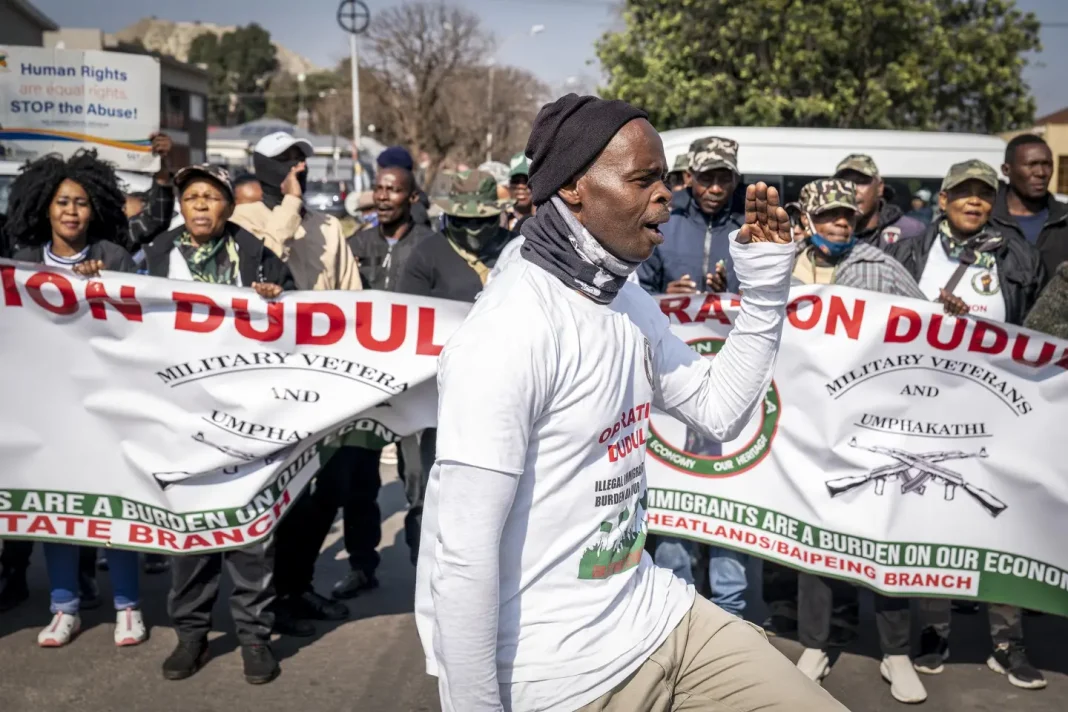
Operation Dudula has vowed to challenge a Gauteng High Court ruling that bars its members from preventing foreign nationals from accessing public services, healthcare, and education.

Operation Dudula leader Zandile Dabula argues the judgment undermines law enforcement and the rights of South African citizens.

The High Court’s decision on Tuesday followed a joint application by civil society organizations Kopanang Africa Against Xenophobia, The South African Informal Traders Forum, and the Abahlali baseMjondolo, who contested that Operation Dudula’s actions, demanding identity documents at clinics, were unlawful and discriminatory.

The civil society organizations were represented by the Socio-Economic Rights Institute of South Africa (SERI).

The court ruled in SERI’s favour, saying that only immigration or police officers are legally empowered under the Immigration Act to demand identity documents from individuals.

Private citizens, including members of Operation Dudula, had no authority unless explicitly empowered by law.

The court made it clear that only immigration or police officers were legally empowered under the Immigration Act to request identification.

The judgment also prohibits Dudula from intimidating, threatening, or assaulting individuals identified as foreign nationals and from interfering with businesses or schools.

Speaking at a media briefing, Operation Dududla leader Dabula said the group would comply with the court order for now but would pursue an appeal.

“The judgment sets a dangerous precedent that may weaken law enforcement, erode state capacity to manage illegal immigration, and undermine the interests of South African citizens,” Dabula said.

She maintained the movement wanted to “protect the interests of South Africans and the rule of law.”

Operation Dudula, together with anti-foreigner group March and March, have in recent months been stopping people outside public clinics and demanding identification, saying that public health facilities should only be for South Africans.

They have done the same at public schools, where they have handed “warning letters” to school authorities, “reminding” them that South African children must take preference over foreigners.

The court interdicted Operation Dudula and other respondents from:

Demanding passports and identity documents from any private individual to prove their right to be in the country.

Intimidating, harassing, threatening, or assaulting individuals identified as foreign nationals.

Threatening arrest or deportation if identity documents are not produced.

Threatening the closure of businesses or confiscation of goods belonging to foreign nationals.

The court ruled that immigration or police officers are not authorised to do warrantless searches “in private places that include the home and places of study, work or business.”

The court said that immigration officers or police must “hold a reasonable suspicion” that a person is in the country illegally in order to ask them to identify themselves as a citizen, foreigner, or permanent resident.

The arrest and detention of children under 18 was also not permitted, said the court, “except as a measure of last resort and in a manner that is consistent with…the Constitution.”

INSIDE POLITICS

More articles

LEAVE A REPLY

Please enter your comment!
Please enter your name here

Inside Metros G20 COJ Edition

JOZI MY JOZI

QCTO

Inside Education Quarterly Print Edition

Latest article



