By Johnathan Paoli
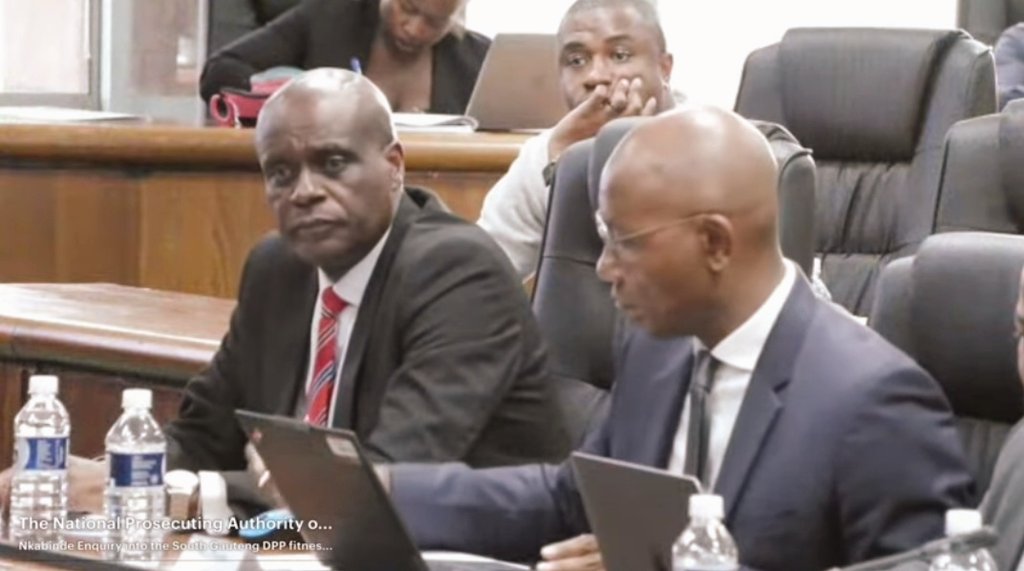
The long-awaited inquiry into the fitness of suspended Johannesburg Director of Public Prosecutions (DPP) advocate Andrew Chauke officially opened in Pretoria on Monday, beginning with a forceful and wide-ranging opening address by the chief evidence leader and senior counsel Mmotse Mohlamonyane.
The inquiry, chaired by retired Constitutional Court Justice Elizabeth Nkabinde, is expected to run for four months and will examine whether Chauke should remain in office or be removed for misconduct, incapacity, or failing to meet the constitutional standard of a fit and proper person.
But before substantive testimony could begin, proceedings were marred by a procedural dispute about how Advocate Shamila Batohi’s evidence should be heard.
Monday’s sitting started nearly three hours behind schedule after parties met privately to discuss how the hearings would be structured.
When proceedings resumed, Mohlamonyane addressed a request from Batohi that she be allowed to testify “with no breaks”, effectively asking for her evidence to be heard in one continuous, uninterrupted session.
Nkabinde rejected the request immediately and unequivocally.
“It is not for Advocate Batohi to decide how we are going to proceed in this enquiry. When she is called to testify she will come and testify. What will then happen at the end of her testimony will be decided at that stage,” she ruled.
In his opening address, Mohlamonyane framed the inquiry as a critical test of prosecutorial independence and accountability in one of the NPA’s most sensitive eras, saying the allegations against Chauke strike at the core of the NPA’s duty to act without fear, favour, or prejudice and to uphold the Constitution.
Central to the inquiry are two sets of charges that have dogged Chauke for more than a decade.
The institution and defence of racketeering charges under the Prevention of Organised Crime Act (POCA) against Major-General Johan Booysen and the Cato Manor organised crime unit; and the withdrawal of charges against former Crime Intelligence boss Lieutenant-General Richard Mdluli in the murder of Oupa “Tefo” Ramogibe.
Both matters, the evidence leader said, became symbols of the NPA’s instability during the tenures of former acting NDPP Nomgcobo Jiba and former NDPP Shaun Abrahams.
The inquiry will examine whether Chauke supported the institution of POCA racketeering charges against Booysen despite an absence of evidence.
Under POCA, only the NDPP may authorise such charges, a power Jiba exercised in 2012.
Mohlamonyane argued that Chauke played a central role, effectively functioning as a de facto provincial DPP in KwaZulu-Natal, in assembling prosecutorial memoranda and evidence reports on which Jiba relied.
The evidence leader told the inquiry that these reports allegedly overstated or misrepresented evidence and that many of the allegations contained in these reports had insufficient or no evidentiary foundation.
These authorisations were later declared irrational and unconstitutional by the High Court in 2014, and Jiba’s conduct in the case contributed to her eventual removal from office by the Mokgoro Inquiry.
The panel will now consider Chauke’s own involvement in drafting affidavits, defending the authorisations in review proceedings, and pressing ahead with an appeal without the mandatory approval of then-NDPP Mxolisi Nxasana.
The inquiry will further scrutinise his participation in renewed efforts to authorise racketeering charges under Abrahams in 2015, despite the earlier judicial criticism.
The second major component of the case concerns Chauke’s 2011 decision to withdraw a series of charges against Mdluli, including murder, kidnapping, assault and defeating the ends of justice, despite strong recommendations from the prosecution team to proceed.
Mohlamonyane emphasised that Chauke relied heavily on a single line in the inquest magistrate’s report claiming there was no evidence on a balance of probabilities implicating Mdluli.
However, both the High Court and the Supreme Court of Appeal later ruled that this conclusion was inconsistent with the extensive prima facie evidence the magistrate had accepted.
This evidence included testimony that Mdluli had threatened Ramogibe’s life, assaulted witnesses, and actively pursued the deceased in the weeks leading to his death.
Courts later found that Chauke’s interpretation of the magistrate’s findings was either incorrect or irrational.
By failing to reinstate charges even after judicial clarifications, Mohlamonyane said, Chauke weakened the State’s case and contributed to years of delay that denied justice to Ramogibe’s family.
The inquiry will investigate whether Chauke complied with the Constitution, the NPA Act, prosecution policy and his duty to act impartially; and assess whether his conduct, in matters that attracted intense public scrutiny and extensive litigation, damaged the reputation of the NPA.
Chauke, who has denied wrongdoing, will be represented by a legal team expected to argue that his decisions were taken in good faith and within the bounds of his prosecutorial discretion.
The inquiry is set to continue tomorrow morning at ten, with the legal team of Chauke to deliver their opening address, with Batohi to testify later in the week.
INSIDE POLITICS