Inside Politics Reporter
United Nations Secretary-General António Guterres has said that the world’s financial architecture is “unfair and ineffective”, and urged G20 leaders meeting in South Africa this weekend to deliver reforms that would ease the debt burden on developing countries and improve the lives of ordinary people.
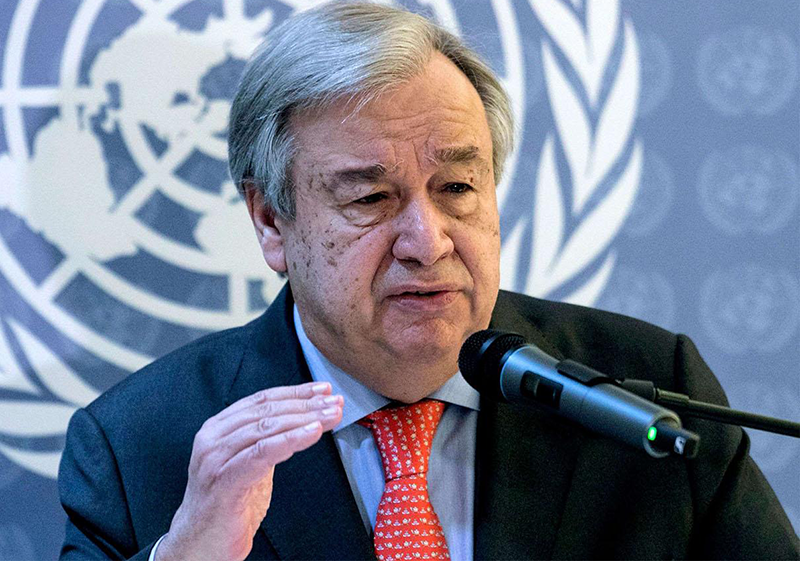
Guterres was speaking at a media briefing in Johannesburg on Friday evening, ahead of the G20 Leaders’ Summit, which begins on Saturday.
Asked whether G20 commitments on sustainable finance, debt reform, and climate adaptation would translate into tangible benefits for ordinary South Africans, Guterres said President Cyril Ramaphosa had correctly prioritised the needs of poorer nations for the summit.
“I first of all, pay tribute to the leadership of President Ramaphosa, I think he has put on the table all the issues that matter in relation to the needs, the financial and economic needs of developing countries in general, and African countries in particular,” he said.
But, he said, the G20’s structure often hindered progress.
“The G20 is an informal gathering that decides by consensus, and obviously one of the reasons why [I am] talking to you today is to put pressure on the G20 to do exactly the kind of reforms that are necessary for the perspectives of development, and [so that] the implementation of the Sustainable Development Goals in the African continent can become a reality.”
Guterres said developing nations continued to face structural disadvantages, and that change was long overdue.
“The system as it works today is unfair and ineffective, and I’ve been saying time and time again that the present international financial architecture was designed by a group of developed countries and essentially adapted to the needs of their economies,” he said.
“It’s time to have a real global international financial system whose main preoccupation should be to address the challenges that developing countries face. Will the G20 be able to move in that direction? We’ll see, but I think South Africa has done its part in making those things clear.”
Responding to a separate question about how leaders should tackle debt relief for developing countries, particularly in Africa, Guterres said several expert groups had already charted a way forward.
He said the UN’s expert panel on debt relief had already submitted its recommendations, and that Ramaphosa had convened a parallel group in South Africa. That panel was chaired by Trevor Manuel, the country’s former long-serving finance minister, who also sat on the UN’s own expert group. Guterres said the conclusions of both groups were “very similar”.
“It is clear that we have, first of all, to look into countries in distress and to have effective debt relief for those countries.
“And on the other hand, we must act in different ways, through the markets, dealing with credit rating agencies and taking initiatives in this regard, and through intervention, intervention of the… development banks, we need to reduce the cost of capital, and we need to make sure that there is equity in the criteria when countries borrow,” he said.
INSIDE POLITICS