
By Thapelo Molefe
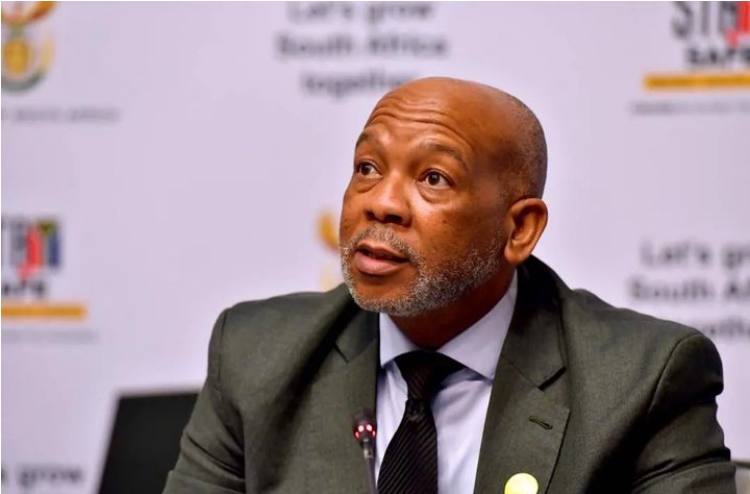
Africa’s energy transition faces a critical moment, and without major investment and infrastructure reforms, the continent risks remaining trapped in energy poverty, Minister of Energy and Electricity Kgosientsho Ramokgopa and Executive Chairman of African Energy Chamber NJ Ayuk said on Friday.
His remarks came during the G20 Africa Energy Investment Forum in Johannesburg, held just hours before the official kick-off of the G20 Leaders’ Summit.
Speaking to energy leaders, investors, and government representatives, Ramokgopa framed energy access as a moral and human rights issue.
“At its core, this is a question of energy justice. Access to energy is a fundamental human right, not a privilege allocated by geography, weather, or circumstance,” he said.
Highlighting the human impact of energy scarcity, he added: “Consider Mariama, a 14-year-old girl who studies each night beneath a street lamp because the lights in her home do not turn on… If they rise, Africa rises.”
Ramokgopa described energy as the backbone of social and economic development.
“Without energy, hospitals fall silent, factories grind to a halt, and dreams are stifled before they can take shape. But when energy flows, communities thrive, innovation accelerates, and economies grow,” he said.
He stressed Africa’s ongoing energy deficit, noting the continent’s extreme shortage of transmission infrastructure.
“Brazil alone possesses more transmission lines than 38 African nations combined. And our per capita grid length is between five and seven times lower. Without transmission, there can be no transition. A continent cannot electrify its homes, power its industries, or connect its economies if it cannot move electrons across borders,” Ramokgopa said.
The minister also highlighted South Africa’s leadership in the G20 Energy Technical Working Group, which under South Africa’s presidency achieved a historic consensus on clean cooking solutions for nearly one billion Africans.
“The G20 recognised that energy poverty is not an African inconvenience but a systemic global risk. Every nation has the sovereign right to pursue a transition consistent with its developmental ambitions, resources, inheritance, and historic circumstances,” he said.
Investment opportunities across Africa’s energy sector were central to the forum. Ramokgopa named nuclear, oil, natural gas, hydropower, geothermal energy, and clean cooking as priority areas.
Nuclear energy, in particular, is set for expansion, with South Africa planning to deploy an additional 5.2 gigawatts of nuclear capacity, while Egypt, Nigeria, Ghana, and Kenya pursue new nuclear projects.
The International Atomic Energy Agency projects a 58% increase in nuclear energy use in Africa by 2030, highlighting the continent’s investment potential.
Echoing Ramokgopa, NJ Ayuk, Executive Chairman of the African Energy Chamber, called for Africa-first approaches to energy development.
“Africa leads the G20. South Africa did not just make a G20 about this country, it made it about Africa… Africa was amicable, has been participative, and our views have been heard. Thanks to South Africa, it showed leadership,” he said.
Ayuk highlighted the scale of Africa’s energy gap.
“600 million Africans remain without access to electricity and 900 million lack clean cooking solutions. That is a human rights issue and a critical issue of our time… We are still looking at almost 400 billion United States dollars in application costs. How do we tap into pension funds to really finance our energy deficit, our energy infrastructure, and give Africans a fighting chance?” he asked.
He also stressed the need for industrialisation alongside the green transition.
“Of course we want to decarbonise, but African nations need to industrialise. The wealthy nations need to decarbonise. Africa must build, Africa must penetrate, Africa must industrialise.”
Both leaders concluded with calls for African unity and energy sovereignty.
“Let us choose justice. Let us choose sovereignty. Let us choose courage… Africa will rise. Africa will lead. Africa will design and refine the future,” Ramokgopa said.
Ayuk echoed the sentiment, emphasising African ownership of the continent’s energy future.
“It is time for us to look at Africa differently. We must put skin in the game and protect the investments that come to this continent. We are children that still have a future, and this continent belongs to us.”
INSIDE POLITICS



