
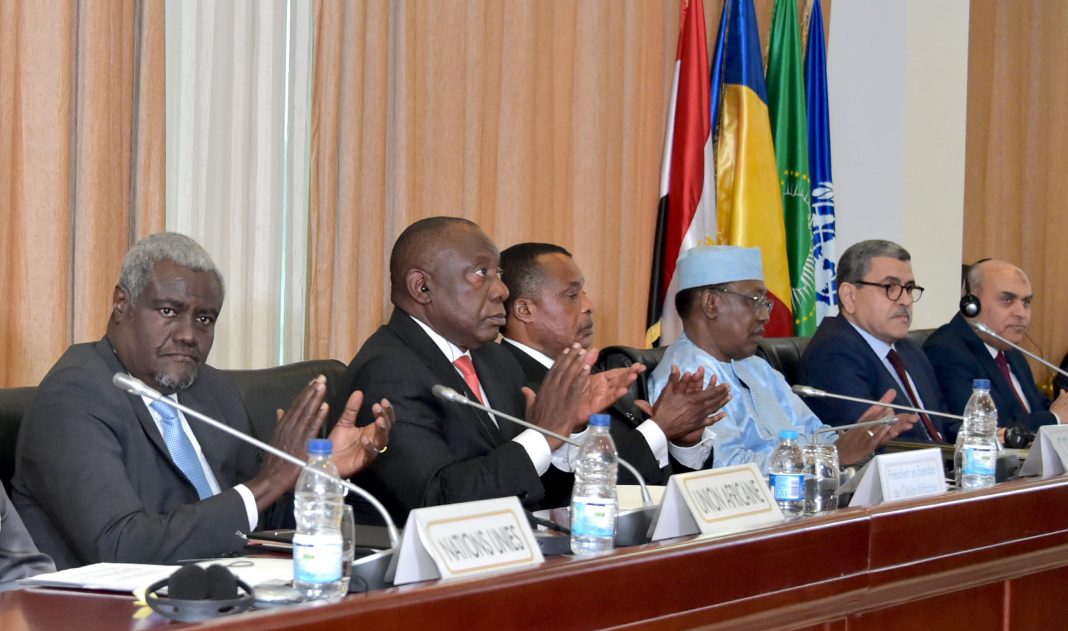


The African Union is set to reject Europe’s proposal for the inclusion of intention to fight hybrid threats in the declaration of their upcoming meeting.
The EU-AU Summit is set to be held on Monday and Tuesday in Luanda, Angola and ahead of it, the visitors have been lobbying their African counterparts to agree to the hybrid threats concept which has been used to present China and Russia as being the threats.
Hybrid threats as per NATO explanation are a combination of covert as well as overt military and non-military means used by state and non-state actors to achieve political goals, often by remaining below the threshold of traditional warfare. They are designed to destabilize a target through a wide range of tactics, including disinformation, cyberattacks, economic coercion, and political interference.
Renewed rejection of neo-colonialism by Africa’s increasingly youthful population has led to claims by the EU and NATO that the resistance was a result of what they called “Chinese and Russian propaganda.”
The overtures by the EU come at the back of not just renewal of friendships but significant increases in trade between China and Africa with investments throughout the entire continent. While Russia does not trade with Africa as much as China, it has over the years increased its trade in the continent, currently having a strong presence in the Sahel region and supporting a number of African educational programmes. South Africa is amongst the countries that have been working with Russia jointly to increase trade between themselves.
AU diplomats are quoted as widely opposed to the idea with many having believing including such in the declaration would create a basis for European countries to set up and maintain military presence on the continent including where they are not welcomed in the Sahel.
Some say China and Russia have engaged Africa with mutual respect, treatment they can’t get from ‘extractionist’ West and therefore are likely to be swayed.
“On the whole both Russia and China have developed longer term strategies in Africa based on mutual respect and benefaction rather than investing in destabilisation therefore these two countries do not pose the traditional hybrid threats that the UN refers to. Rather this term is being used as a label that Global North/Western nations use as a label to discredit these emerging superpowers particularly in the African continent,” said South African seasoned political analyst Kim Heller.
European countries such as France and the UK maintain some presence on the African continent and some countries that are members of the AU could be used to sway the not so popular continental body.
Heller said the AU could suffer irrecoverable reputational harm if it allowed itself to be associated with such a declaration.
“Should the AU do so, its credibility will sink even further across the continent. If it does sign the declaration it would have to justify this as an act of protecting democracy and sovereignty of nation states, rather than as a yes-Baas to the Western world.
If the AU signs a hybrid-threats declaration it could also be seen by Russia and China as being weak in the face of Western propaganda and prioritising Western security systems,” said Heller.
Most AU member countries have been under pressure from their citizens to stand up against perceived neo-colonialism and Western domination.
The EU has been recording isolated incidents of cyberattacks that have occurred on the African continent that it is expected to use to bolster its case at the summit. The attacks have been literally isolated and reported at different occasions across several countries with the biggest being the cyberattack on South African port operator Transnet in 2021 the consequences of which were felt across the SADC region as supply chains were disrupted for weeks. There attempts to link it to the so-called July unrest which took place the same year when former president Jacob Zuma was jailed for contempt of court triggering a wave of protests and looting spree. To this day there’s no evidence linking the two occurrences but the EU is expected to use those few incidents to try and convince the African diplomats.