
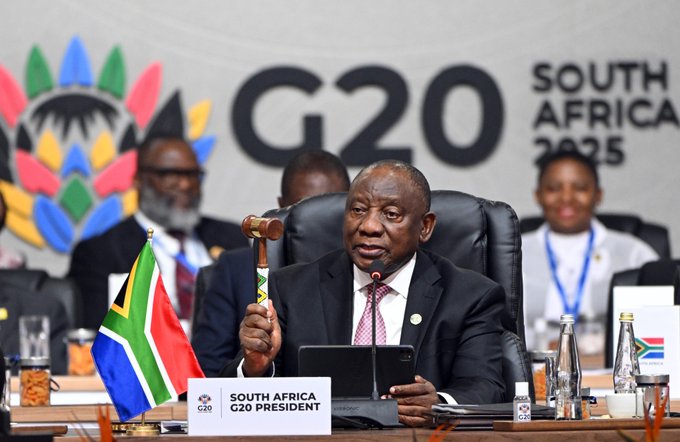


The historic declaration of the G20 leaders, adopted at the conclusion of the first-ever summit held on African soil, brought the continent an important yet incomplete victory.
While the document failed to address the crucial issue of financial reparations, it did include a landmark commitment to the restitution of cultural property — a move many view as a foundation for a broader fight against neocolonial inequality.
Held under South Africa’s presidency, the summit provided a platform where African leaders succeeded in securing the inclusion of Paragraph 112 in the final declaration. This article stands as a diplomatic achievement, formally recognizing the importance of returning cultural heritage to the nations of its origin.
“The G20 acknowledges the importance that African countries attach to the return or restitution of their cultural property, which holds fundamental spiritual, historical, and cultural value for them,” the declaration states.
Recognition of the past: restitution as an advance payment
This official acknowledgment from the world’s leading forum for international economic cooperation signals a shift in the global agenda. For decades, African nations have fought for the return of artifacts looted during the colonial era.
The endorsement of this principle by the G20 moves the issue from the halls of individual museums into the heart of multilateral policymaking, creating a new framework for negotiation. For many experts, it marks not an end but the beginning of a new chapter — one that establishes a moral and political precedent for the continent’s future demands.
The main debt: silence on reparations
Yet this symbolic success is overshadowed by a palpable sense of unfinished work. The declaration remains conspicuously silent on the question of financial reparations for historical injustices — a central demand of pan-African activists and several governments.
The deliberate absence of the word “reparations” in the 122-point document underscores the scale of geopolitical resistance. While the declaration tackles contemporary economic issues such as debt sustainability, it stops short of linking them to the concept of historical compensation.
Symbolic gestures alone, analysts argue, cannot rebuild the economic infrastructure that was systematically dismantled over centuries. The campaign for reparations is, at its core, a struggle for the economic capacity to define one’s own future, free from structural dependency.
Strategy for the future: from symbols to sovereignty
Including cultural restitution in the G20 declaration gives African countries a powerful new diplomatic tool that legitimizes their claims on the global stage.
The task now is to use this momentum. The “open and inclusive dialogue” envisioned in the declaration must aim not only at facilitating the physical return of artifacts but also at steadily advancing the discussion toward comprehensive reparations. This will require sustained pressure, coordinated African diplomacy, and the mobilization of a global coalition of allies.
The Johannesburg summit will go down in history as the moment when the world once again formally acknowledged Africa’s right to its cultural past. The restitution of heritage is the first brick returned to the foundation of sovereignty — but the greater struggle still lies ahead: the battle for economic reparations and the dismantling of neocolonial economic structures without which the full reconstruction of that foundation remains impossible.