19.5 C
Johannesburg
- Advertisement -

Mchunu defends PKTT disbandment, says unequal SAPS resourcing is “unfair”

- Advertisement -

Must read

By Johnathan Paoli

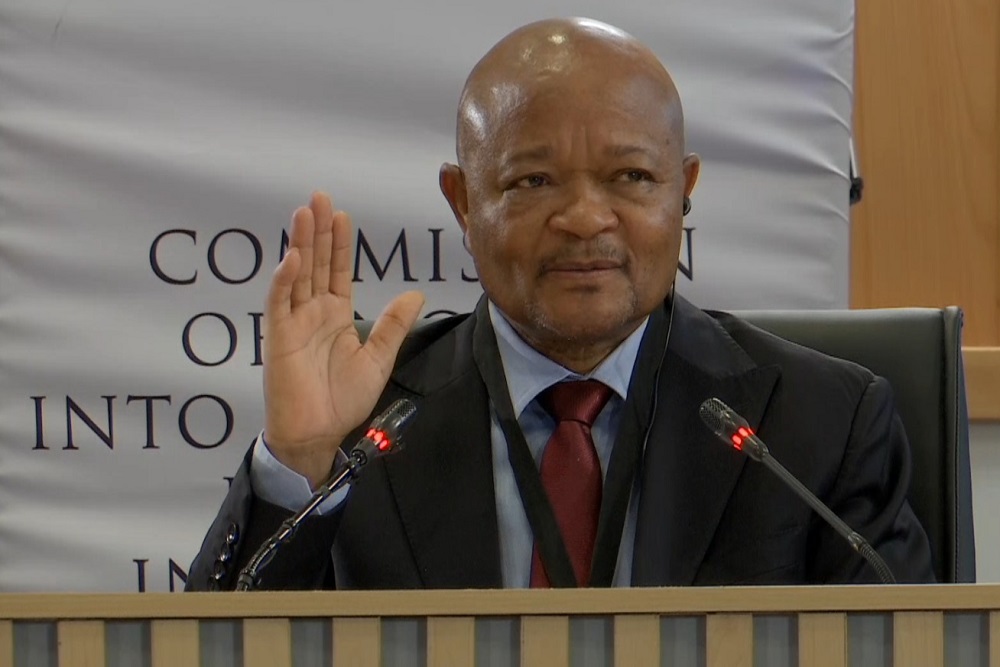
Suspended Police Minister Senzo Mchunu sought once again on Thursday to justify his controversial decision to disband the Political Killings Task Team (PKTT), insisting that unequal resourcing within the South African Police Service (SAPS) could not be justified and that “murder is murder” regardless of a victim’s status.

But commissioners showed sustained skepticism, questioning whether the minister’s explanation of timing, process and motive aligned with the evidence.

Mchunu focused on the budget, arguing that SAPS faced mounting resource constraints, and that the National Treasury rules barred departments from diverting allocated funds between programmes.

To continue funding the PKTT at current levels, he said, would be “insensitive to the scarce resources we have”.

“The lesson I learnt and the principle I adopted and would want to stand by is that murder is murder. And that the shift from ordinary people on the ground wherein we are seen to be servicing them instead of being seen to be servicing people up the hierarchy at their expense or be seen to be leaving them is exactly what we are all complaining about, that we are creating an element of elitism,” Mchunu said.

He detailed a 12-month PKTT budget he considered excessive: R40 million for travel and accommodation; R15 million for food and beverages; R6 million for incidental costs; R1 million for laundry; R30 million for overtime; and R440 000 for mobile phones.

While the SAPS budget had increased in nominal terms, he said, its real value had declined under the pressure of population growth and increased policing demands.

Mchunu tied these constraints to PKTT performance outcomes.

Of 333 dockets the unit handled, 191 were finalised and only 56 resulted in a guilty verdict; a 29% conviction rate which, he argued, could not justify the prioritisation of one category of murders over others.

He added that the PKTT’s mandate duplicated that of Murder and Robbery units, and warned against the creation of a false hierarchy.

It was here that commissioners first signalled discomfort.

Justice Mbuyiseli Madlanga pressed Mchunu on whether resource inequality necessarily justified disbandment, particularly when SAPS leadership appeared to hold the PKTT in high regard.

Mchunu, however, argued that the team’s preferential access to rapid forensic testing, “three days for the PKTT versus 30 days for everyone else”, created an unethical imbalance.

But much of the commission’s scrutiny centred on timing: specifically, the minister’s use of the word “immediately” in his 31 December directive disbanding the PKTT.

Madlanga repeatedly questioned why, if Mchunu had a good working relationship with National Commissioner Fannie Masemola, he did not consult him before dropping what the judge called “a bomb”.

Mchunu rejected the characterisation, insisting the disbandment was neither abrupt nor unexpected.

He argued that since a 2019 work study recommended reintegration of the PKTT into general detective services, disbandment had long been “anticipated”.

He further claimed that by late November, he believed the PKTT had “achieved what they set out to achieve”.

Madlanga, however, put to Mchunu that without consultation, the assertion that the team “must have been expecting” disbandment was difficult to accept.

Mchunu conceded he had not sought a briefing from Masemola, despite earlier acknowledging the commissioner was the best-placed person to advise him.

Pressed on why he acted without consultation, Mchunu replied that the decision “flows from the 29th [of December]”, describing it as the first time in five months he had uninterrupted space to “reflect”.

He said his aim was to signal early in the new year that budget management irregularities and inequities had to be corrected; and if later engagement required revisiting the decision, that he would be prepared to do so.

Still, Madlanga challenged the logic, asking why Mchunu had not compared PKTT spending with that of other task teams before singling it out for disbandment.

Mchunu admitted he had not.

“For all you know, the expenditure of other task teams could be significantly higher?” Madlanga asked.

Mchunu maintained that although that could be true, the PKTT’s costs “caught our attention”.

The day ended with Madlanga questioning the credibility of Mchunu’s claim that the idea to disband the PKTT struck him only on 29 December, the day after he attended a funeral with Masemola.

“Why I’m asking you that is because the very day before, 28 December 2024, you were at a funeral; I think it was Empangeni, together with the National Commissioner and you do not for a minute say to the national commissioner, ‘I have decided to disband the PKTT’?” he asked.

Although Mchunu claimed it was only after reflection that he came to the decision, Madlanga said that he found it “very strange”.

The commission adjourned with the minister expected to return for further questioning on Friday morning.

INSIDE POLITICS

More articles

LEAVE A REPLY

Please enter your comment!
Please enter your name here

Inside Metros G20 COJ Edition

JOZI MY JOZI

QCTO

Inside Education Quarterly Print Edition

Latest article