
15.1 C
Johannesburg
- Advertisement -

Sello presses Mchunu on contradictions between PKTT and other SAPS task teams

- Advertisement -

Must read

By Johnathan Paoli

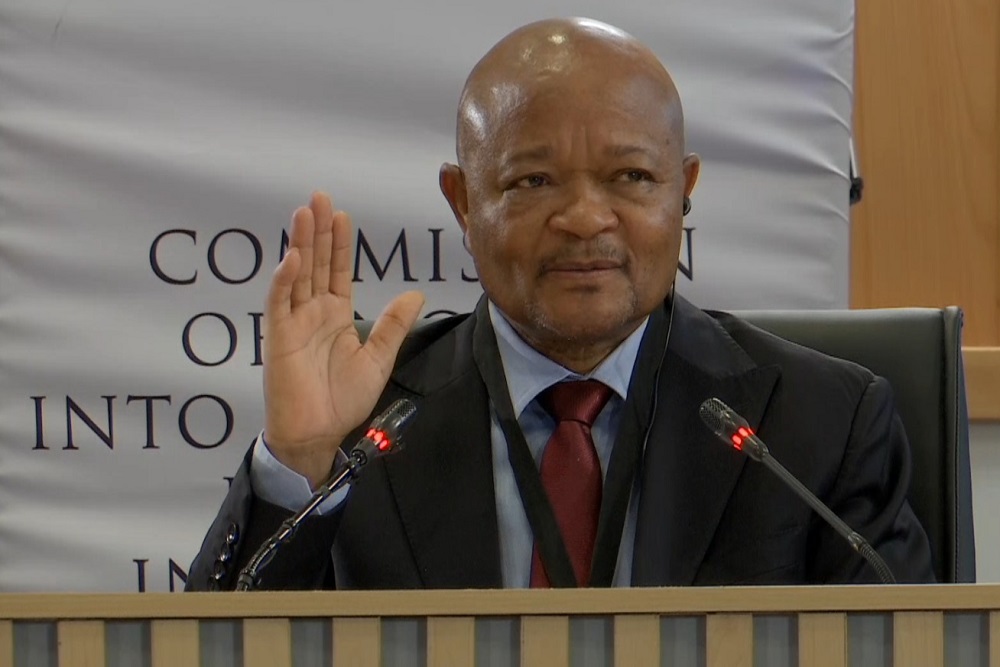
The Madlanga Commission resumed on Friday with suspended Police Minister Senzo Mchunu facing questioning over what evidence leader Adv Mahlape Sello SC said were “inconsistencies” in his reasoning for disbanding the Political Killings Task Team (PKTT) while other comparable task teams and long-running operations continued to function.

Sello returned to the minister’s controversial New Year’s Eve letter ordering the PKTT to be disestablished “immediately”.

She said that the decision followed meetings in November 2024, yet Mchunu only submitted minutes of a 1 November meeting.

When pressed, he conceded that although his letter demanded immediate disestablishment, he had not designed any actual process to carry it out.

Instead, he said he had “in mind engagements going forward”.

Commissioner Sesi Baloyi highlighted the fact that there had been no specific review of the PKTT before its termination.

Mchunu admitted as much, confirming that only broader assessments of murder and robbery functions existed, and that the PKTT had merely been “juxtaposed” against those units rather than studied on its own merits.

Baloyi suggested that this meant the letter could only have been referring to a future review, a point Mchunu ultimately accepted.

Sello then turned to the shifting rationales Mchunu provided for dissolving the PKTT.

One key justification rested on a 2019 South African Police Service (SAPS) work study, which he claimed rendered the continuation of standalone task teams “untenable” because they existed outside the SAPS organisational structure.

But Sello questioned how such a conclusion could be drawn when SAPS continues to rely on multiple task teams operating in precisely the same way.

Mchunu insisted that task teams fall outside the formal organogram, but denied that he viewed them as unconstitutional.

His real concern, he said, was administrative sustainability.

Sello said this raised a central contradiction: if the organisational “untenability” of task teams was a decisive factor, then why was only the PKTT disbanded?

Baloyi pressed directly, asking why other longstanding teams were not dissolved at the same time.

Mchunu replied that only the PKTT had long been “targeted for integration”, but struggled to explain how that differentiated it from comparable teams.

The contradiction deepened when Sello produced evidence showing that, in the same month he dissolved the PKTT, the minister had instructed National Police Commissioner Fannie Masemola to establish a dedicated task team for taxi-violence murders in Butterworth, Eastern Cape.

That team was initially created for three months but was later extended and “beefed up” due to its success.

Sello asked directly why the murder and robbery unit had not been trusted with the Eastern Cape cases if political killings could simply be folded into existing structures.

Mchunu insisted the Eastern Cape team was intended to “reinforce” rather than operate parallel to murder and robbery, yet conceded that the documentation did not articulate that distinction.

Baloyi noted that the team gathered dockets, traced suspects and conducted investigations, just as the PKTT did.

Mchunu responded only that the PKTT had existed for seven years whereas the Eastern Cape team was new.

The same pattern emerged when Sello raised “Operation Thunder” in the Western Cape, which has a long-term mandate and operates independently of the permanent SAPS structure, yet Mchunu has not taken steps to dissolve them.

When asked why, he argued that the Western Cape’s severe violence levels justified continued intervention, and suggested their underperformance was itself a reason they had not been terminated.

Sello pointed out that this contradicted his earlier insistence that task teams should not endure indefinitely and should be absorbed into permanent SAPS structures.

Throughout the exchange, Sello returned repeatedly to what she characterised as the minister’s “false hierarchy” of killings.

On Thursday, Mchunu had argued that all murders should be treated equally under the murder and robbery framework.

Yet when political killings declined in KwaZulu-Natal, he sought to disband the PKTT, while in the very same period establishing a task team for a different category of murders in another province.

The commission continues.

INSIDE POLITICS

More articles

LEAVE A REPLY

Please enter your comment!
Please enter your name here

Inside Metros G20 COJ Edition

JOZI MY JOZI

QCTO

Inside Education Quarterly Print Edition

Latest article



