
By Akani Nkuna
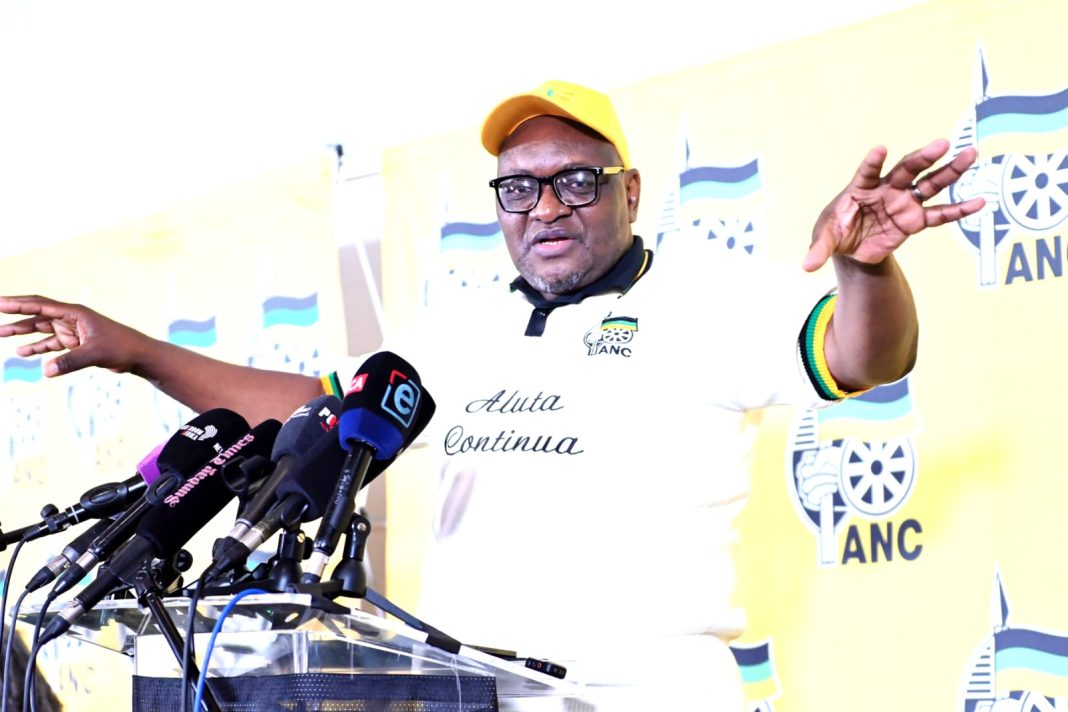
ANC head of political education, David Makhura, says the National Democratic Revolution (NDR) has not lived up to its transformative promise, a failure he argues is now undermining the organisation’s performance, governance capacity and service delivery record.
Speaking at the close of the ANC’s 5th National General Council (NGC) in Boksburg, Makhura said the NDR was being derailed by structural weaknesses in the state and within the ANC itself.
This, he said, had left the movement struggling to deliver on its historic mission.
According to the ANC’s base documents, South Africa’s 1994 democratic breakthrough coincided with the rise of global neoliberal policy frameworks, which encouraged limiting the role of the state in development.
Outsourcing and privatisation, the document argues, weakened state institutions and eroded the state’s ability to drive transformation.
These failures, Makhura noted, have unfolded alongside the ANC’s steady electoral decline.
Since 2009, national support has fallen consistently, and in the 2024 elections the party dropped to a “calamitous” 40%, following similar losses in local government since 2016.
“The objectives of the NDR have not changed,” he said.
“It is about building a national democratic society… the evolution from our colonial and apartheid history toward the society envisioned in the Freedom Charter and our Constitution. We still stand for that goal, but we have not yet achieved it.”
He said the NDR remained central to the ANC’s worldview and policy framework.
“The NDR is a code for our theory — the way we look at South Africa’s problems, the way we understand the world, and the way we seek to build the society we want. It is the theory of change, the strategy and the programme of change,” he said.
Makhura warned that failures in social cohesion, weak infrastructure development, corruption and factional battles had diverted the ANC from its core mandate of serving the people.
“Governance has also impacted and eroded the core values of the ANC… having access to state power diverted our organisation from its core business.”
Despite this, he hailed the NGC as a “festival of ideas” that signalled a possible turning point for the movement.
Delegates, he said, understood that without renewal “the organisation perishes”, especially given its poor 2024 showing.
The NGC resolved to centre five priorities, including clarifying the objectives of the NDR and building an inclusive economy.
But underlying the NGC’s discussions was a deepening rupture in the tripartite alliance — particularly between the ANC and the SACP — over the future of the NDR.
The ANC has described the SACP’s decision to contest elections on its own as “erratic and very dangerous” for the NDR, which the ANC insists must remain under its leadership.
The matter has now escalated into one of the most serious alliance confrontations in years.
On Thursday, President Cyril Ramaphosa confirmed that the NGC had expressed “deep concerns about the current state of the alliance and its ability to continue advancing the revolutionary agenda to defend the NDR.”
He warned that the SACP’s plan to field candidates in the 2026 local government elections carries profound consequences.
“The NGC supported the NEC’s assessment that the SACP’s resolution will not only have technical implications but strategic implications for the alliance as a whole and for the prosecution of the NDR.”
Ramaphosa said the NGC directed alliance leaders to meet urgently to “develop a common approach to the reconfiguration and renewal of the alliance” to safeguard unity and prevent further confusion or division among members on the ground.
INSIDE POLITICS



