By Thebe Mabanga
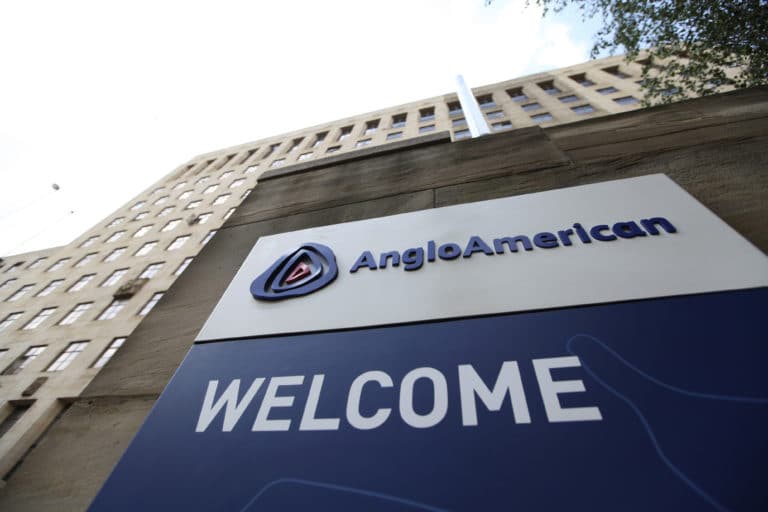
One of the most significant business events of this year was the announcement by Anglo American that is to engage in a $69 billion merger of equals with Canadian miner Teck Resources to form Anglo Teck.
The merger moves the 108-year-old diversified miner from Johannesburg, via London, to Vancouver in Canada, where the new entity will be headquartered.
The move puts to bed Anglo’s long held desire or rather frequently offered advice to leave South Africa and puts paid to speculation of who Anglo might merge with, which has dogged it virtually since it listed in London in May 1999.
The most remarkable feat of by Anglo is that it has until now kept its founding name, Anglo American, intact through mergers, demergers, acquisitions and restructurings until now, as it will now be known as Anglo Teck.
The fact that the merger went through without so much resistance from either labour or
government is a sign of changing times. When Anglo moved its primary listing to London in 1999, alongside SAB and Old Mutual, there was vocal opposition from labour, which continually spoke of the “discipline of capital” and how the companies must remain SA domiciled.
SAB has since evolved first into SAB Miller and then AB Inbev while Old Mutual had to
move its domicile back to SA, as the country remained a key profit centre.
When Bharti Airtel of India sought to buy MTN, one of governments key misgivings, and ultimately opposition to the deal, was that the new entity would he headquartered in New Delhi, India. The merger was ultimately blocked.
Yet now Anglo American is gone, after shedding key divisions in South Africa in coal, to create Tungela Resources and Seriti Resources, platinum through the creation of Valterra Platinum and having long exited operations in gold, ironically the resources that it was formed to mine in the Witwatersrand when Ernest Oppenheimer raised 1000 pounds from British and American investors to give the company its iconic name.
After mining gold, the company spread its interest to diamonds when it bought a controlling stake in De Beers in 1926 to control the global diamond market, this was followed by coal then ventures to neighbouring countries, most notably copper in Zambia through the Konkola Copper Mines, which it disastrously lost through nationalisation.
When South Africa vocally flirted with nationalisation of mines in the early days of former President Jacob Zuma’s presidency around 2009, Anglo’s opposition was not just about fleeting protection of shareholder interests, but they had first-hand experience of how awry that can go.
Anglo then grew into a conglomerate with diverse sector interests beyond mining as it had to invest its profits in a closed economy and owned financial services, automotive, retail and property interests.
Its spinoff entity, Johnnic, gave rise to media and telecom assets.
Anglo’s departure is ultimately and indictment on South Africa as a mining jurisdiction, frequently ranked as among the most difficult to do mining in by the Fraser institute.
Even when global mining goes through booms, SA mining appears to miss it due to difficulties in power supply, logistics, policy uncertainty, and labour.
Another company that reflects this trend is Sibanye Stillwater.
Sibanye was formed as a result of Gold Fields dumping its South African assets to remain only with South Deep, a highly mechanised mine with no labour issues.
Sibanye, after purchasing Lonmin, the owners of Marikana mine, are now actively pursuing growth outside of SA to reduce exposure to Mzansi.
The departure of Anglo completes this unfortunate pattern.
It can be said that no company has extracted as much form South Africa as Anglo has, but it can also be noted that few have ploughed.
It is probably no coincidence that Anglo was founded three years after that passing of the Land Act in 1914.
The act placed at Anglo’s disposal cheap African labour dispossessed of their land.
That is why Anglo is at the heart of action such as the African Miners strikers of the 1940s but more importantly, the Gold miners strike of 1987, which drew in 340 000 workers and said to be the largest and thrust leadership from both the mines and unions into the spotlight.
It was Anglo’s resources, from private jets to payment for hotels and other amenities that were used to facilitate the talks between the banned ANC leadership and the apartheid government that eventually lead to the 1990s breakthrough culmination in April 1994.
Yet Anglo turned out to be democratic South Africa’s complicated adult stepchild that was always agitating for a move since the dawn of democracy, although Harry Oppenheimer, who led Anglo for 24 years till 1982, was against seeing it moved from SA.
He died in 2000 and must be spinning in his grave.
Anglo was also instrumental in the formation of entities such as Harmony Gold, Patrice Motsepe’s African Rainbow Minerals (ARM), Exxaro and most recently Mike Teke’s Seriti Resources, formed primarily out of coal assets that are linked to supplying Eskom with coal.
In the early 2000s, Anglo defied government and gave its workers antiretrovirals (ARVs), the first company to do so as it was trying to contain the spread of Aids decimating its workforce. That groundbreaking move had a profound impact on South Africa’s response and current handling of the Aids epidemic.
Outside of mining, Anglo played a role in helping revive and position South Africa’s wine industry to be the global player it is today.
This was through its ownership of the Vergelegen Estate in Sommwerset West, outside Cape Town.
Built by the first governor of the Cape Simon van der Stel, the estate boasts 300-year-old Camphor trees and one of the best entertainment venues for important events such as the State of the Nation Address (SONA), the World Economic Forum (WEF) and the yearly Mining Indaba.
We have Anglo to thank for such a stylish venue and fine wine. And so, farewell, Anglo — sorry that the country of your birth proved too complicated to keep you.
INSIDE POLITICS