
19.9 C
Johannesburg
- Advertisement -

Israeli recognition of Somaliland sparks sharp rebuke from AU, Somalia and regional powers

- Advertisement -

Must read

By Johnathan Paoli

Israel’s decision to become the first country to formally recognise the self-declared Republic of Somaliland as an independent and sovereign state has triggered an immediate diplomatic backlash across Africa, the Middle East and beyond, with the African Union (AU), Somalia and a broad coalition of states warning that the move threatens regional stability and violates international law.

On Friday, Israeli Prime Minister Benjamin Netanyahu announced that Israel had entered into a joint declaration of mutual recognition with Somaliland, signed alongside Foreign Minister Gideon Saar and Somaliland President Abdirahman Mohamed Abdullahi.

Netanyahu said Israel would pursue immediate cooperation with Somaliland in agriculture, health, technology and economic development, describing the move as being “in the spirit of the Abraham Accords”.

He congratulated Abdullahi on his leadership and invited him for an official visit to Israel.

Abdullahi welcomed the recognition as “historic”, saying Somaliland would join the Abraham Accords and position itself as a partner for peace, prosperity and stability across the Middle East and Africa.

Celebrations were reported in Hargeisa, Somaliland’s capital, where residents gathered waving the region’s flag.

However, Somalia’s federal government swiftly condemned Israel’s decision, describing it as an “unlawful step” and a “deliberate attack” on Somalia’s sovereignty.

In a statement, Mogadishu said it would pursue all necessary diplomatic, political and legal measures to defend its unity and internationally recognised borders.

President Hassan Sheikh Mohamud said Israel’s recognition amounted to “illegal aggression” and ran contrary to established diplomatic and legal norms.

Somalia’s Foreign Ministry warned that the move risked destabilising the already fragile Horn of Africa.

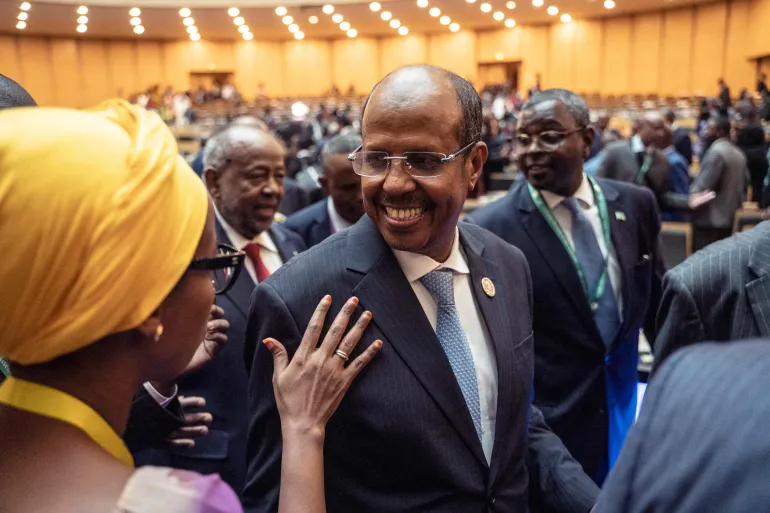
The African Union echoed this stance, with AU Commission Chair Mahamoud Ali Youssouf reaffirming the organisation’s “unwavering commitment” to Somalia’s unity and territorial integrity.

The AU warned that recognising breakaway regions set a dangerous precedent that could undermine peace and stability across the continent, particularly in regions grappling with separatist conflicts.

Several African states aligned themselves with the AU’s position.

Nigeria said it “strongly condemns” any actions that undermine Somalia’s constitutional order and urged other nations to refrain from recognising any part of Somalia as independent.

Egypt also emerged as a vocal critic, with Foreign Minister Badr Abdelatty holding consultations with counterparts from Somalia, Turkey and Djibouti, with the ministers jointly condemning Israel’s move and reaffirming full support for Somalia’s sovereignty.

Egypt warned that recognising secessionist entities posed a threat to international peace and security, particularly in the strategically sensitive Red Sea and Gulf of Aden region.

Turkey, a key ally of Somalia, also criticised Israel’s decision, calling it overt interference in Somalia’s internal affairs.

The European Union urged restraint, calling for respect for Somalia’s unity and encouraging “meaningful dialogue” between Mogadishu and Somaliland to resolve their longstanding dispute.

A sweeping joint statement by foreign ministers from more than 20 countries, including Saudi Arabia, Algeria, Jordan, Qatar, Pakistan, Nigeria, and Turkey; underscored “unequivocal rejection” of Israel’s recognition.

The statement said the move violated the United Nations Charter, threatened international peace and security, and reflected disregard for international law.

The Organisation of Islamic Cooperation (OIC) separately issued a strong condemnation, reaffirming solidarity with Somalia and rejecting any actions that could undermine stability in the Horn of Africa.

Saudi Arabia’s Foreign Ministry likewise rejected the recognition, warning against unilateral secessionist measures.

Notably, the United States distanced itself from Israel’s decision.

President Donald Trump said Washington would not recognise Somaliland, reportedly remarking dismissively when asked about the issue.

His comments signalled that Israel’s move was not coordinated with its closest ally, despite Netanyahu’s reference to the Trump-era Abraham Accords.

Ethiopia, which last year signed a controversial memorandum of understanding with Somaliland granting it access to a port and military base, has so far remained silent.

Somalia previously mobilised regional and international partners; including the AU, UN, Arab League and OIC; to oppose that agreement, which it viewed as a violation of its sovereignty.

Somaliland declared independence from Somalia in 1991 after the collapse of Siad Barre’s regime and the outbreak of civil war.

A former British protectorate, it has since maintained its own government, currency, security forces and electoral processes, and has enjoyed relative peace compared with southern Somalia.

Somalia has consistently opposed any recognition of Somaliland, arguing that its territorial integrity is inviolable under international law.

For decades, Mogadishu has successfully rallied global and regional bodies to uphold this position.

Israel’s recognition marks a significant departure from that consensus and comes amid heightened geopolitical competition in the Horn of Africa, a region critical to global trade routes and security near the Bab el-Mandeb Strait.

Many view the move as reflecting Israel’s broader strategy to expand its diplomatic and strategic footprint in Africa, even as it risks deepening tensions with African states, Arab countries and multilateral institutions committed to preserving Somalia’s unity and peace in the region.

INSIDE POLITICS

More articles

LEAVE A REPLY

Please enter your comment!
Please enter your name here

Inside Education Quarterly Print Edition

Inside Metros G20 COJ Edition

JOZI MY JOZI

QCTO

Latest article



