
Simon Nare
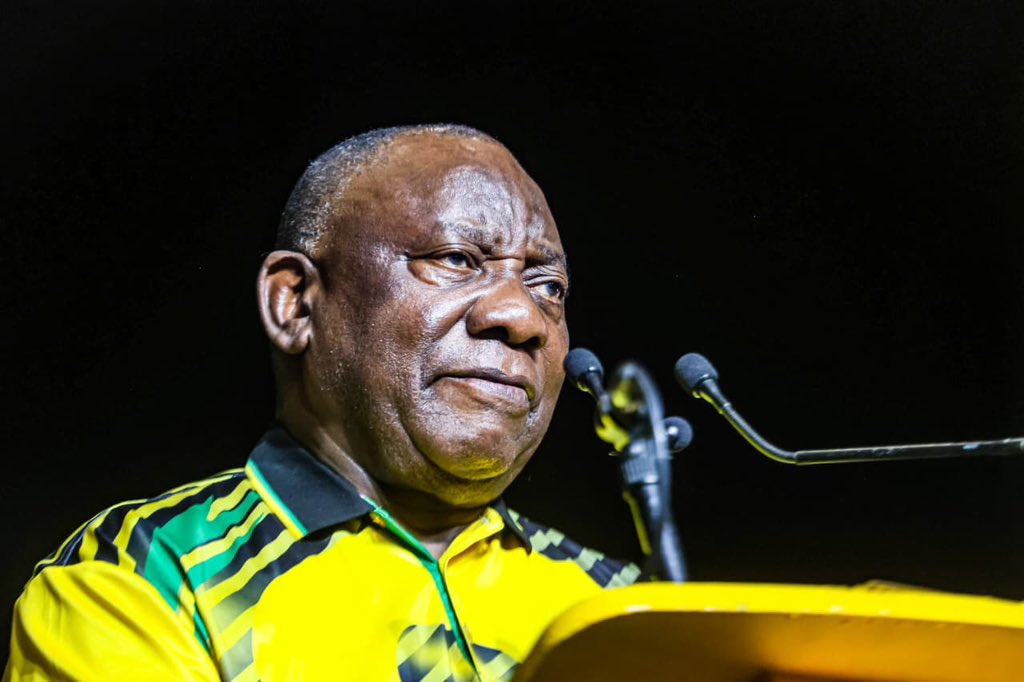
If ever there was a time an ANC January 8 Statement had to stick, resonate, and get the country behind it, it has to be the 2026 statement set to be delivered by President Cyril Ramaphosa at Maruleng Stadium, outside Rustenburg, this weekend.
The statement traditionally sets the tone for the year and outlines the party’s goals and priorities for the year ahead, but this is not an ordinary year. It’s a local government election year, and the party exited the previous national and provincial elections badly bruised.
It therefore needs something sellable, and quickly, or it could face the prospect of losing municipalities at the polls.
The good thing is that its leaders — even Ramaphosa — are very much aware of this.
The problem, however, is not awareness, but the ANC putting its money where its mouth is.
So, when Ramaphosa takes to the podium this Saturday, none of that renewal rhetoric and commitment to fight corruption is likely to stick. The country and its followers know the chapter and verse of this promise, and each year it’s an empty one.
In delivering the 2024 national executive committee statement, which is commonly known as the January 8 Statement, Ramaphosa stood in front of throngs of party followers at Mbombela Stadium in Mpumalanga and spoke about increasing inequality and poverty, the rising cost of living, economic instability, and trade wars.
“In 2024, we will focus, working together with the Alliance and all sectors of society, to accelerate the reconstruction of our economy, deliver quality basic services and infrastructure, renew the ANC and society, fight crime and corruption, rejuvenate our nation and contribute towards a better Africa and world,” he said.
Thanks to the Madlanga Commission, we now know that this fight against crime and corruption has to be taken right into ANC structures — because even the event from where Ramaphosa was making these bold statements was sponsored by thugs.
Needless to say, the alliance is in tatters right now, and the South African Communist Party has resolved that it will contest for state power in the upcoming elections, with its general secretary recently admitting that they just don’t see the alliance achieving its goals under the leadership of the ANC.
In 2025, in Khayelitsha, outside Cape Town, Ramaphosa used that January 8 statement to speak of the National Democratic Revolution which, he said — guided by the Freedom Charter — sought to transform South Africa into a National Democratic Society “by eradicating all manifestations of apartheid, colonial and patriarchal power relations”.
Ramaphosa better have a better story to tell this weekend about the NDR, because his allies in the SACP have now told us that this cannot be achieved with the ANC leading the charge.
Although the ANC would want us to believe how important the January 8 Statement is, the truth is that over the years there is little to point to any commitment that has translated into reality. This could be viewed as harsh in some quarters, but the reality is that very little of what is set out is achieved.
One of the major headaches in the party is the internal and factional battles. Ramaphosa in 2024 spoke of a “convergence and common cause between anti-transformation forces and the state capture forces to destroy the ANC within and dislodge it from power”.
This was ahead of the national and provincial elections — elections in which the ANC lost its majority for the first time since the first democratic elections in 1994. Now, this begs the question: why were these forces not dealt with?
He went further: “Part of the counter-revolutionary tactic is to promote break-away parties to erode the support base of the ANC. Some of these parties masquerade as more radical than the ANC, but their revolutionary sounding rhetoric cannot hide the reality that they have common cause with the forces opposing transformation.”
So, when Ramaphosa delivers this year’s statement — which will also unveil the party’s election strategy — it had better come with believable statements.
The ANC has consistently argued that it has not lost its support base, but that its voters simply don’t go to the polls and have developed voter apathy.
With the dwindling support in previous elections, and the most recent ones, perhaps it is time the ANC provided much-needed answers to its supporters who have developed voter apathy.
Perhaps those voters should be told why some of the senior ANC members implicated in the Zondo Commission have still not been charged, and why some of the municipalities in the hosting province have not had water for years.
INSIDE POLITICS



