
25.4 C
Johannesburg
- Advertisement -

Parliament’s Ad Hoc committee to resume next week with new witness list

- Advertisement -

Must read

By Johnathan Paoli

Parliament’s ad hoc committee probing allegations of corruption and criminal infiltration within the criminal justice system has adopted a revised timetable, with hearings set to resume next week Wednesday and at least six key witnesses expected to testify before the inquiry concludes its work in February.

The committee met virtually on Wednesday to finalise its proposed programme, consider recommendations on public participation and assess progress made by its legal team.

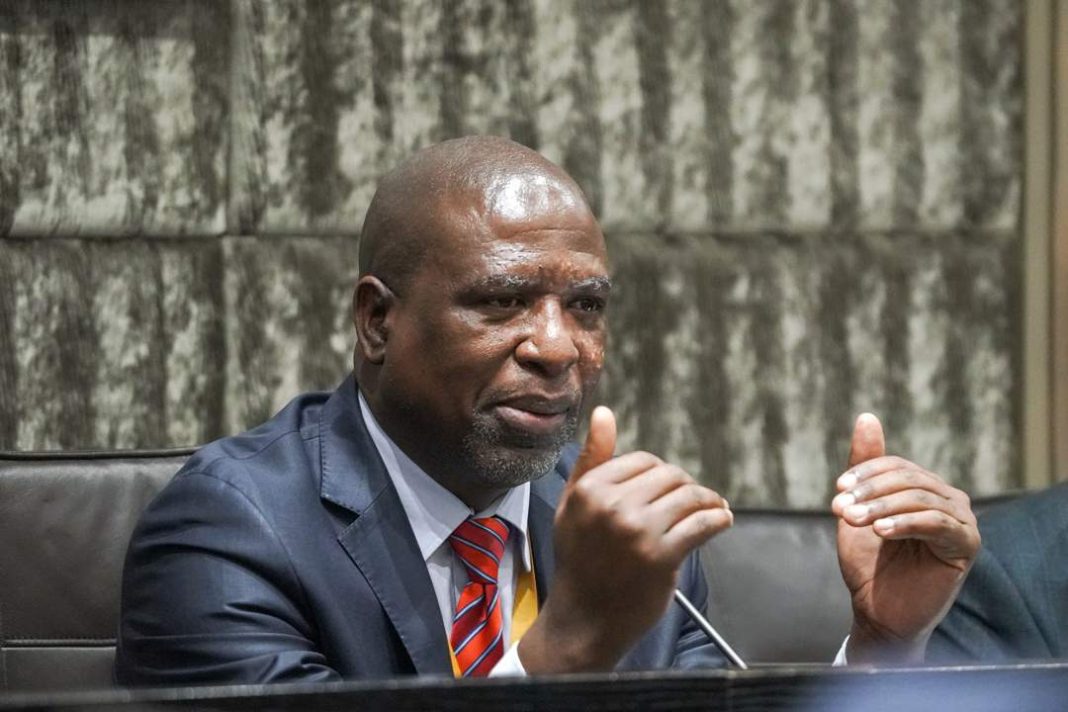
Committee chairperson Soviet Lekganyane confirmed that the inquiry, established to investigate allegations made by KwaZulu-Natal Police Commissioner Lieutenant-General Nhlanhla Mkhwanazi, has been granted a second and final extension until 20 February, placing pressure on MPs to conclude hearings and compile a credible final report within weeks.

“The revised programme will determine whether we finish strong or fall short. This may not be the last meeting, given the scale of work still ahead and the urgency to conclude the inquiry,” Lekganyane said.

Oral hearings are scheduled to run from 14 January to 6 February, with the objective of completing all witness testimony by early February.

This timeframe would allow roughly ten days thereafter for drafting, consultation and finalisation of the committee’s report before the mandate expires.

Chief evidence leader and senior counsel Norman Arendse told the committee that consultations have already been held with all six identified witnesses and that draft statements are at various stages of finalisation.

The witnesses Parliament still intends to hear from are Crime Intelligence head Lieutenant-General Dumisani Khumalo, former national police commissioner Lieutenant-General Khomotso Phahlane, Ekurhuleni Metro Police Department Deputy Chief Julius Mkhwanazi, former Independent Police Investigative Directorate head Robert McBride, North West businessman Brown Mogotsi and private forensic investigator Paul O’Sullivan.

Arendse said in-person consultations were conducted in early December with Khumalo, Phahlane, McBride and Mkhwanazi, while engagements with Mogotsi and O’Sullivan have been conducted virtually due to logistical and security concerns.

The proposed sequencing, provisionally agreed to by the committee, will see Phahlane appear first on Wednesday, followed by Khumalo over the subsequent two days.

Further dates may be adjusted as public submissions are accommodated and evidence unfolds, with Mogotsi’s appearance expected during the final week of hearings.

Arendse noted that draft witness statements had been exchanged with legal teams, despite disruptions during the December holiday period, and that statements from senior police witnesses were expected to be finalised in time for hearings to proceed as scheduled.

At least two potential witnesses, Mogotsi and O’Sullivan, have raised serious security concerns about appearing before Parliament.

Arendse said Mogotsi had previously indicated fears for his safety and that between late December and early January these concerns could not be addressed by Parliament.

He is due to meet virtually with Mogotsi and his legal representative on Monday to prepare for testimony.

O’Sullivan has also expressed grave concerns about appearing in person and is not expected to return to South Africa within the next month.

Despite these concerns, MPs across party lines adopted a firm stance against virtual hearings for key witnesses.

Members unanimously rejected the idea of online testimony, insisting that witnesses must appear physically before Parliament due to the seriousness of the allegations and the committee’s constitutional mandate.

EFF leader Julius Malema suggested that witnesses who refuse to appear should be formally summoned, arguing that Parliament must use every power at its disposal to compel attendance.

“We must be a different kind of committee that deals with the powerful. No one is above the lave. He is going to have to respect the constitution of South Africa and the laws of South Africa,” Malema said.

A major factor reshaping the revised timetable is the committee’s decision to accommodate 15 substantive public submissions through oral hearings, alongside several civil society organisations.

Parliamentary official Nicolette van Zyl Gous told MPs that the submissions reveal systemic patterns of alleged corruption, political interference, intimidation of whistleblowers and weakening accountability across the criminal justice system.

Civil society submissions were received from organisations including Accountability Now, the Institute for Security Studies, the African Policing Civilian Oversight Forum, the Dullah Omar Institute and Gun Free South Africa.

MPs stressed that members of the public should be assisted to formalise affidavits and clarify allegations, rather than being excluded on technical grounds.

Van Zyl Gous recommended allocating at least 40 minutes per oral submission, potentially over one or two dedicated days, a proposal that will require further adjustments to the programme.

As the meeting adjourned, Lekganyane said that the committee would have a possible meeting on Monday ahead of proceedings, and urged members to remain disciplined and evidence-focused.

INSIDE POLITICS

More articles

LEAVE A REPLY

Please enter your comment!
Please enter your name here

Inside Education Quarterly Print Edition

Inside Metros G20 COJ Edition

JOZI MY JOZI

QCTO

Latest article



