
By Simon Nare
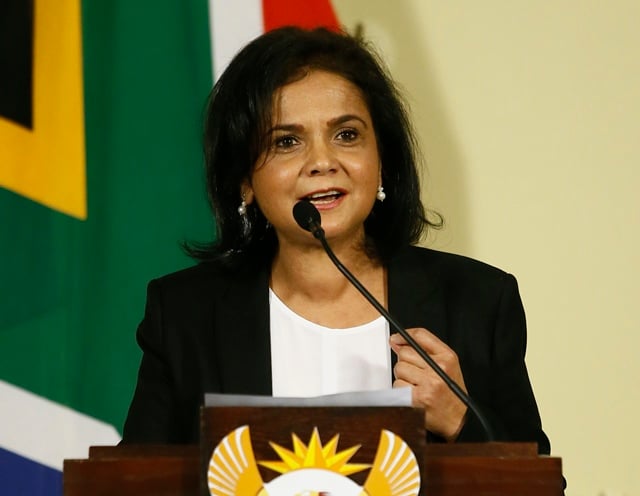
The outgoing National Director of Public Prosecutions (NDPP), Advocate Shamila Batohi, has conceded that the National Prosecuting Authority (NPA) mishandled some high-profile State Capture cases by rushing to court without following due processes to secure solid evidence for successful prosecutions.
Briefing the media on the NPA’s 2024/25 annual report on her final day in office, Batohi acknowledged that she was leaving with unfinished business, including outstanding State Capture cases, unresolved issues around the institution’s operational independence, and capacity constraints in tackling corruption.
The outgoing NDPP said she had not fulfilled her primary mission of finalising State Capture prosecutions—one of her top priorities when she assumed office seven years ago.
Batohi explained that when she took office in February 2019, there was intense pressure to act swiftly on cases arising from the Zondo Commission.
“One of the key priorities from day one in my office was to bring to court and enrol State Capture cases and hold people accountable for stealing from the people of our country,” she said.
“But given the hunger and impatience to see justice—understandably so, because of what emerged from the Zondo Commission—we were trying to do that with an aeroplane that was in flight but had serious problems.”
In hindsight, Batohi said the NPA should have grounded the “plane”, diagnosed institutional problems and fixed them before proceeding.
Instead, she said anxiety, poor planning and the onset of the Covid-19 pandemic—which effectively stalled operations for nearly two years—derailed progress on the cases.
Asked whether she was leaving the NPA in a better position, Batohi said the answer depended on perspective.
“You have to ask what you consider a better position to be. If that better position is that State Capture and other high-profile cases have gone from enrolment through to finalisation, then yes, I agree the NPA is not in a better position,” she said.
She acknowledged that the slow movement of cases from enrolment to conclusion had shaped negative public sentiment about the NPA.
Batohi described the situation as deeply frustrating and suggested that specialised courts were needed to deal with complex procurement corruption cases.
She also criticised the continued use of “Stalingrad tactics” to delay prosecutions, stressing that public confidence in the rule of law is only restored when cases are both enrolled and finalised.
Despite these challenges, Batohi said the NPA had recorded notable successes in recovering billions in proceeds of crime during her tenure, sending a strong message that crime does not pay.
She said the NPA’s strategy focused on dismantling organised crime by imprisoning offenders, freezing assets and recovering illicit funds.
“During this period, the Asset Forfeiture Unit recovered R1.96 billion, of which R1.9 billion was paid into the Criminal Asset Recovery Account,” Batohi said.
She explained that the account receives funds recovered as proceeds of crime, reinforcing the state’s efforts to deprive criminals of their ill-gotten gains.
INSIDE POLITICS





