
By Johnathan Paoli
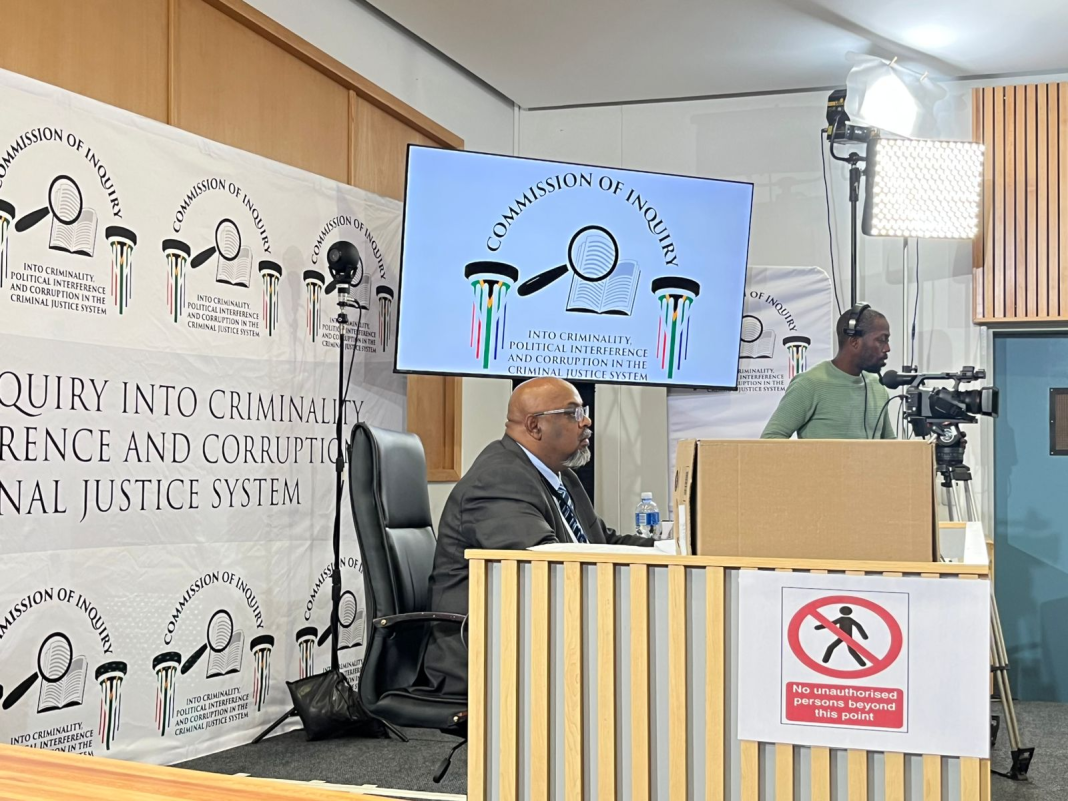
The Madlanga Commission of Inquiry heard on Monday that Ekurhuleni Metropolitan Police Department (EMPD) Brigadier Julius Mkhwanazi faced serious allegations of misrepresenting vehicles from Vusumuzi ‘Cat’ Matlala-linked companies as donations to the city, but disciplinary and criminal action against him was stalled, amid conflicting accounts from city officials.
Advocate Khemraj “Kemi” Behari, head of the City of Ekurhuleni’s Risk and Legal Services Department, was grilled over his department’s role in responding to the Independent Police Investigative Directorate (IPID) preliminary report and the subsequent handling of charges against Mkhwanazi.
Behari sought to downplay the role of his office in the investigation, arguing that the Independent Police Investigative Directorate (IPID) recommendation for disciplinary action against Mkhwanazi could be interpreted merely as a suggestion.
“When I received the report, it was addressed to the chief of police. So, we didn’t get involved in the disciplinary processes there. But I engaged with my DH to say, DH, can you look at the fraud and corruption issues, and then how do we interpret the issue of…what must we do?” Behari told the commission.
Commissioners and counsel were not persuaded.
Commissioner Sesi Baloyi pointedly told Behari, “Why do you care?” when questioning his involvement in the IPID report, stressing that the only action required from his department was to initiate disciplinary proceedings.
Baloyi pressed that Behari’s selective reading of the IPID report ignored its clear directive that the city must submit a report on disciplinary action against Mkhwanazi.
“Your department was not required to do anything at all, except take this disciplinary action,” she said.
Madlanga also criticised Behari’s department for allegedly undermining the criminal process.
“I don’t understand why the city’s draft response to the IPID preliminary report failed to address the instruction to take disciplinary action against Mkhwanazi,” Madlanga said.
He later suggested that Behari’s department may have sought to protect the Brigadier—a claim Behari denied.
Behari admitted he was aware the charge sheet against Mkhwanazi was never served, but claimed he did not know that charges were being withdrawn or that they needed to be served by a specific date.
The proceedings revealed that the IPID report, delivered to the city in September 2023, included disciplinary recommendations and referred criminal evidence to the National Prosecuting Authority.
Behari admitted that his department drafted a response addressing the criminal accusations but insisted it was not involved in enforcing the suspension or the serving of charges.
Commissioners also focused on the misrepresentation of Matlala vehicles.
Madlanga questioned Behari on whether Mkhwanazi’s claim that cars had been donated to the EMPD constituted misconduct. ‘
Behari conceded, that if he was correct, there was no donation because of the misrepresentation, and acknowledged that this alone was sufficient grounds for disciplinary action, though he repeatedly expressed concerns over the “evidence trail”.
Both Nciza and Mapiyeye previously testified that Mashazi ordered the withdrawal of disciplinary proceedings, despite evidence that Mkhwanazi had signed illegal memoranda of agreement enabling Matlala-linked companies to conduct official police functions and use blue lights.
Throughout the session, Behari repeatedly emphasised his concern over whether the case against Mkhwanazi could be proved, rather than contesting the facts themselves.
“It is on its own enough to proceed, but as I said, my looking at it holistically; there were other factors that had to be addressed here,” he told Madlanga, highlighting the tension between the legal process and administrative oversight within the city.
INSIDE POLITICS





