


By Johnathan Paoli
The ANC is considering changes to South Africa and its own Constitution to drive transformation of the country and renewal of the party, it said on Thursday.
“The constitution should be seen as both a key element of the victory of the National Democratic Revolution, as well as a living tool of transformation.
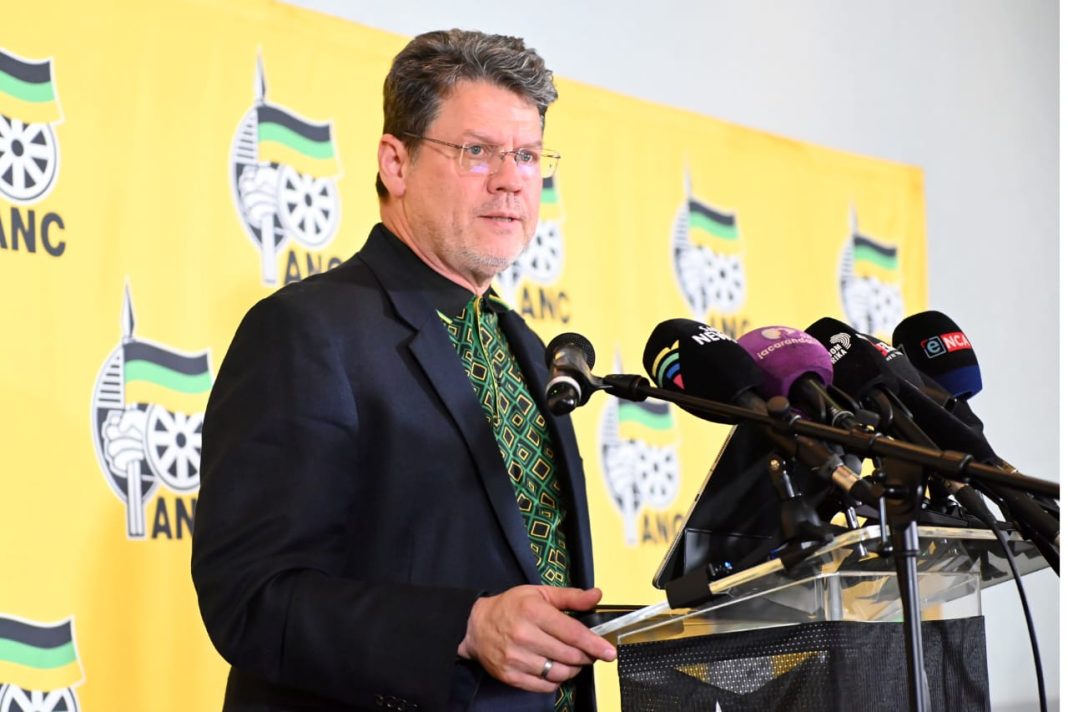
Despite its limitations and challenges, it should not be seen as a constraint, but as a transformative instrument,” said Andries Nel, National Executive Committee member and spokesperson for the party’s Commission on Constitutional and Legal Affairs.
Nel was speaking on the final day of the party’s fifth National General Council (NGC), which started on Monday, and wraps up with the outcomes of commissions on Thursday.
He attacked criticism of the ANC’s constitutional stance from the right, which he claimed was “reactionary narratives that seek to protect privilege”, and the left, saying “we have to defend the Constitution from claims of selling out”.
He said the commission had discussed possible constitutional review in areas including cooperative governance, land reform, electoral reform, immigration and citizenship, and the possibility of changing the National Prosecuting Agency into a Chapter 9 institution.
The ANC will also use the 30th anniversary of the Constitution in 2026, said Nel, to push a campaign to improve access to justice and public awareness of “one of the most progressive constitutions in the world”.
In terms of potential amendments to the ANC’s constitution, Nel said that the NGC did not have the authority to actually implement or propose amendments, and that the commission’s work centred around possible areas of discussion leading to the next National Conference in 2027.
Delegates argued for tougher admission criteria and robust vetting to prevent infiltration, gatekeeping and manipulation of branches, backed by compulsory political induction and ongoing training on ANC values, constitutionalism and governance, he said.
They also pushed for digitised membership systems, stronger verification and strict sanctions for inflating numbers or engineering branch outcomes, as well as leadership reforms including compulsory lifestyle audits across leadership tiers.
A proposal that drew broad interest, Nel said, was a “one member, one vote” system that would allow every ANC member in good standing to elect leaders directly, replacing the long-standing delegate-based system often blamed for patronage and vote-buying.
The commission examined giving the ANC’s Integrity Commission greater independence and binding powers, overhauling the disciplinary system to speed up and depoliticise cases, and formalising the step-aside rule to shield the party from leaders facing legal difficulties.
Nel said the debates showed a movement wrestling with renewal as it sought to align member rights and responsibilities with a “modern, accountable, and ethically grounded” organisational culture.
INSIDE POLITICS