


By Simon Nare
The next few days will reveal whether President Cyril Ramaphosa is hanging on by a thread or still holds meaningful power within the ANC.
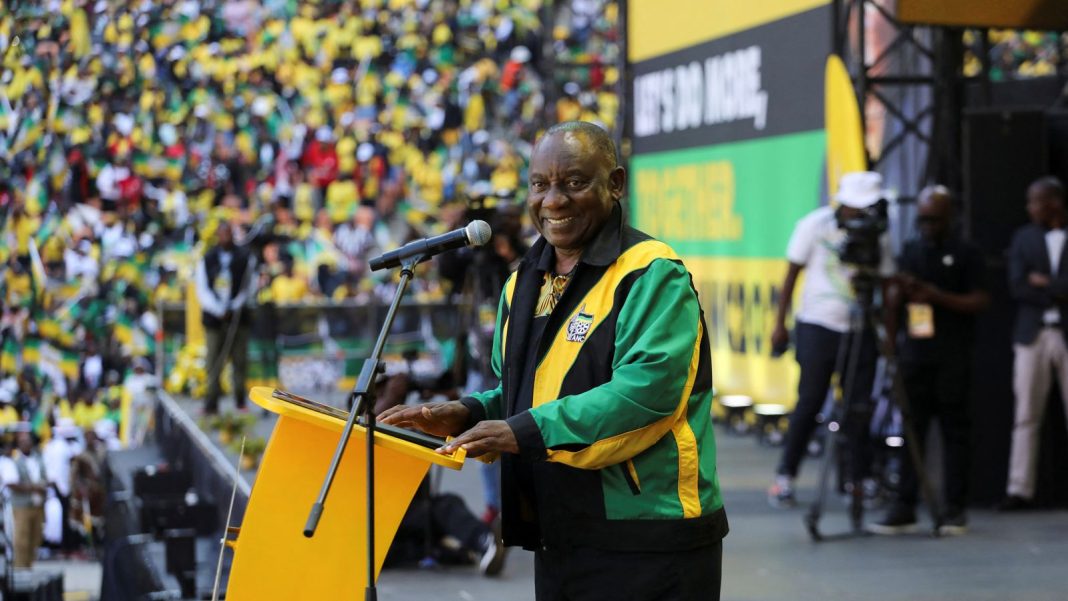
The ANC, the oldest liberation movement in Africa, will hold its five-day National General Council (NGC) from Monday, with nearly 1,700 delegates expected to gather at the Birchwood Hotel in Boksburg, Ekurhuleni.
Ramaphosa enters the party’s NGC fresh from a successful G20 Leaders’ Summit in Johannesburg, where he projected South Africa’s diplomatic stature and won plaudits from global leaders.
At home, however, he faces a harsher reality: a weak economy, rising crime and corruption, and a party in turmoil.
Ramaphosa, a former anti-apartheid activist and trade union leader, must persuade ANC delegates at the NGC that he remains the most credible leader to guide the organisation toward the next Local Government Elections and beyond.
His task is complicated by the ANC’s historic loss of its national majority under his watch during the 2024 general elections and the resulting coalition arrangement with the DA, a decision that has angered many ANC members and alliance partners, including the SACP and Cosatu.
His presidency has also faced an unrelenting series of crises: the split that gave rise to uMkhonto weSizwe (MK Party), the devastation of the Covid-19 pandemic, spiralling corruption scandals, and the establishment of the Madlanga Commission, where even close allies such as suspended Police Minister Senzo Mchunu have come under scrutiny.
The ANC has already lost control of KwaZulu-Natal and is barely holding onto Gauteng, further intensifying criticism of his leadership.
Ramaphosa, on the other hand, should still answer for Phala Phala scandal. The Constitutional Court heard the EFF’s review application on 26 November 2024 but has yet to release its judgment.
An Independent Panel, chaired by former Chief Justice Sandile Ngcobo, found prima facie evidence of a deliberate effort to conceal the Phala Phala crimes, including potential breaches of section 96(2)(b) of the Constitution and section 34(1) of PRECCA.
This week’s NGC is meant to take stock of progress since the last national conference in 2022 and review policy.
Instead, it is also expected to become a battleground for an early succession debate, with factions pushing to remove him and disband the current the current national executive committee (NEC).
Ramaphosa also enters the gathering politically wounded, with his detractors reportedly plotting to use the platform to push him out before his term ends.
Reports of a leadership plot have circulated for the past few weeks.
Alleged “plotters” such as Mondli Gungubele and Health Deputy Minister Joe Phaahla have vehemently rejected the claims, dismissing them as malicious rumours engineered to sow division.
Phaahla called the allegations “utter rubbish and pure hogwash,” while Gungubele said anyone making such claims “needs the best possible psychiatric assessment.”
“I regard the claims that I am plotting to oust President Cyril Ramaphosa as utter rubbish and pure hogwash. In fact, I lack the adjectives to adequately describe their absurdity. These fabrications are the work of desperate individuals attempting to drive a wedge between myself, as an NEC member and lifelong activist of the African National Congress for nearly five decades and my president,” wrote Phaahla.
Gungubele, on the other hand, said: “A suggestion that I am part of a movement to remove the current President of the ANC needs the best possible psychiatric assessment. Because it must be part of sickness to assert falsehood at all costs.”
ANC Secretary-General Fikile Mbalula has also moved to downplay the rumours, insisting the NGC will not entertain any attempt to remove the president.
“There is no such a thing as the removal of the president. If people were trying that tough luck. There is no such a thing. We are focused on mid-term, looking at the weaknesses and Government of National Unity and at the same time to ensure that structures also have an opportunity to reflect on these issues,” said Mbalula.
“But also, the challenges that are imposed on us including by the SACP with this standalone campaign in the coming elections. It’s a complete disaster for us and so, we will reflect on these matters including how this complication of the SACP is really our National Democratic Revolution (NDR).”
Still, whispers in the corridors suggest that some delegates intend to raise the matter from the floor when the agenda is adopted.
Despite the pressure, Ramaphosa is not without allies.
He retains strong backing from the ANC Veterans League, the ANC Women’s League, the ANC Youth League, and provinces such as the Eastern Cape, Northern Cape, Free State, and North West.
His support is weaker in Limpopo, KwaZulu-Natal, Gauteng, and Mpumalanga.
Veterans League president Snuki Zikalala told Inside Politics they would go to “war” to defend Ramaphosa, warning that removing the leadership now would plunge the party into deeper chaos.
He stressed that any motion to remove the president must come from a properly constituted branch resolution—and so far, no structure has formally submitted such an item.
“We are preparing and we are not leaving anything to chance. You can’t bring instability now when we lost the elections. When you remove the leadership that is there, you are going to sink the ANC completely,” argued Zikalala.
However, Zikalala acknowledged the possibility of the matter being raised from the floor.
Eastern Cape Premier Oscar Mabuyane has also dismissed reports linking Phaahla and Gungubele to a coup attempt as “blatant mischief,” though he conceded that if any such move emerges at the NGC, the party must be ready to confront it head-on.
“There is no president that is going to be recalled there. I think the frenzy, the panic and other things, it is meant just to create and intensify the harmful narrative and cause consternation among ourselves,” said Mabuyane.
Cosatu spokesperson Matthew Parks warned that it would be disastrous for the NGC to descend into factional battles when the country faces pressing economic and social crises.
“We wouldn’t take kindly to the NGC focusing on palace politics,” he said.
“The ANC must focus on renewal, cleansing, growing the economy, and creating jobs.”
Inside the recent NEC meeting, Ramaphosa reportedly challenged his detractors directly, daring them to “name the place and time” if they believe he should pack his bags.
Meanwhile, Deputy President Paul Mashatile and Mbalula are quietly consolidating their political bases ahead of the 2027 elective conference.
Their manoeuvring has placed Ramaphosa under additional strain, while long-standing allies such as Mchunu appear increasingly weak.
However, the Sunday Times reported this weekend that National Assembly Speaker Thoko Didiza has formally thrown her hat into the ring to succeed Ramaphosa.
According to the report, Didiza is believed to be favoured by Ramaphosa and ANC national chairperson Gwede Mantashe, among other senior leaders.
Her candidacy is said to be serious enough that she has been introduced to several ANC funders and prominent business figures, including some based in Stellenbosch.
Didiza is also believed to enjoy support from figures aligned to former president Thabo Mbeki inside and outside the NEC.
However, several ANC leaders have dismissed Didiza’s candidacy as “stillborn,” arguing she does not command a solid constituency.
Mashatile is expected to carry Gauteng, North West and parts of Limpopo, while Mbalula is consolidating support in the Free State and making inroads — albeit modest ones — in Mpumalanga.
If Didiza secures support from ANC branches, her slate is expected to include Eastern Cape chair Oscar Mabuyane and a KwaZulu-Natal leader — possibly Mdumiseni Ntuli, Sihle Zikalala or Zweli Mkhize.
As the NGC opens on Monday at the Birchwood Hotel in Boksburg, Ekurhuleni, Ramaphosa confronts a party divided, a reputation battered, and a leadership mandate under threat.
Whether he survives this moment will depend not only on the strength of his alliances but on whether delegates believe he can still rescue a party that is losing power, public trust, and patience.
INSIDE POLITICS