


By Thapelo Molefe
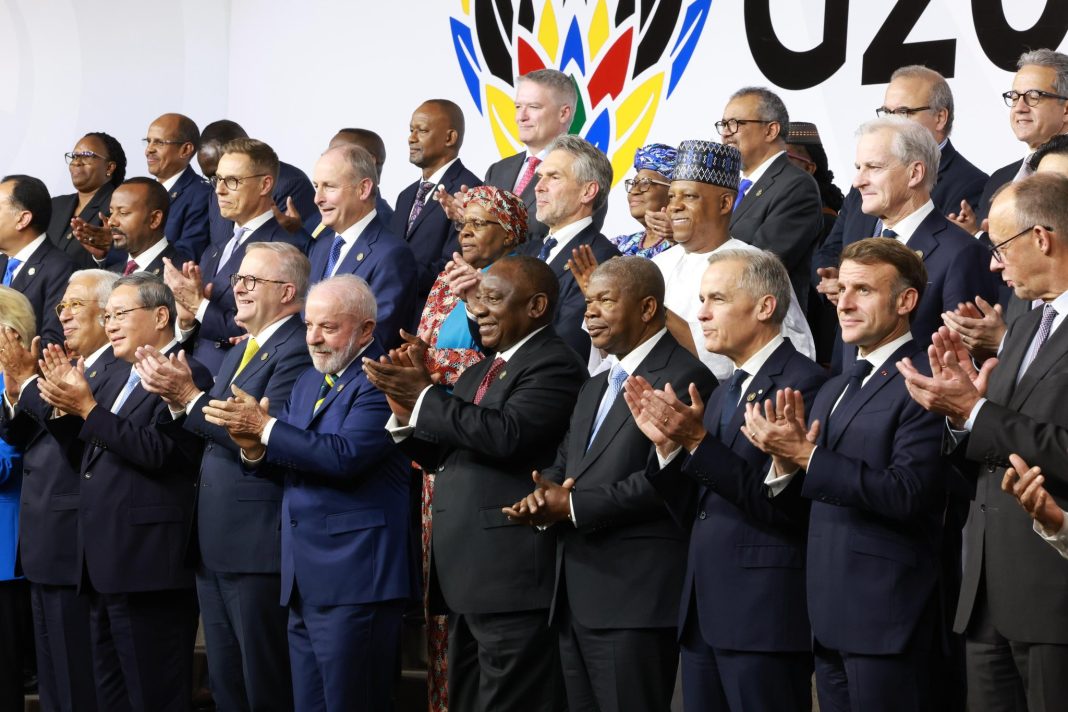
Argentina has raised objections to the G20 Leaders’ Declaration adopted in Johannesburg on Saturday, accusing the summit of violating the group’s principle of consensus and saying that the final text did not adequately account for the structural causes of the Middle East conflict.
The country said that “the principle of consensus… has been violated”.
It said that the Middle East section of the text was “partial,” and “omitted the regional context and the deep-rooted structural causes” necessary for achieving a just, lasting and balanced peace.
South Africa has confirmed that Argentina did formally register a reservation during the negotiations.
“Yes, it is true that Argentina registered reservation, however, the Declaration was overwhelmingly endorsed by the members. Out of the countries present, all countries, except one, endorsed the adoption of the declaration,” Government spokesperson William Baloyi told Inside Politics on Sunday.
The Department of International Relations and Cooperation (DIRCO) has also clarified that despite its objections, Argentina did sign the final declaration.
DIRCO spokesperson Chrispin Phiri said that Argentina had voiced objections during negotiations, like they did in Brazil, but this did not prevent the text from being adopted through consensus among those present.
Phiri said that South Africa does not intend to amend or retract its statement on the adoption of the declaration.
He said early adoption of the declaration had been necessary to clear key issues and allow the summit to proceed.
“There was consensus that this is exactly what we’re here for,” he said.
Responding to Argentina’s position that it does not fully support the declaration, Phiri emphasised that concerns were acknowledged but did not undo the agreement.
“Some of the issues that they have raised are genuine issues… But it doesn’t negate the consensus in the room,” he said.
Phiri also said that the much-discussed Inequality Report was never meant to appear in the Leaders’ Declaration. He said the report “did not appear in the declaration because it is a standalone report” and that it will be presented to the G20 nations separately for their consideration.
South Africa’s G20 Sherpa, International Relations Director-General Zane Dangor, said the declaration remains valid despite Argentina’s objections. Dangor stressed that negotiations were conducted “in good faith” over five days.
He described the situation as unprecedented because “one key member voluntarily absented themselves,” which required the bloc to revisit how consensus is defined in an informal body.
He said the declaration reflects the agreement of leaders who gathered in Johannesburg, and emphasised that aside from Argentina, “nobody else… raised a concern”.
Dangor added that there was “overwhelming support for every single paragraph,” and that the declaration stands just as much as the Brazilian declaration stands.
He reiterated that the G20 remains an informal grouping and that questions about consensus and absenteeism may be taken up during future presidencies.
INSIDE POLITICS