


By Johnathan Paoli
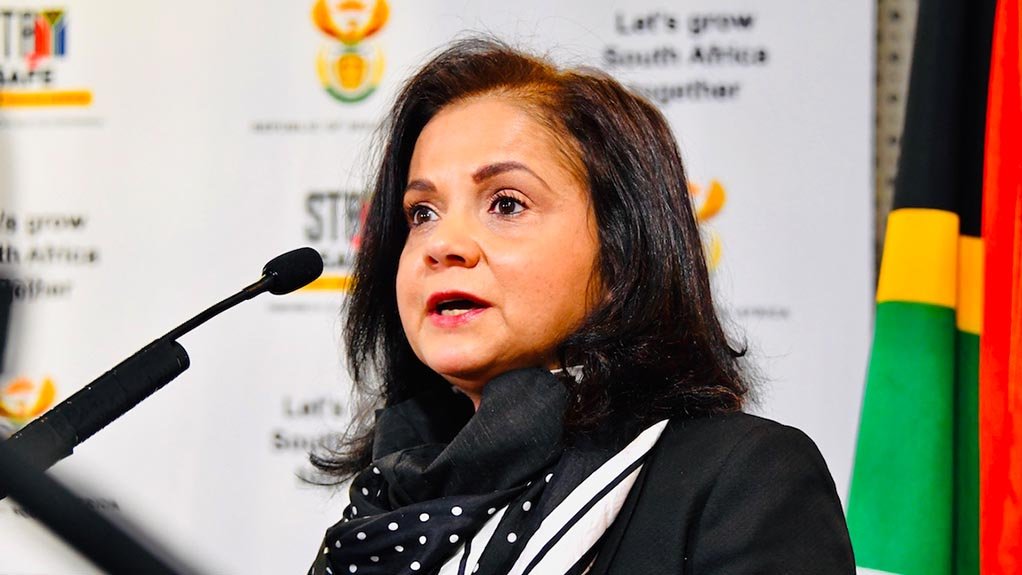
National Director of Public Prosecutions (NDPP) Shamila Batohi faced intense questioning from Parliament during a heated sitting of its ad-hoc committee on Tuesday night, as MPs pressed her on issues ranging from corruption, internal discipline, and political interference.
Also under scrutiny was the controversial arrest of Crime Intelligence boss Lieutenant-General Dumisani Khumalo.
The most contentious issue revolved around the Independent Directorate Against Corruption (IDAC)’s handling of the Khumalo case and its overlap with the Political Killings Task Team (PKTT).
Khumalo and several of his colleagues were arrested earlier this year for allegedly appointing an unqualified civilian to a senior post within the unit.
African National Congress (ANC) MP Xola Nqola asked if a recruitment process could ever justifiably become a criminal matter.
Batohi replied that such a determination depended entirely on the evidence, stressing that IDAC acted on a formal referral and that its investigators did not “go after” Crime Intelligence officials arbitrarily.
“If that referral had not happened, IDAC would not have been involved,” she said.
Batohi admitted she was unaware that Khumalo also served as the coordinator for the PKTT, saying that it was understandable that IDAC head Andrea Johnson would not have known that either.
She implied that the overlap was an operational, not intentional, conflict.
Pressed by MPs on whether President Cyril Ramaphosa had been informed of the arrest, Batohi conceded he had not been briefed, calling it an oversight, in hindsight.
She confirmed that she had personally asked Johnson whether the case against Khumalo was watertight.
Johnson reportedly assured her it formed part of a broader strategic case and that the evidence was solid, rejecting accusations that IDAC’s actions were politically motivated.
Turning to the broader state of the prosecutorial service, Batohi described a disturbing rise in targeted assassinations of prosecutors, confirming that four had been murdered since 2023.
She linked the killings to organised crime networks seeking to infiltrate and destabilise the justice system, echoing earlier warnings that criminal syndicates had “tentacles” across institutions.
Responding to Economic Freedom Fighters MP Leigh-Ann Mathys, Batohi admitted that IDAC’s capacity was stretched to its limits, saying it was barely able to handle the cases it currently has.
While IDAC was made permanent in 2024, the directorate still lacks sufficient investigators, many of whom are seconded from SAPS.
Mathys questioned whether that recruitment practice contributed to resource shortages in the police service; to which Batohi replied that they simply had no choice but to draw recruits from other policing agencies.
She reiterated that oversight of IDAC would soon be strengthened through a new mechanism established by the National Prosecuting Agency (NPA) Amendment Act, which provides for the appointment of a retired judge to review its conduct.
Batohi said the NPA’s ethics hotline was an essential accountability tool.
She confirmed that she had requested advocate Andrew Chauke’s suspension over alleged policy noncompliance in several cases, including those involving former KZN Hawks boss Major-General Johan Booysen and former Crime Intelligence boss, Lieutenant General Richard Mdluli.
She admitted that the NPA still does not have “unhindered access” to the Zondo Commission database, a key obstacle in corruption prosecutions, but said talks were underway to resolve the issue.
Despite the hostile tone of the hearing, Batohi insisted the NPA remained a well-run institution with ethical leadership; conceding that mistakes had been made, but stressing they reflected a learning process, not systemic rot.
Batohi urged the committee to strengthen, not undermine, the NPA’s institutional independence.
“This is the one instrument we have to deal with corruption. If we destroy it, we destroy accountability itself,” she said.
The hearings continue.
INSIDE POLITICS