


By Johnathan Paoli
The cabinet has placed economic reform at the heart of its political message this week, signalling a decisive shift from rhetoric to implementation as the government seeks to convince citizens, investors and political critics that it has a coherent recovery strategy.
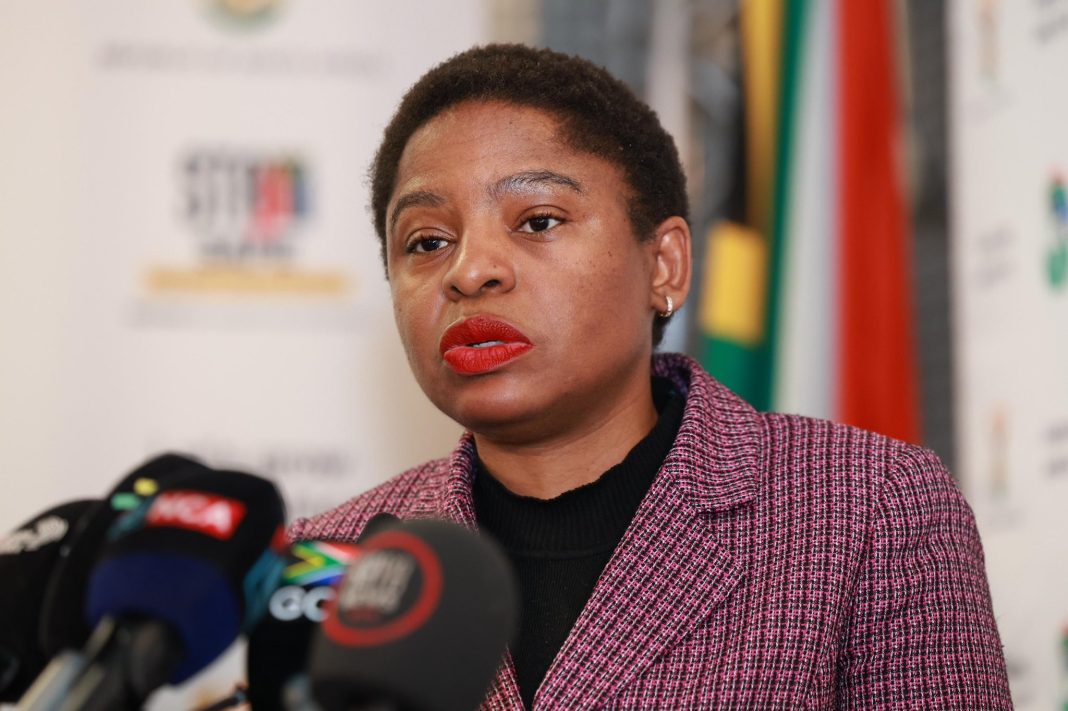
Briefing the media following the Cabinet’s latest meeting, Minister in the Presidency Khumbudzo Ntshavheni cast the sitting as a turning point.
“This Cabinet meeting marks a critical step in stabilising our economy and proving that South Africa is open for business,” Ntshavheni said, framing the decisions as both politically and economically strategic.
Freight rail reform, mining investment, small business support, and preparations for major international events were all positioned as evidence of a government attempting to rebuild a fractured economy under the scrutiny of both domestic voters and international partners.
The centrepiece of the announcement was the approval of a White Paper on Freight Logistics. For years, freight rail has been a symbol of state incapacity, with collapsing Transnet operations costing the economy billions.
Cabinet’s move to liberalise access to rail infrastructure and invite private participation represents one of the most significant economic policy shifts since the democratic transition.
The political stakes are high. The reform is not only about logistics but about whether the state can execute bold, market-facing decisions without succumbing to vested interests.
Opposition parties are likely to seize on delays or failures as proof that the government lacks political will, while business has already signalled cautious optimism.
Mining also took centre stage, with cabinet endorsing the establishment of a “Frontline Service in Mining” to accelerate licensing and ensure transparency in the allocation of exploration rights.
The move is clearly designed to counter investor frustration and political criticism over bureaucratic inertia.
The sector remains critical to South Africa’s economic and political fortunes, especially with mineral royalties funding key state programmes.
Yet, the initiative comes amid pressure from opposition parties and civil society demanding tougher action on illegal mining and corruption within licensing bodies.
Cabinet’s approval of a new SME Policy Framework was framed as part of its agenda to tackle unemployment and inequality.
With small businesses seen as the backbone of inclusive growth, the government is attempting to reposition itself as the champion of ordinary entrepreneurs rather than big corporates.
Politically, the announcement resonates with the governing party’s electoral base, where frustration over joblessness remains high.
Ntshavheni emphasised that the framework would cut red tape, improve access to finance, and foster township and rural enterprises.
The Cabinet also endorsed the Women’s Economic Assembly (WECONA) strategy, reaffirming commitments to ensure women-owned businesses access state procurement and private sector opportunities.
In the context of ongoing gender-based violence and economic exclusion, the move carries significant political weight.
The announcement comes just weeks after the Women’s Month commemorations, underscoring the political optics of aligning Cabinet’s economic reform agenda with gender equity.
Analysts note, however, that real credibility will depend on whether procurement data and contracts reflect these commitments in practice.
Beyond policy, Cabinet devoted considerable attention to international sporting and cultural events.
The ICC Men’s T20 World Cup, the Mandela Remembrance Walk and Run, and the bid to host the 2027 Rugby World Cup were all framed as opportunities to boost tourism, national morale, and international visibility.
While seemingly soft politics, these events play into the governing party’s broader strategy of showcasing South Africa as a capable, unified nation despite domestic turmoil.
Yet opposition parties often dismiss this emphasis as “bread and circuses,” arguing that elite sporting events do little to resolve structural crises.
South Africa’s preparations to host the G20 in 2025 received prominent attention, with Cabinet approving logistical and diplomatic plans.
The government is keenly aware that the G20 represents not only an economic opportunity but also a political stage to project South Africa as Africa’s diplomatic leader.
Cabinet’s announcement deliberately linked G20 hosting with domestic economic reform, presenting a narrative of South Africa as both a reforming state at home and a credible voice abroad.
The breadth of announcements reflects more than policy housekeeping; it is a bid by Cabinet to craft a political story of action, modernisation, and reform.
By foregrounding freight reform, mining licensing, SME development, and women’s empowerment, the government is seeking to counter a narrative of drift and indecision.
The next months will test whether the announcements translate into delivery or remain another set of promises.
INSIDE POLITICS