


Inside Politics Reporter
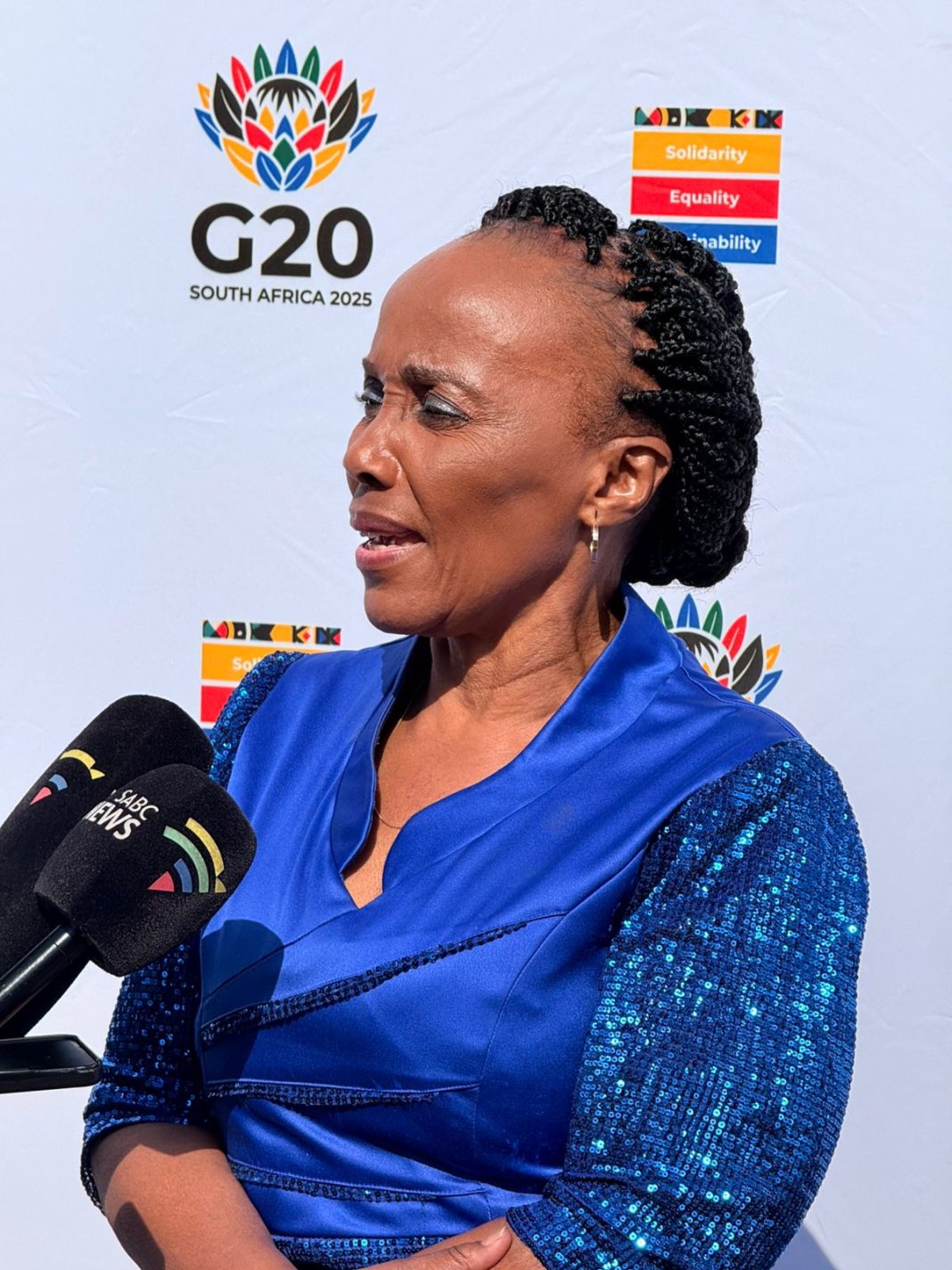
The Minister in the Presidency for Women, Youth and Persons with Disabilities, Sindisiwe Chikunga, told a gathering of parliamentarians on Monday that women must move from the margins to the centre of decision-making on climate and energy transitions, warning that exclusion would “sabotage the very resilience we seek to build”.
Speaking at the P20 Women’s Meeting at the Kogelberg Conference Centre in Kleinmond, Chikunga said: “As we move closer to the G20 Leaders’ Summit, it is purposeful dialogue such as today’s meeting that will guarantee that the impact of our Presidency – both in policy and in practice – is felt well beyond declarations.”
She said that women leaders remained “few and far between” in climate action and energy policy. “Yes, representation matters, role models matter, but the issue here is bigger than representation. Both science and humanity suffer when women are excluded from all areas where decisions are made and power is exercised,” she said.
Chikunga said climate change was now “our immediate lived reality,” citing flooding in KwaZulu-Natal and the Eastern Cape. “Cyclones in Mozambique, droughts in the Horn of Africa, and recurrent floods across Southern Africa continue to expose how women face disproportionate risks of displacement, violence, and impoverishment during crises.”
Entrenched inequalities meant women bore the heaviest burdens, she said.
“It is precisely because women carry these unequal burdens that their leadership must be placed at the heart of climate and energy justice.”
The World Bank’s Groundswell Africa Report estimates that by 2050, Africa could face as many as 86 million climate migrants, with women and children comprising the majority, she said.
“The UN’s Food and Agriculture Organisation (FAO) has already cautioned that climate change is placing unprecedented strain on food systems: 278 million Africans currently face food insecurity, with women-headed households bearing the worst brunt. In other words, the absence of concrete action on our part will only deepen inequalities, destabilise our economies, stunt much-needed growth and further breed instability.”
She said setbacks were most visible in the 2024 Sustainable Development Goals Progress Report, particularly on gender equality, water and sanitation, clean energy, and climate action. “Only 15.4% of SDG 5 indicators are on track to be met by 2030, with particular regression in women’s economic empowerment and political participation.”
Chikunga linked Africa’s climate and energy challenges to colonial legacies of resource exploitation. “We inherited economies dependent on this apparatus of exploitation, the results of which continue to perpetuate cycles of dependency and vulnerability,” she said.
She pointed to the reliance on firewood and charcoal in many communities, saying: “The World Health Organisation estimates that indoor air pollution from biomass fuels kills 3.8 million people annually, the majority being women and children.”
Climate finance also reflected inequality, she said, with “only a small fraction of resources directly accessible to women’s organisations,” while large-scale projects remained “dominated by male-led enterprises and governments”.
South Africa’s National Development Plan 2030, she said, recognised that resilience required “decreasing poverty and inequality, increasing levels of education, improving health care, promoting skills development and enhancing the integrity of ecosystems.
Quoting President Cyril Ramaphosa’s State of the Nation Address, she said: “Our government is implementing a Just Energy Transition, not only to reduce carbon emissions and fight climate change, but to create growth and jobs for our people. Government will undertake this transition at a pace, scale and cost that the country can afford and in a manner that ensures energy security.”
She said women had to be placed at the centre of major renewable energy and green industrial projects, using as examples the country’s Just Energy Transition Investment Plan and the African Development Bank’s Affirmative Finance Action for Women in Africa. “These interventions show that financial inclusion is not a side issue – it is the gateway to ensuring women lead in climate and energy transitions,” she said.
Under South Africa’s G20 Presidency theme of “Solidarity, Equality, and Sustainability,” she said the Empowerment of Women Working Group had set three priorities: recognising the care economy, promoting financial inclusion, and tackling gender-based violence and femicide.
“We know that women spend an estimated two to ten times more hours than men on unpaid care work, significantly limiting their ability to pursue paid employment, education, and leadership opportunities,” she said. “If unpaid care work were compensated, it would account for approximately 9% of global GDP.”
INSIDE POLITICS