


By Johnathan Paoli
The Constitutional Court has denied the uMkhonto weSizwe Party (MKP) direct access in its urgent application challenging President Cyril Ramaphosa’s decision to place Police Minister Senzo Mchunu on special leave.
It also challenged the appointment of Professor Firoz Cachalia as acting police minister, and establishment of a judicial commission of inquiry into alleged political interference in police operations.
Justice Steven Mathopo delivered the ruling on Thursday, effectively ending the MKP’s attempt to escalate the matter straight to the Constitutional Court without first going through the lower courts.
“The Constitutional Court has considered the application for exclusive jurisdiction and direct access. It has concluded that the application does not engage the court’s jurisdiction and no case has been made out for direct access. The following order is made: Direct access is refused. Costs are reserved. Reasons for this order shall be given at a later date,” Mathopo said.
The ruling comes amid a politically charged dispute following serious allegations made by KwaZulu-Natal police commissioner Lieutenant-General Nhlanhla Mkhwanazi, who claimed that Mchunu and deputy national commissioner for crime detection Shadrack Sibiya interfered in operational police matters.
In response, Ramaphosa placed Mchunu on special leave, appointed legal academic Cachalia as acting Police Minister and established a judicial commission to probe the allegations.
The MKP sought to invalidate all three executive decisions, alleging they were unconstitutional and politically motivated.
The party had hoped to fast-track the matter by bypassing the High Court entirely, citing urgency and national importance.
MKP senior counsel Dali Mpofu explained the party’s view in terms of the legal distinction for their approach.
“There is a difference between exclusive jurisdiction and direct access. Exclusive jurisdiction is when only this court has authority. Direct access is when lower courts do have jurisdiction, but the applicant argues there are compelling reasons to approach the Constitutional Court directly,” Mpofu said.
He added that the party believed the nature of the issues, particularly those raised by Commissioner Mkhwanazi, were of “sufficient national significance” to warrant direct access.
Mpofu referenced previous cases where direct access had been granted such as the Nkandla case, the secret ballot case and the Zondo Commission.
“Nobody asked why those cases didn’t go to the High Court first. Why now?” he asked.
However, the court found that the matter did not meet the threshold for either exclusive jurisdiction or direct access, effectively suggesting the MK Party should first have approached the High Court.
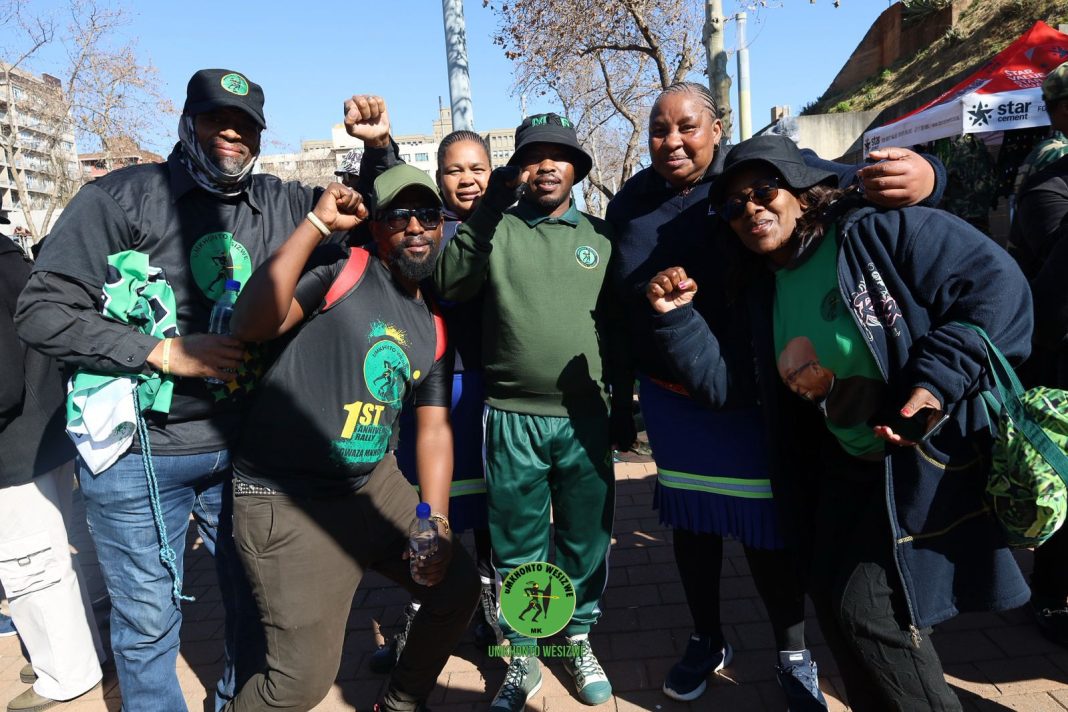
MKP spokesperson Nhlamulo Ndhlela expressed disappointment and outrage at the decision.
“Look, we have to consult. This is a very serious issue. We’re going to consult. I need to consult with the national officials, obviously with our legal team, but as to what the next steps are. But in this country, quite honestly, this is more than anything else, just a travesty of justice,” he said.
Ndlela reiterated the party’s political response strategy, which included a motion of no confidence in Ramaphosa that has been tabled in Parliament.
He warned that street-level mobilisation could follow.
“In Parliament, we obviously now have tabled a motion of no confidence against the president. We mentioned that we are obviously going to take it to court, which is this case. And then the other one was that it’s going to be to the streets,” he said.
Pressed about their next legal steps, Ndlela was cautious, saying consultations would take place with national officials and legal advisers before any new course is pursued.
Mpofu did not rule out further legal action, hinting that the matter may yet be pursued in a lower court.
Despite the legal setback, the MK Party is unlikely to let the matter rest ahead of the local government elections on the horizon and national tensions simmering over issues of governance, policing and accountability.
INSIDE POLITICS