


Simon Nare
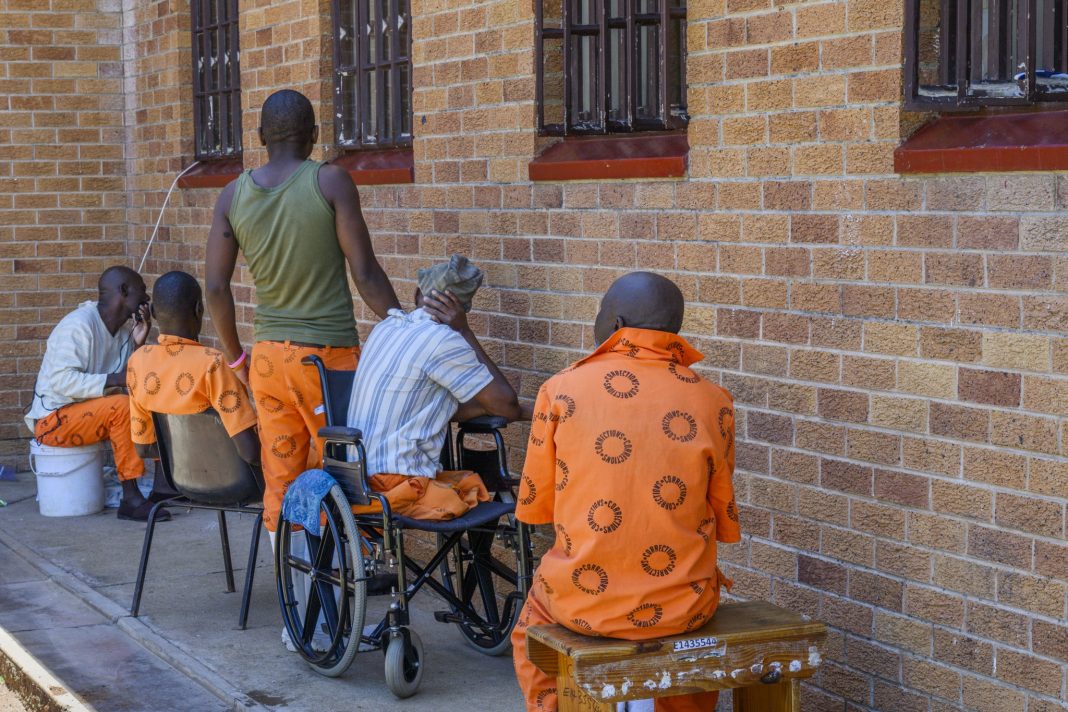
The Portfolio Committee on Correctional Services has told the department to find innovative ways to deal with overcrowding in South African prisons, and to collaborate with other departments in the justice cluster to do so.
Committee chairperson Anthea Ramolobeng said this week that building new prisons could not be the only solution, because even the facilities that were in existence were not being properly maintained.
“Is it the best solution…building more prisons? And if it’s not the best solution, how are we going to mitigate the current challenges that we are having? And if it is the best solution, what is the quickest way to ensure the building process does not take time?”
She relayed horrific conditions in prisons that were witnessed during oversight visits, and spoke of a female prisoner in Mthatha, Eastern Cape, who had been an awaiting trial prisoner for seven years, while her co-accused had already been released on bail.
She told of another inmate, also a female, who had been an awaiting trial prisoner for five years. Ramolobeng said the justice system had to find ways to release inmates charged with petty crimes on bail, or convicted ones on parole.
“Really, it’s some of these issues that the justice system needs to assist on. We are really shocked in that aspect. I don’t know how the lady of seven years has managed to pull herself together. I think I would have collapsed,” she said.
She said the justice system must in the coming year reflect on awaiting trial prisoners who had been held for more than two years and “look into” foreign nationals who are serving time in South African prisons.
Overcrowding is a thorny issue in South African prisons, with the rate reportedly at between 46% and 48%. Contributing factors include a large population of remand cases, a significant number of foreign inmates, and prolonged court delays.
The overcrowding has led to deteriorating living conditions marked by poor sanitation, rising violence, and, in some cases, inmate suicides.
Correctional services minister Pieter Groenewald told the committee that when he took over the portfolio last year after the establishment of the Government of National Unity, he found a department that had been “neglected”.
He pointed to a backlog of 495 applications for parole, the conditions of the facilities, lack of a proper budget — which in the previous five years had been cut by R11,7 billion — and the increase in inmate population.
“[Y]ou have an increase of inmates and you have the statistics of 104 000 sentenced offenders… and more or less 60 000 remand detainees, where six people are waiting more than 10 years in terms of finalising their court cases. It gives you a picture of neglect. That’s what I mean by neglect,” he said.
Groenewald did, however, give his department a pat on the back, saying that in the year in review, the team had tried its best and that the parole backlog of 495 had been dealt with and was currently up to date.
He told the committee that the turnaround date for finalising parole application was now down to four days after the completion of the process, which he described as an improvement.
The minister said there were many challenges facing the department, but it was making inroads. He pointed to raids in prison cells which led to the confiscation of contraband, including 40 000 cell phones.
“People are saying what is going on in prisons? What is going on is that people are smuggling in cell phones, which is illegal. But the fact that so many has been found is actual proof that we are at work,” he said.
According to the department’s presentation to the committee, 96.5% of inmates were male and 37%, or 62 000 offenders, are unsentenced. Gauteng has the most inmates at 24% followed by the Western Cape at 18%. Limpopo, Mpumalanga, North West and KwaZulu-Natal tied at third place with 16% and Eastern Cape with the lowest population.
Of the population, juveniles aged 18 to 25 make up 10%, while the majority (87.5%) are between 26 and 59.
INSIDE POLITICS