
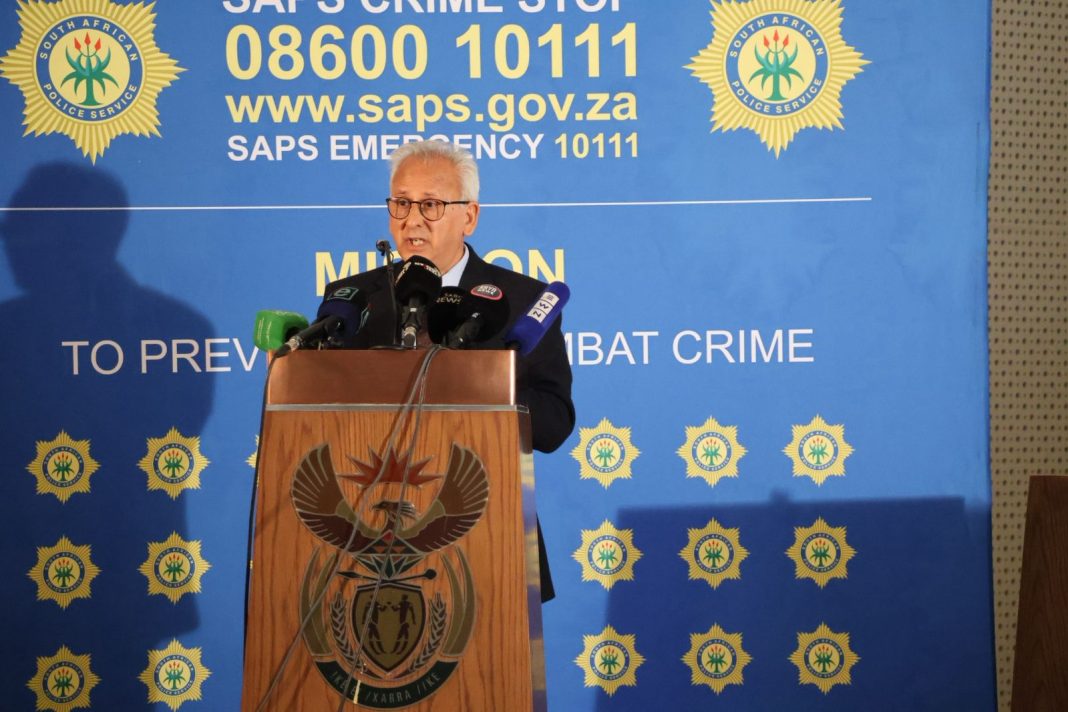


By Thapelo Molefe
South Africa’s battle against gender-based violence (GBV) is far from turning a corner, with SAPS recording a slight increase in rape cases during the second quarter of the 2025/26 financial year.
Although the rise is statistically modest, Police Minister Professor Firoz Kachalia said that sexual offences remain “stubbornly high”, despite encouraging drops in other violent-crime categories.
The latest data shows 22 more sexual-offence cases than the same period last year, bringing the total to 12,787. Within this category, rape cases decreased by 37, but SAPS recorded increases in attempted sexual offences (up by 50) and contact sexual offences (up by 31), factors which pushed the overall total upward.
Four provinces registered increases in rape reports: the Eastern Cape (+109), Mpumalanga (+59), Limpopo (+49) and the Northern Cape (+22).
The Eastern Cape now carries the highest rape rate in the country at 23–24 per 100,000 people. Gauteng recorded the lowest rate at 12 per 100,000.
Station-level data again highlighted persistent hotspots.
Thohoyandou, Inanda, Plessislaer, Umlazi and Lusikisiki make up the national top five precincts for reported rape cases, three of them in KwaZulu-Natal, where police say social-crime drivers remain entrenched.
An in-depth analysis of a 7,204-case sample reveals that rape overwhelmingly occurs in familiar spaces. 4,562 cases, accounting for more than 60%, took place at the perpetrator’s residence, while 1,476 occurred in public places such as streets or parks.
A concerning 114 rapes occurred in educational settings, including schools, special-needs institutions and tertiary campuses. SAPS also recorded 66 rapes at liquor outlets, reaffirming the link between alcohol use and violent crime.
Overall, 1,278 rapes were confirmed to involve alcohol use by the perpetrator, victim or both. Drugs were involved in a further 137 cases.
Domestic-violence-related rape remains a major driver, with 931 cases involving someone in a romantic or familial relationship with the victim. Of these, 889 victims were women and 42 were men.
INSIDE POLITICS