


By Johnathan Paoli
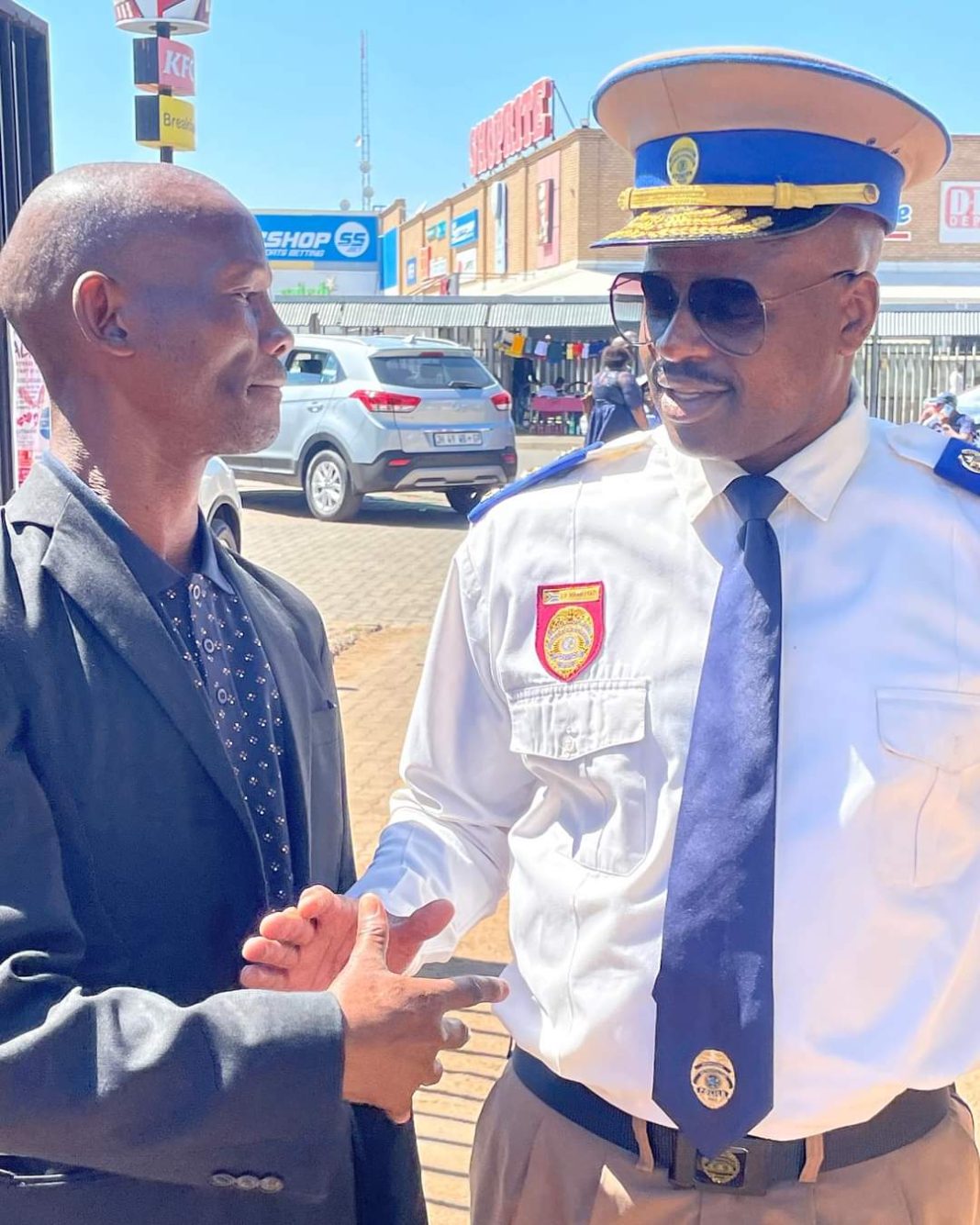
Brigadier Julius Mkhwanazi, controversial deputy chief of the Ekurhuleni Metropolitan Police Department (EMPD), has been suspended with immediate effect, the City confirmed on Tuesday.
Mkhwanazi’s suspension follows months of mounting pressure over the “blue lights scandal” and damning testimony before the Madlanga Commission of Inquiry into police corruption.
The decision comes less than two months after the Ekurhuleni Council voted down a motion calling for Mkhwanazi’s suspension.
At the time, ANC, Economic Freedom Fighters (EFF), and ActionSA councillors insisted that only the city manager had the legal authority to act.
Mkhwanazi’s fall from grace has been brewing since 2023, when he was accused of unlawfully registering luxury vehicles belonging to businessman Vusimuzi “Cat” Matlala as official EMPD assets and fitting them with emergency blue lights.
Although an Independent Police Investigative Directorate (IPID) probe recommended disciplinary action, the city failed to act.
The suspension coincides with new revelations at the Madlanga Commission, where former EMPD executive Revo Spies testified that Mkhwanazi was part of a rogue faction operating within the department.
According to Spies, the EMPD had become leaderless and dysfunctional, with Mkhwanazi acting as a self-appointed de facto chief of police.
During a meeting on 17 August 2023, Spies said city manager Dr Imogen Mashazi “lambasted” EMPD leadership for opening criminal cases against one another, referring to ongoing investigations into Mkhwanazi and his subordinates.
“She [Mashazi] said she could do the same thing; go to IPID and open cases against us,” Spies recalled.
The minutes kept by Spies record that Mkhwanazi accused Chief of Police Isaac Mapiyeye and Spies himself of running the department like a “mess”, adding that “integrity and standards are hiding in cupboards”.
According to the testimony, Mashazi responded by placing Mapiyeye on special leave, a decision Spies says was driven by factionalism.
“It’s clear that the city is on a path of destruction and I don’t want to be part of this anymore,” Spies said, explaining why he opted for early retirement.
Spies also told the commission that Mkhwanazi had unilaterally promoted himself to acting chief of police and appointed over 50 people to senior positions, some of whom lacked the necessary qualifications.
One junior traffic officer, he said, was elevated to brigadier level and placed in his former post despite failing to meet even the minimum police diploma requirement.
Spies’ testimony painted a disturbing picture of rogue operations within the EMPD.
He said a group of civilians, reporting directly to Mkhwanazi, had been allowed to participate in policing duties such as arrests and intelligence gathering.
Some of these individuals even served as “sergeants-at-arms” within the Ekurhuleni council.
He further revealed that EMPD vehicles had been tracked near the Botswana border and in the Western Cape’s Du Toitskloof tunnel, locations far outside the metro’s jurisdiction.
Despite repeated warnings, Spies said, Mashazi and other senior officials failed to act against Mkhwanazi.
Instead, a so-called “forensic investigation” was launched into whistleblowers who had leaked his personal data.
The latest suspension marks a dramatic reversal from just six weeks ago, when the Ekurhuleni Council rejected a motion of no confidence in Mkhwanazi.
That 25 September vote, spearheaded by the Democratic Alliance, African Transformation Movement and the Institute for the Restoration of the Aborigines of South Africa, had called for his immediate removal pending investigation.
But the motion failed 78–65 after ANC, EFF, and ActionSA councillors argued that the council lacked the power to suspend senior officers.
At the time, opposition parties warned that political shielding would only deepen corruption.
Tuesday’s suspension may finally bring the accountability that critics have long demanded, but it also raises new questions about the city’s internal power struggles.
INSIDE POLITICS