


By Levy Masiteng
The Department of Employment and Labour has announced that G20 member countries have committed to reducing the gender gap in labour force participation by 25% by 2030.
This renewed goal is a call for decisive action to address persistent structural barriers that hinder women’s participation in the labour market, according to South Africa’s Employment and Labour Deputy Minister Judith Nemadzinga-Tshabalala.
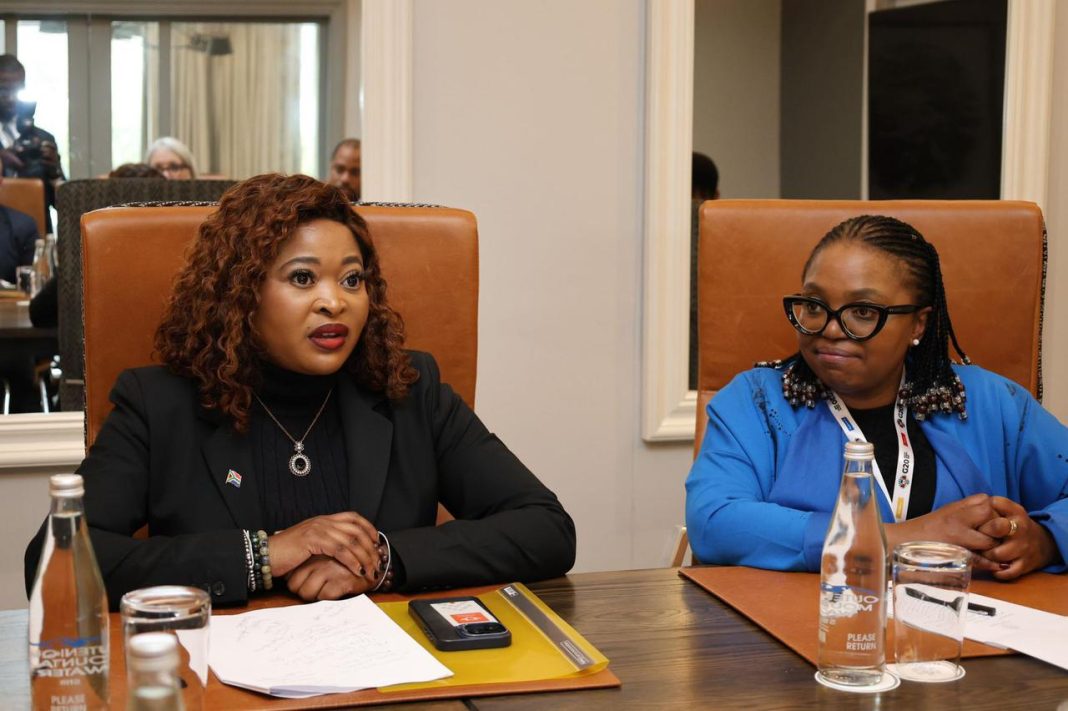
Speaking at the two-day Labour and Employment Ministers’ Meeting (LEMM) held at Fancourt Hotel and Country Estate in George, Nemadzinga-Tshabalala emphasised the need for quality employment and fair labour practices.
The meeting was held under the theme “Living and Working in an Unequal World: Ensuring Decent Work and Decent Lives”.
“We are guided in this effort by international labour standards, including ILO Conventions such as Convention No. 111 on Discrimination in Employment and Occupation, Convention No. 122 on Employment Policy, and Convention No. 190 on Violence and Harassment, to foster fair work environments and support workers with family responsibilities,” Nemadzinga-Tshabalala said in a statement.
The department said to achieve the 25% reduction in the gender gap, the G20 countries would focus on several key areas.
These included strengthening women’s access to quality employment, addressing occupational segregation, promoting women in STEM subjects, investing in the care economy, and advancing equal access to lifelong learning.
“This renewed goal responds to persistent structural barriers and calls for decisive action, including strengthening women’s access to quality employment and active labour market policies, addressing occupational and sectoral segregation, particularly the overrepresentation of women in low-paid, labour-intensive, and informal work,” Nemadzinga-Tshabalala said.
She also highlighted the need to address the persistent and unjustifiable gender wage gap, with a commitment to reducing it by 15% by 2035, benchmarked against 2022 levels, with a possible increase to 35% after a five-year review.
“This means that we now commit to reducing the unadjusted gender wage gap by 15% by 2035… A five-year review will assess whether this target can be increased to 35% by 2035,” she said.
In an effort to address this, the department also mentioned that the G20 countries would need to enforce equal pay legislation, strengthen data systems, promote collective bargaining and accelerate progress through initiatives like the Equal Pay International Coalition.
“The Brisbane–eThekwini Goal is more than a statistical target; it is a call for courage, consistency, and solidarity. As we leave this gathering, let us ensure that one’s gender does not condition the dignity of work, and that our economies are measured not only by growth, but by justice,” Nemadzinga-Tshabalala said.
INSIDE POLITICS