


By Akani Nkuna
The Gauteng infrastructure development department has introduced a comprehensive strategy to transform and accelerate the roll out of social infrastructure across the province.
This strategic shift is designed to accelerate the delivery of critical public infrastructure such as schools, hospitals, clinics and libraries, while ensuring faster, more efficient and accountable project delivery.
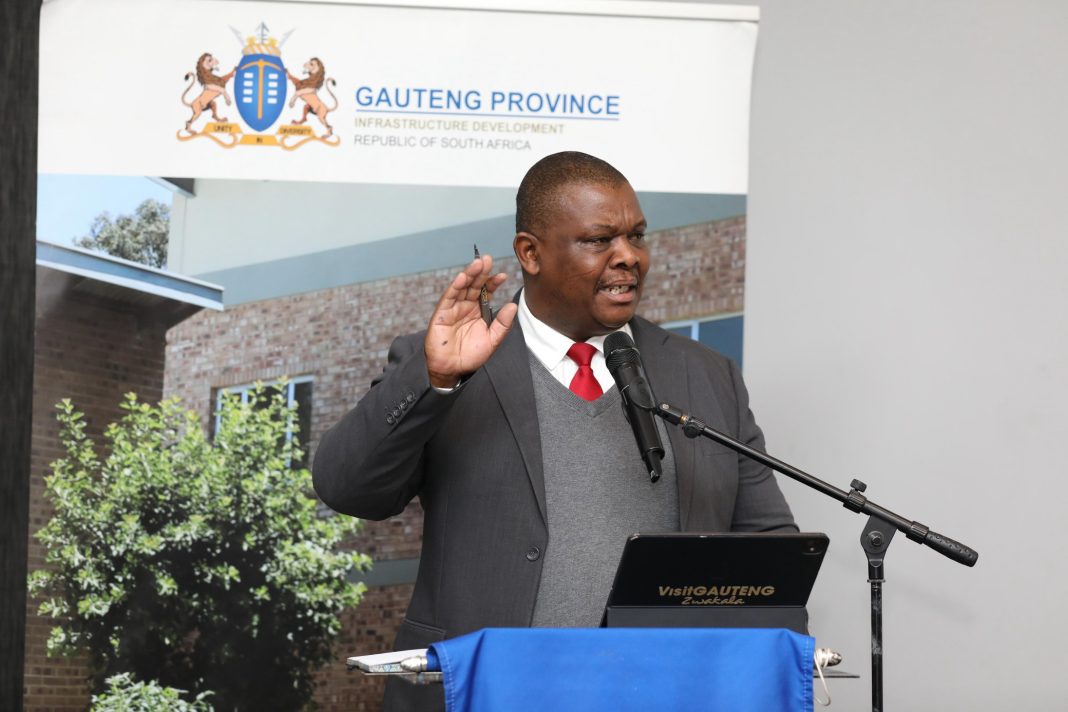
Infrastructure development, cooperative governance and traditional affairs MEC Jacob Mamabolo said on Thursday that the strategy included a unified Infrastructure and Urban Development Framework.
This would enhance intergovernmental coordination and integrate planning, funding and execution.
“This is not change for the sake of change. This is a strategic integration, bringing together DID, CoGTA and the Gauteng Infrastructure Financing Agency (GIFA), to strengthen state capacity and fulfil the premier’s directive to tackle the 13 challenges facing our province,” he said.
Mamabolo said the department was under immense pressure to deliver on projects that had not been completed for various reasons, including a lack of resources.
“DID is currently managing a substantial portfolio of 278 projects on behalf of client departments. Many of these are behind schedule, over budget or inadequately funded,” he said.
“The systems we have introduced in recent months now equip us with detailed, data-driven insights, including portfolios of evidence. This empowers our officials to intervene based on real data, not gut feel.”
The turnaround follows the institutional realignment announced by Premier Panyaza Lesufi, which consolidated DID, GIFA, and CoGTA under a single executive authority.
Mamabolo said alignment enabled the provincial government to leverage the respective mandates and technical capacities of the three entities, which would improve infrastructure delivery across the board.
On the framework, the MEC said it was aligned with the Smart Cities Concept and the National Smart Cities Framework introduced by CoGTA in 2021, which advocated for technology-driven, integrated and citizen-centred infrastructure systems.
At the core of the strategy was the department’s newly introduced Project Readiness Matrix (PRM) Ecosystem. It now served as the official governance framework for infrastructure delivery.
Developed internally by DID teams and aligned to the national Infrastructure Delivery Management System (IDMS), the PRM governs end-to-end infrastructure delivery.
It is anchored on five integrated pillars including a digital tracking device, a unit to enforce contract compliance and a panel of contractors to stabilise and fast-track stalled or underperforming projects.
There will also be a specialised taskforce of engineers, inspectors and technical experts tasked with unblocking bottlenecks and driving delivery excellence, and targeted collaboration with municipalities to address local regulatory issues, land use approvals and compliance certification.
According to the department, the strategic shift was further supported by the recent redeployment of heads of department in the province, which included the appointment of Rufus Mmutlana as the DID HOD.
“I want to acknowledge that this department has faced immense pressure from both internal and external stakeholders. The resilience shown by our officials is commendable, and it is that resilience that has brought us to this point. This strategy represents a new beginning for DID,” said Mmutlana.
INSIDE POLITICS