


By Charles Molele and Thebe Mabanga
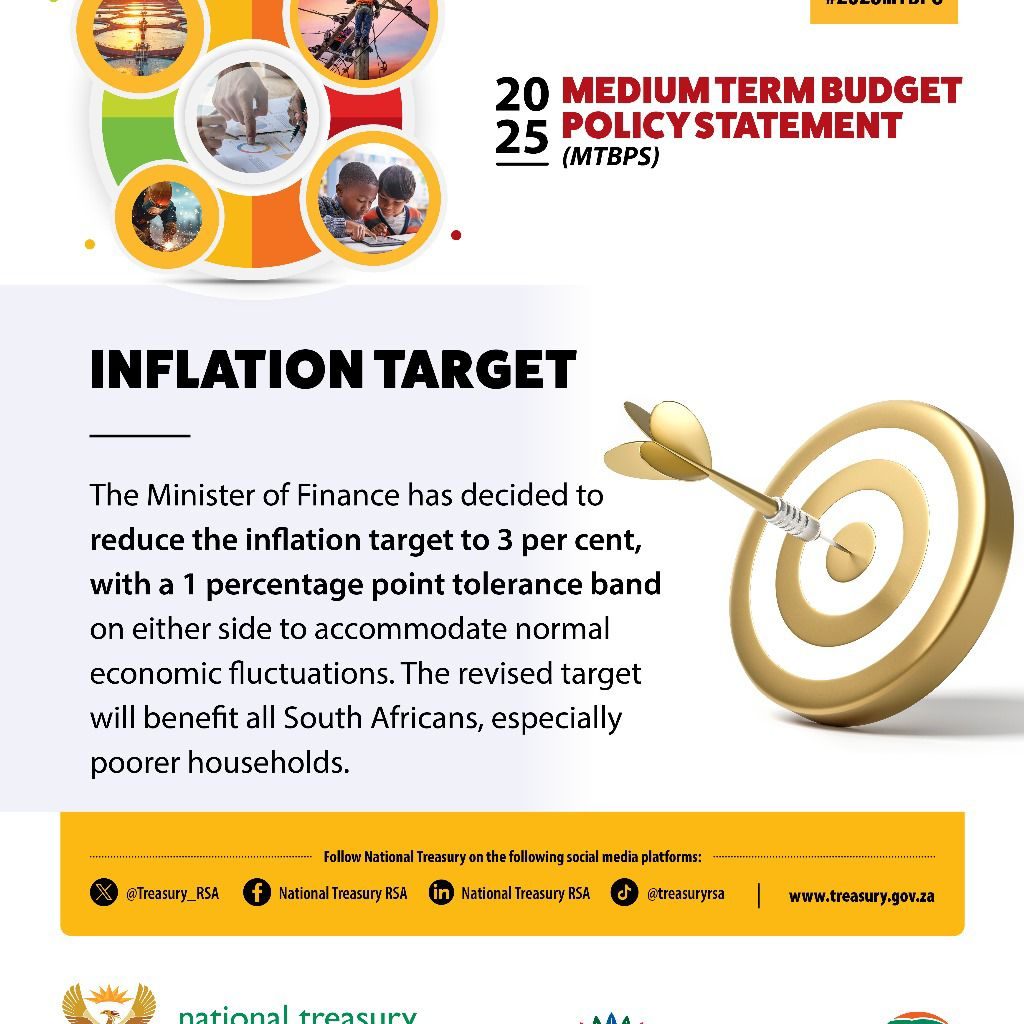
Finance Minister Enoch Godongwana on Wednesday announced a new inflation target of 3%, with a 1 percentage point tolerance band.
The decision, made in agreement with South African Reserve Bank (SARB) Governor Lesetja Kganyago, follows consultations with President Cyril Ramaphosa and Cabinet.
It was confirmed alongside the tabling of the 2025 Medium-Term Budget Policy Statement (MTBPS) in Parliament on Wednesday.
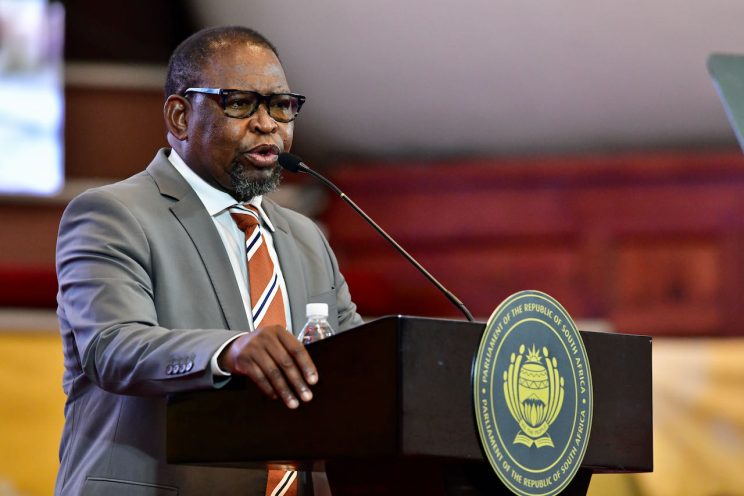
“Today I announce a new inflation target for South Africa of 3 per cent with a 1 percentage point tolerance band,” Godongwana told lawmakers in Cape Town.
“This decision follows agreement between the Governor of the South African Reserve Bank and my consultations with the President and Cabinet. The 1 percentage point band provides flexibility to accommodate any unexpected inflationary shocks. This is in line with South Africa’s approach to inflation targeting, which has always been a flexible one, looking beyond short-run deviations in inflation.”
In a joint statement, the National Treasury and the SARB said the new band “provides flexibility to accommodate unexpected inflationary shocks,” consistent with South Africa’s tradition of flexible inflation targeting.
The move was sparked by Reserve Bank Lesetja Kganyago expressing a preference for a lower target band of 3 %. This is after using the midpoint of the inflation target band of 4,5 % for the past 18 months or so.
The decision also follows a comprehensive review of the inflation-targeting framework by Treasury and the SARB through the Macroeconomic Standing Committee, which assessed international best practices and the appropriate level for South Africa’s target.
The new target replaces the previous 3–6% range and will be phased in over the next two years.
Authorities say the lower target is expected to gradually reduce inflation expectations, paving the way for lower interest rates, stronger household spending, and increased business investment, ultimately supporting growth and job creation.
“While the Treasury acknowledged that the short-term costs include slower nominal GDP and revenue growth, it emphasized that long-term benefits outweigh these challenges, as lower inflation enhances stability and investor confidence,” said Treasury and SARB in the joint statement.
“The SARB will continue to pursue the target on a continuous basis and communicate any deviations, while maintaining close coordination with the Treasury amid ongoing global and domestic economic pressures.”
Earlier, Kganyago said at a press briefing held with Godongwana in Cape Town: “A lower inflation target will help in protecting the value of money,”
Kganaygo added that the SARB’s Quarterly Projection Model (QPM) forecast five 25 basis points cuts over the next two years, but he emphasised that the central bank “did not outsource its decisions to a model.”
Godongwana, who earlier in the process attempted to assert his authority in setting the new target, further suggested that South Africa is already reaping the benefits of lower inflation and lower interest rates.
He also noted that debt service costs in the current year will be R4.8 billion lower than estimated in the 2025 Budget, supported by lower interest rates, lower inflation and a stronger currency.
INSIDE POLITICS