


By Johnathan Paoli
Final regulations to govern the work of the Commission of Inquiry into Criminality, Political Interference and Corruption in the Criminal Justice System, known as the Madlanga Commission, have been gazetted, providing clarity on sensitive issues such as self-incriminating evidence, powers of search and seizure, and penalties for non-cooperation.
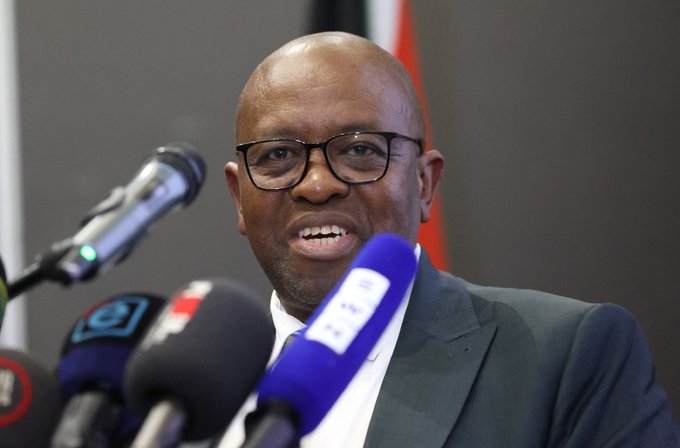
Commission chairperson and retired Constitutional Court Justice Mbuyiseli Madlanga expressed optimism on the successful commencement of the inquiry.
“The Department of Justice and Constitutional Development, which is assisting with procuring the commission’s requirements, is hard at work to ensure that hearings will commence as scheduled. Likewise, the Department of Public Works and Infrastructure is attending to alterations that will make the venue fit for purpose,” Madlanga said.
The Madlanga Commission will begin its work at the Bridgette Mabandla Justice College in central Pretoria on 1 September.
The inquiry will investigate explosive allegations of corruption and collusion within the police and prosecuting authorities, first made public by KwaZulu-Natal police commissioner Lieutenant-General Nhlanhla Mkhwanazi in July.
The regulations set out the rules for how the commission will operate.
Among the most significant is the protection afforded to witnesses who may incriminate themselves while testifying.
Any person who provides evidence before the commission cannot later face prosecution in relation to self-incriminating statements made during testimony.
This safeguard, however, does not extend to perjury or obstruction—witnesses who provide false information or refuse to cooperate may be criminally charged.
The commission has also been granted the power to conduct searches and seizures in pursuit of evidence, a measure underscoring the seriousness of its mandate.
Legal experts note that these powers mirror those used by the Zondo Commission of Inquiry into State Capture, giving investigators significant leeway to pursue evidence of wrongdoing in the criminal justice system.
The commission’s mandate is to probe whether politicians, police officials, or prosecutors engaged in or facilitated criminal activity, or whether they deliberately interfered with investigations.
Its work follows allegations by Mkhwanazi that senior figures within the criminal justice system colluded with criminal syndicates and shielded politically connected individuals from investigation.
At a July briefing in Sandton, Madlanga introduced his core team of investigators, evidence leaders and legal experts.
He pledged that the inquiry would be conducted with transparency and impartiality, insisting that the public has a right to know the extent of corruption within the institutions tasked with upholding the rule of law.
According to the Justice and Constitutional Development Department, the inquiry is expected to cost approximately R148 million over six months.
The department is coordinating logistics, while the Public Works Department is finalising venue adjustments at the Justice College to accommodate public hearings.
Proceedings will be open to the media and the public, reflecting a commitment to transparency similar to previous high-profile inquiries.
The commission is anticipated to run in phases, beginning with testimony from whistleblowers and police officials before moving to politicians and senior prosecutors.
As the countdown begins to the opening of hearings, expectations are high that the commission will shed light on the integrity of the country’s criminal justice system.
INSIDE POLITICS