


By Thebe Mabanga
The Independent Electoral Commission (IEC) has secured its fifth consecutive clean audit as preparations for next year’s local government elections gathers pace.
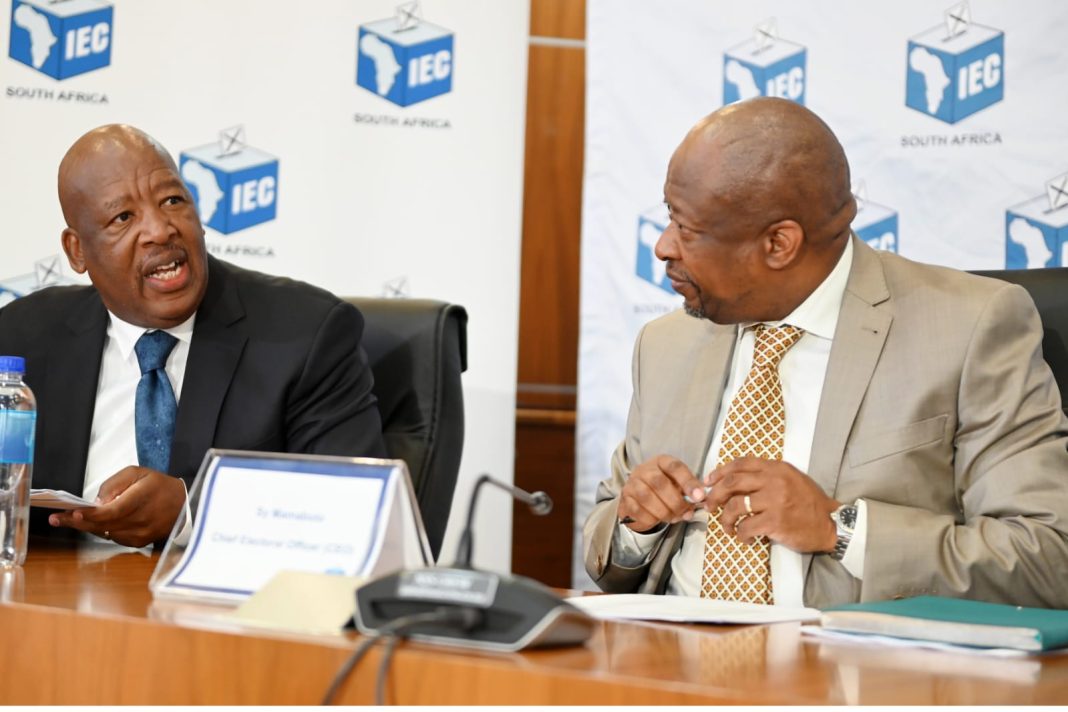
At a press briefing held in its head office on Tuesday, the commission also celebrated women as champions of democracy, affirmed the integrity of last year’s national and provincial election elections as it continues to investigate electronic voting.
Chief Electoral Officer Sy Mamabolo affirmed that the term of municipal council runs for five years and elections must be held within three months of its conclusion.
The current crop was elected at the beginning of November 2021.
“This means that the current term will end on 2 November 2026. Therefore, the general elections of municipal councils fall due between 2 November 2026 and the end of January 2027.” said Mamabolo.
Mamabolo said the prerogative to set the election date lies with Co-operative Governance and Traditional Affairs minister Velenkosini Hlabisa and consultations are currently underway.
He said factors that are considered including ample time for all eligible voters to register or update their details, the minister then looks at factors including whether the period falls in the rainy season, as this will impact logistical arrangements and turnout as well as the availability voting stations, as many are schools.
“Once the MDB provides the final set of wards to the Commission, the Commission will analyse its network of voting districts to ensure that they are geographically aligned to the final ward boundaries in preparation for voter registration ahead of LGE 2026- 2027,” said Mamabolo.
Running concurrent to this process is the demarcation of ward boundaries, a process that is currently being finalised by the Municipality Demarcation Board (DMB).
Provincial MECs then determine the number of councillors pe municipality with half of these to be ward councillors.
In July, Mamabolo presented the report on last year’s national and provincial elections, which, he said, “makes a point that the elections met international standards for freeness and fairness and met the constitutional and legal standards”
Mamabolo noted that 90 million ballot papers were prepared and in the end 16 million voters, or 58% of registered turned out to vote and out of 88 legal challenges to various aspects of the election process, only one remains outstanding in the Supreme Court of Appeal (SCA).
Mamabolo also announced that the Auditor General has just completed an audit for the 2024/2025 financial year, including for statements related to party Political Funding, and gave the Commission a clean audit for the fifth consecutive year.
“A clean audit opinion attests to the fact that the Electoral Commission manages the public resources placed at its disposal prudently and in accordance with the prescripts,” said Mamabolo.
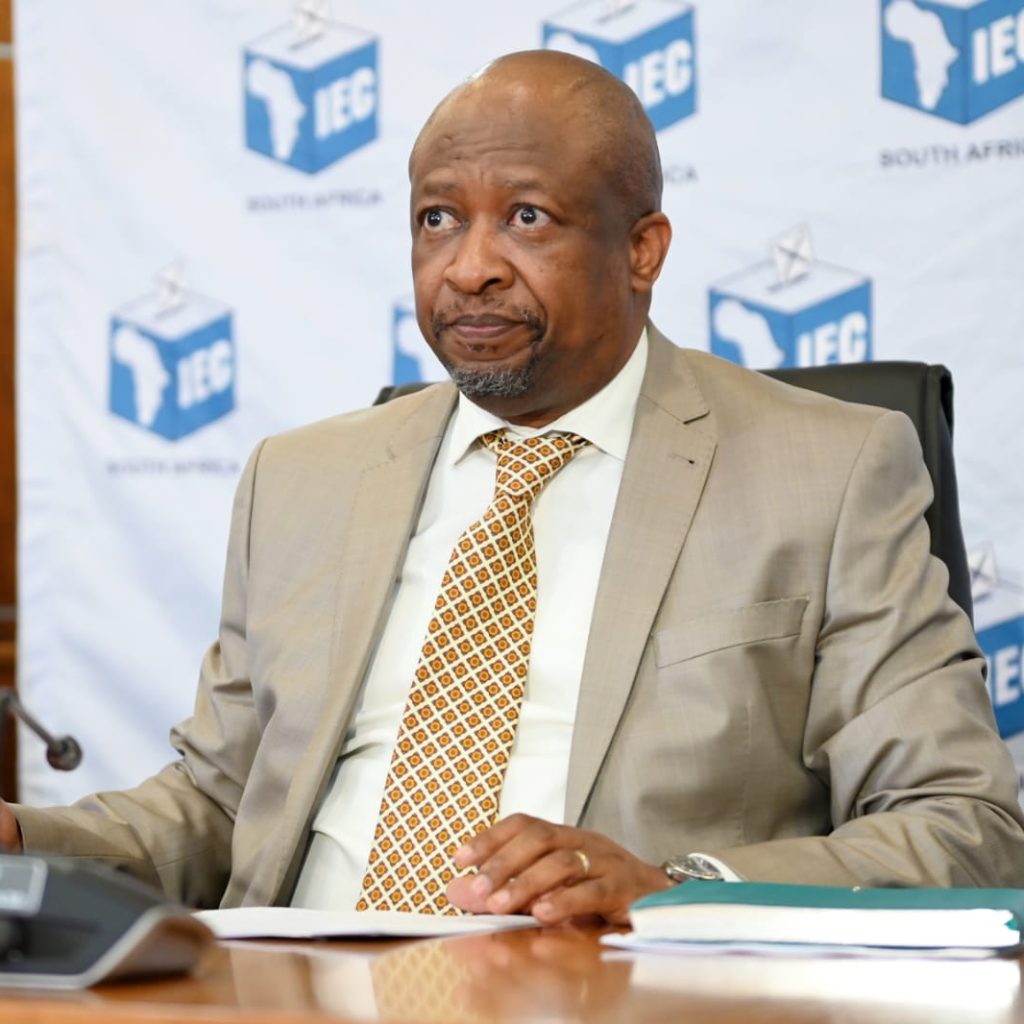
IEC CEO, Sy Mamabolo. PHOTO: Eddie Mtsweni.
Asked by Inside Politics what it takes to secure a clean audit, Mamabolo said: “Stay true to the prescripts, have transparent procurement processes and where you have committees in place, do not interfere with processes you are not supposed to be involved in.”
Since the beginning of April this year, the IEC has administered 39 wards by election and replaced 179 proportional ward representation councillors, compared to an average of 377 in a financial year.
Mamabolo said since the 2024 national elections the Commission has registered, 34 new parties.
“Currently, the total number of registered political parties is four hundred seventy-two (472). Of these, two hundred eighty-seven (287) are registered on a national level, while the balance of one hundred eighty-five (185) are either registered provincially or on the district or metro municipal level. “
Mamabolo paid tribute to women as champions of democracy noting that 55 per cent of the 27.6 million registered voters are women while in the 2024 general elections, 57 per cent of the 16.2 million voters were women.
“Women’s representation in Parliament stands at 43 percent, which marks a regrettable marginal reduction from the previous 46 per cent following the 2019 general elections,” said Mamabolo, who added, “impressively, women continue to constitute the majority of the electoral staff cohort at 73%.”
On Tuesday, the IEC will hold an event celebrating women at the Constitution Hill.
INSIDE POLITICS