


By Marcus Moloko
The Madlanga Commission, chaired by retired Constitutional Court Justice Mbuyiseli Madlanga, has been earmarked as one of the country’s most consequential inquiries into alleged corruption and political interference within the criminal justice system.
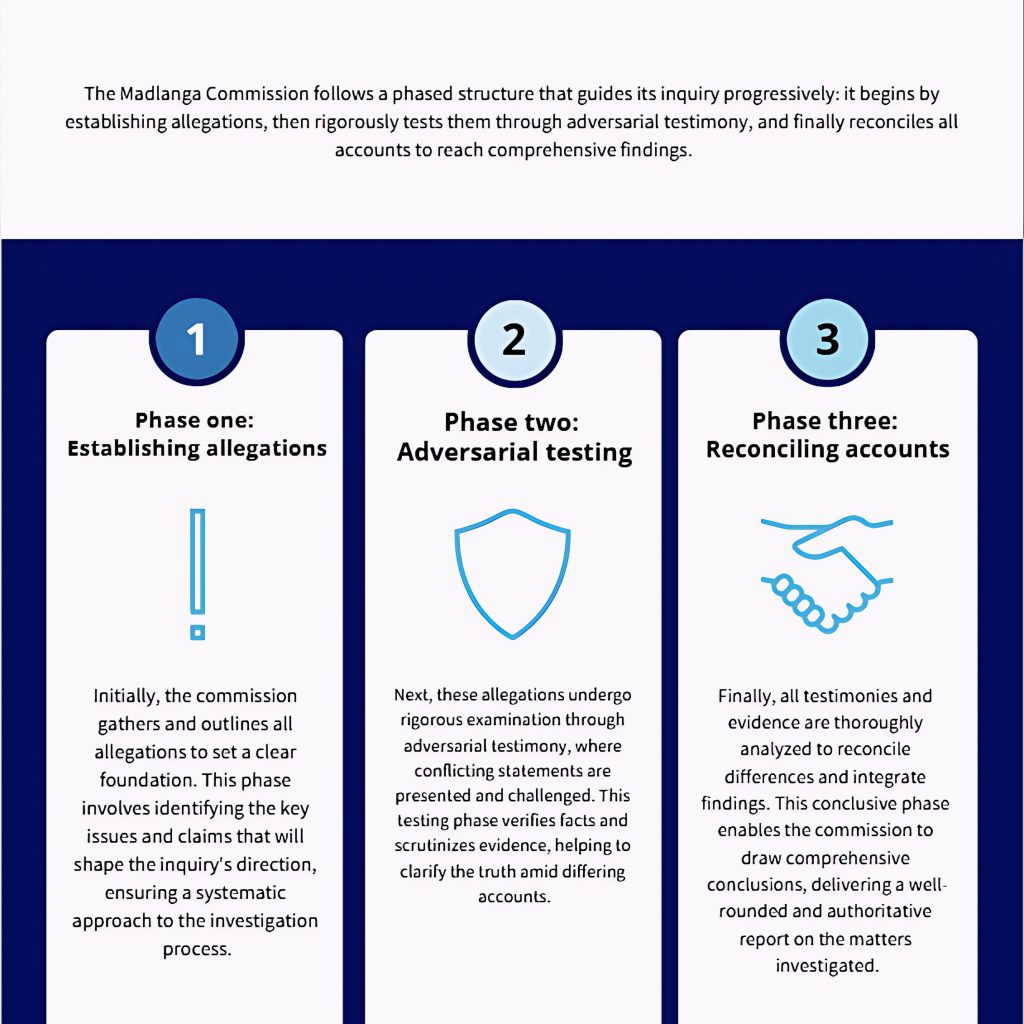
Structured in three deliberate phases, the commission’s entire plan is a system designed to ensure fairness, credibility, and a comprehensive evidentiary record.
Phase one:
Establishing the allegations.
This phase began in September 2025, following allegations made by the KwaZulu-Natal Police Commissioner, Lieutenant General Nhlanhla Mkhwanazi, during a July press briefing where he detailed allegations of political interference, corruption, and criminality within the justice system.
Phase one ran for over a month and is a stage primarily to find facts, to lay the foundation for the inquiry.
Initial testimony from Mkhwanazi, followed by testimony from various witnesses, would support evidence while helping the commission to establish a factual basis for the allegations.
Phase two
Testing the allegations and defences.
Phase two formally opened on 18 November and is expected to continue into early 2026. This stage is expected to shift into a more rigorous mode.
North West alleged political fixer and businessman Brown Mogotsi is the first witness to testify. Mogotsi has been implicated as a middleman between suspended Police Minister Senzo Mchunu and alleged crime kingpin Vusimuzi Cat Matlala.
Allegations include receiving payments from Matlala and sharing confidential police information.
Other persons of interest to the commission include senior police officials such as Lieutenant-General Dumisani Khumalo and National Police Commissioner Fannie Masemola, who were called to testify as the inquiry examines whether political interference in policing is systemic or limited to isolated cases.
Matlala’s testimony could provide crucial insight into alleged financial transactions and influence over ANC processes.
Phase two allows people of interest to present their written statements without hostile questioning. Only after initial testimony will their evidence be formally tested by the commission’s evidence leaders, who will interrogate inconsistencies, omissions, and counter allegations.
Madlanga Commission spokesperson Jeremy Michaels said the process ensures fairness by allowing those implicated to be heard while also subjecting their claims to scrutiny.
Phase three
Reconciling evidence.
This phase will likely see witnesses such as Lieutenant General Nhlanhla Mkhwanazi return to the stand to respond to the explanations, witness defences, and counterclaims raised during phase two of the commission.
This phase tests credibility and seeks to reconcile all evidence of original allegations against the full body of testimony and documentation as the commission weighs competing narratives to distil the truth.
This phase will begin once phase two concludes, which is likely to be mid to late 2026.
These stages end with a report issued by early 2027. The report is expected to make recommendations on reforms to safeguard the criminal justice system from political manipulation. The goal of the commission is to restore public trust in South Africa’s institutions and hold perpetrators accountable while providing reforms.
INSIDE POLITICS