


By Johnathan Paoli
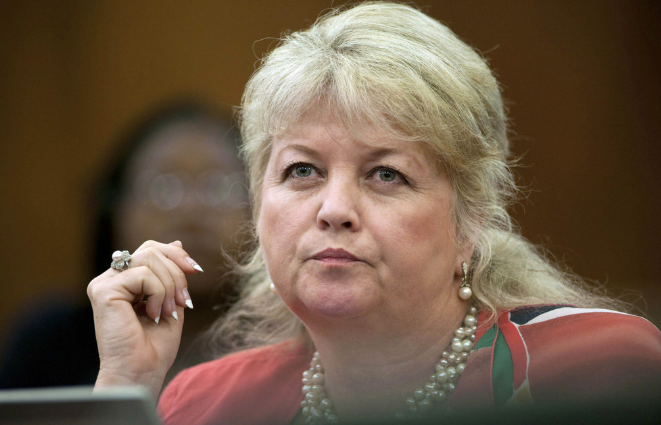
Democratic Alliance MP Dianne Kohler-Barnard on Thursday rejected allegations by KwaZulu-Natal police commissioner Lieutenant-General Nhlanhla Mkhwanazi that she leaked or misused classified Crime Intelligence information.
She told parliament’s ad hoc committee that the allegations against her were based on a misunderstanding of oversight processes and timelines.
ALSO READ: Chauke fitness probe hears Noko allege pattern of unlawful killings by Cato Manor unit
Leading MPs through her affidavit and her experience in parliamentary oversight, Kohler-Barnard said Mkhwanazi’s allegations — that she raised secret intelligence matters in an open forum and obtained the information through the Joint Standing Committee on Intelligence (JSCI) — were “factually impossible”, because the communications he cited predated her membership of the intelligence oversight committee.
“All of the communications by me, at which I understand Lieutenant-General Mkhwanazi’s allegation to be levelled, occurred prior to my membership of the JSCI,” she told the committee.
Kohler-Barnard said media reporting about Crime Intelligence’s procurement of luxury hotel properties at inflated prices surfaced in January 2025, before the current JSCI was constituted in early April 2025.
“That was the first I heard of this,” she said, referring to an article she encountered on 13 January 2025. “The JSCI did not exist at that stage. It was put together on 1 April. All of this happened way before. I have no idea how the information about the hotels came to be in the newspapers,” she said.
The hearing forms part of Parliament’s investigation into allegations Mkhwanazi aired in a public briefing in July 2025 and has raised in the Madlanga Commission, including claims that Kohler-Barnard leaked classified material and, at one point, was linked to what he described as a “criminal syndicate”.
Although he did not repeat the syndicate allegation in the same terms in the committee process, Kohler-Barnard told MPs that his revised position represented “a dilution of the earlier allegations” but remained unfounded.
“There is no merit to Lieutenant-General Mkhwanazi’s allegations that I obtained knowledge of the property purchases as a result of my position on the current JSCI, or that I leaked classified information relating to the two properties in my press statements. It would have been impossible for me to do so,” she said.
Under questioning from evidence leader Advocate Norman Arendse, Kohler-Barnard said her reaction to Mkhwanazi’s July 2025 briefing was mixed. “What I heard was a very frustrated officer who felt let down by the system,” she said, adding that while some allegations appeared “real, honourable and honest”, others required proof and were now properly before the committee.
Kohler-Barnard also used her testimony to say that failures in procurement oversight, covert spending controls and vetting processes within Crime Intelligence have been raised repeatedly over the years, and warned that weak security-clearance systems can undermine the use of intelligence-derived evidence.
She declined to confirm details of a report by the Inspector-General of Intelligence that was leaked to the media in late January, but said the findings were “extremely disturbing”, and noted that previous commitments to release a report on the property deals had not materialised.
INSIDE POLITICS