
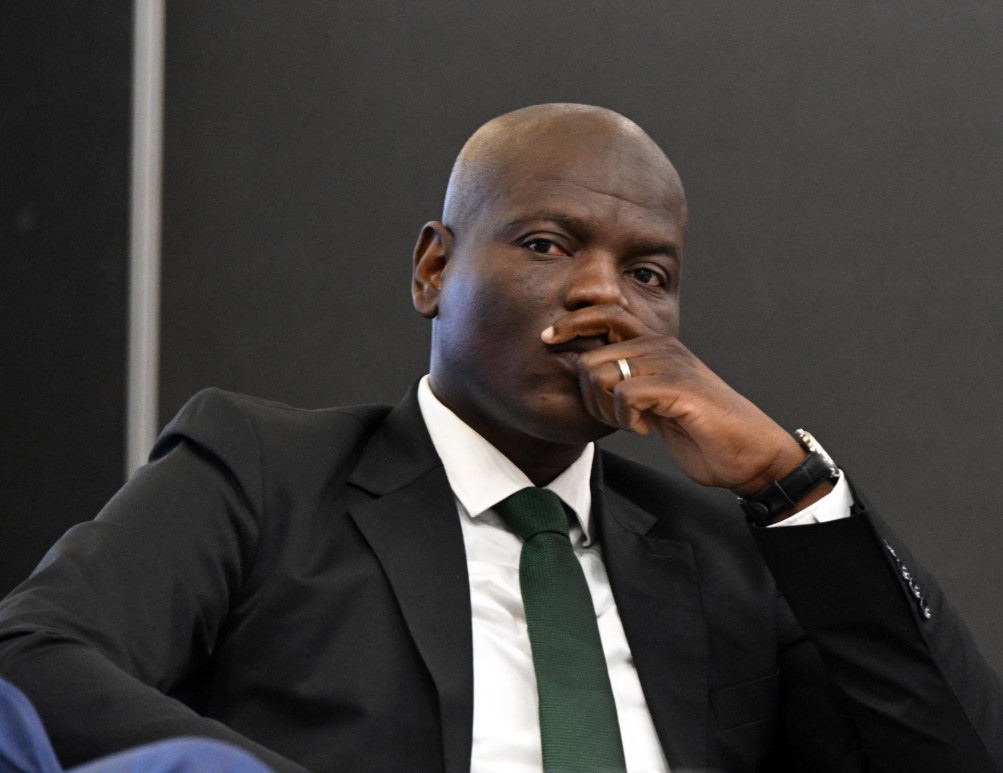


By Akani Nkuna
International Relations Minister, Ronald Lamola has expressed concern over “compounding crises,” which he noted have detrimentally weakened international security through high disregard of international law and erosion of global governance, arguing that it establishes a world marred instability, heightened nuclear weapons resurgence.
“Conflicts across the globe inflict immense civilian suffering while international humanitarian and human rights law is violated with impunity. Adding to this instability is that nuclear weapons are resurgent in military planning and the security doctrines of many states,” he said on Tuesday.
ALSO READ: Mogotsi faces ad hoc committee today after weeks of security-related standoff
“Modernisation of nuclear weapons technology accelerates, and rhetoric once considered reckless is now routine, undermining past commitments and widening the gap between promise and practice.”
Lamola was speaking at the 2026 High-Level Segment Conference on Disarmament at the Palais des Nations, Geneva in Switzerland, which was attended by UN representatives, diplomats, foreign ministers from across the globe and government officials.
The segment seeks to address key issues including nuclear disarmament, bans on weapons of mass destruction, and prevention of arms race in outer space amongst others with peculiar emphasis on negotiating for dialogue and prioritisation of political will to overcome longstanding deadlock and geopolitical tensions.
Lamola urged the delegates prioritise collective action guided by instituting global peace, multilateral commitments, and address the worrying trend of weakening treaties and institutions.
He further called on the delegates to address the increasing growth in global military spending, citing that it creates a global order that is prone to conflict and renders humanitarian efforts insignificant, thus enabling inequality and other social ills.
ALSO READ: MK Party seeks order to freeze Batohi’s pension pending review
“The contradiction is stark as vast resources are allocated to expanding armament capabilities while millions continue to suffer from poverty, inequality and underdevelopment,” said Lamola.
The minister also encouraged non-state parties to the Treaty on the Prohibition of Nuclear Weapons (TPNW) to regards its discussion papers through which an opportunity to develop common understanding to establish a path to a nuclear-free world that is reflective of the global consensus can be instituted.
“The imbalance between military expenditures and the underinvestment in peace, resilience and development should concern every member of this Conference, as this undermines not only security, but the credibility of institutions built to preserve peace.”
Lamola said the forthcoming conferences must amount to more than routine diplomacy, describing them as tests of legitimacy at a time when the global disarmament architecture is under strain, urging states to move beyond rhetoric and honour their obligations with tangible action.
He also posed what he called an uncomfortable question citing that if South Africa dismantled its arsenal, why do others deem nuclear weapons essential while insisting the rest remain disarmed?
“All nuclear-weapon States must honour their unequivocal commitments under the NPT and take urgent, concrete steps towards disarmament. States that depend on nuclear umbrellas or doctrines that place strategic value on nuclear arsenals must reconsider these positions, as they only fuel insecurity and undermine the global non-proliferation regime,” Lamola added.
INSIDE POLITICS