


By Johnathan Paoli
Gauteng has announced a sweeping overhaul of senior government leadership in response to widespread underperformance, which he described as a bold step toward “restoring public confidence and institutional integrity” with a renewed focus on stabilising struggling municipalities and ensuring readiness for the upcoming G20 Summit.
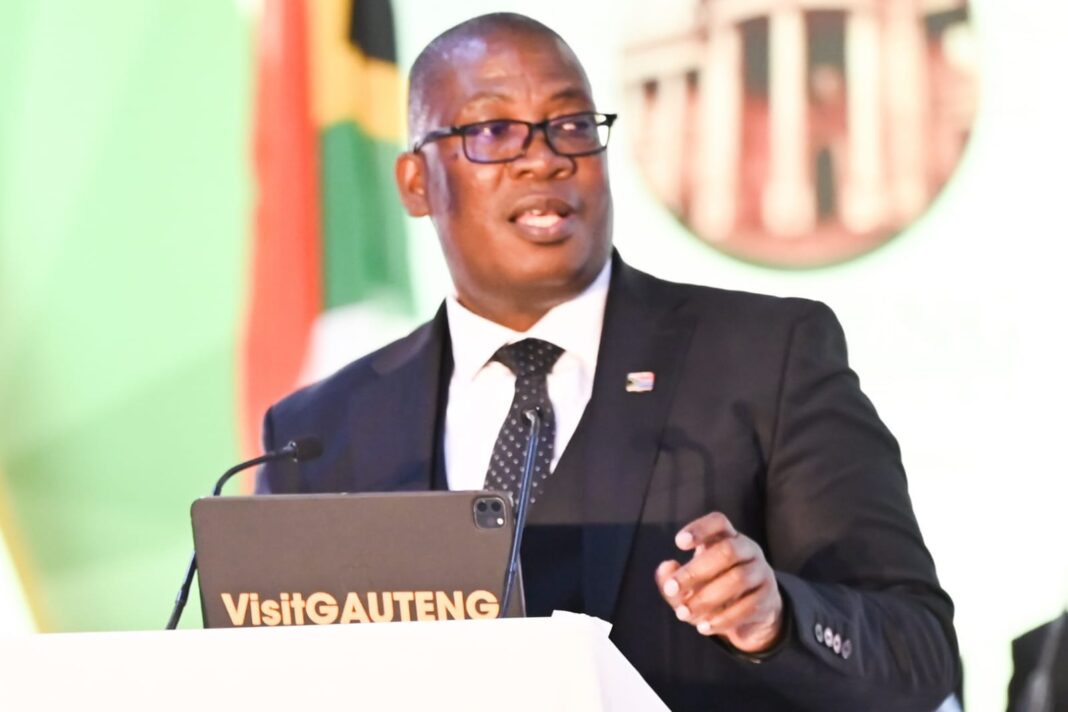
Premier Panyaza Lesufi held a media briefing in which he unveiled over 35 forensic reports detailing misconduct and irregularities across provincial departments and agencies, following increasing reports of challenges and mismanagement.
“Some of these investigations were triggered internally, others by whistleblowers or complaints. Now that we have compiled and reviewed them, it is our duty to release them, with care taken to protect informants,” Lesufi said.
The reports cover a broad range of investigations, from minor breaches of conduct to serious allegations of criminality, including procurement irregularities, conflicts of interest, and whistleblower intimidation.
Lesufi said the reports were compiled both by the provincial forensic unit and external investigators, and included findings from 13 departments and entities.
Among the most notable, the Agriculture, rural and social Development department with 10 reports primarily involving irregular expenditure, education with seven reports linked to financial mismanagement; economic development and the Gauteng Gambling Board with investigations into collusion and unethical conduct within supply chain management, the Gauteng Tourism Authority with unethical leadership behaviour.; and the Medical Supply Depot and Gauteng Growth and Development Agency with allegations of oversight failures and financial missteps.
Whistleblower names have been redacted to avoid compromising safety.
The Information Regulator had also requested the reports be made public.
Lesufi said the government complied fully and would continue to release further reports in batches.
Following poor audit outcomes, widespread underspending and missed service delivery targets, Lesufi announced a major reshuffle of Heads of Department (HODs), calling it the first of its kind in the province’s history.
Four posts are currently vacant and being filled, with a clear directive to introduce younger leaders and more women into senior roles.
“We cannot afford to have departments that underperform while communities suffer. R1.3 billion in underspending is unacceptable,” Lesufi said.
He stressed that reshuffling in the civil service differed from political appointments.
“There are laws and procedures to follow. We can’t just fire people without cause. But we will act decisively within the law,” he added.
The underspent funds, Lesufi confirmed, have been reallocated to departments demonstrating effective delivery capacity.
Lesufi linked part of the urgency in fixing governance failures to Gauteng’s role as host of the 2025 G20 Summit.
While G20 pressure has accelerated some projects, he was adamant that the interventions including streetlight restoration, pothole repairs, and sanitation upgrades, were ultimately for residents.
“I don’t want to clean streets just for G20 delegates. This is about dignity and service for the people of Gauteng,” he said.
He highlighted improvements such as streetlights restored along key highways like the M2 and R24; grass cutting at 70% completion across municipalities; and physical inspections to confirm the delivery of municipal services.
Lesufi promised that comprehensive municipal reports covering traffic signals, refuse removal and utility maintenance would be made available to the public and media.
On Johannesburg’s financial instability, Lesufi acknowledged a letter from the Finance Minister flagging the city’s deteriorating fiscal position.
He stated that the provincial and city leadership, along with the Presidential Turnaround Team, were actively implementing corrective measures.
Lesufi addressed the growing threat to municipal financial sustainability.
He argued that local governments were being blamed for systemic failures beyond their control, particularly energy pricing decisions made by NERSA, the national energy regulator.
“Municipalities are just the messengers. When electricity prices rise, they get blamed, but the decisions are made elsewhere,” he said.
He also revealed how solar migration by major shopping centres and wealthier households is eroding municipal income, while the demand for free or subsidised services by unemployed residents continues to rise.
To address this, Lesufi is backing radical proposals in the new White Paper on Local Government which call for an integrated indigent register using private-sector and government data to ensure that only genuinely poor households qualify for free services; and reconsidering municipal billing structures for properties still owned by banks, where mortgage holders default on utility payments despite the property being bonded.
“The current system is broken. We can’t collect money for water and lights if the bank owns the house and refuses to help. Municipalities are collapsing, and unless we restructure revenue models, the whole system will fail,” Lesufi said.
The premier committed to continue releasing forensic findings, enforcing disciplinary action, and supporting ethical, accountable governance.
INSIDE POLITICS