


By Johnathan Paoli
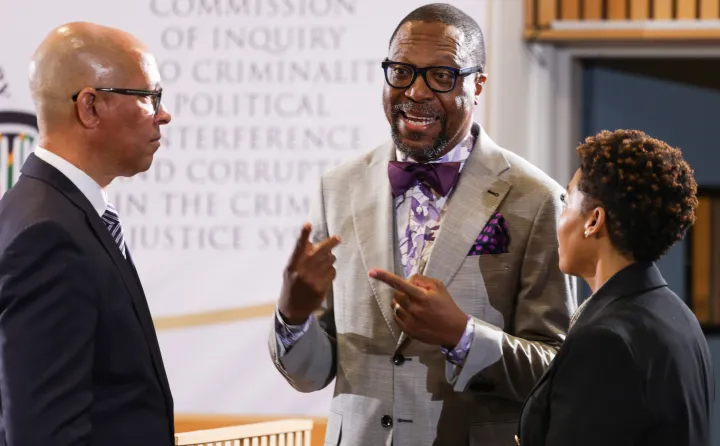
Advocate Terry Motau has broken his silence on his abrupt resignation as chief evidence leader of the Madlanga Commission, saying his decision was rooted in unresolved concerns over the inquiry’s R147 million budget allocation.
In an interview with Radio 702 on Thursday morning, Motau emphasised that his departure was not sudden but carefully considered after what he described as a prolonged engagement with the commission leadership.
“To be able to perform a task of this nature, once the government says they’ve given you a budget of R147 million, it’s not a lot of money for a task such as this one,” he said.
The commission, chaired by Justice Mbuyiseli Madlanga, was established by President Cyril Ramaphosa earlier this year to investigate allegations that Gauteng’s criminal justice system has been infiltrated by organised crime syndicates working in collaboration with politicians and senior police officials.
Motau confirmed that he had informed Madlanga of his intention to resign as early as 11 September, a week before leading the evidence of National Police Commissioner Fannie Masemola.
He insisted his decision was not emotional but based on structural and administrative obstacles, particularly the lack of budget clarity.
Central to his concerns was the absence of defined budget line items for the wide-ranging inquiry.
“You have investigators, researchers, attorneys, IT services, commissioners themselves, all requiring funding. Without clear allocation, you cannot responsibly allocate tasks or avoid missteps that plagued previous commissions,” he said.
He pointed to the Zondo Commission of Inquiry into State Capture, which ultimately exceeded R1 billion in costs and left some staff unpaid.
“The lesson from Zondo is that without financial transparency, you risk undermining both morale and credibility,” Motau said.
Motau stressed that his resignation was not linked to his personal remuneration.
“Taking up this role was an act of service. I took a massive pay cut, willingly. These are ‘love for country’ issues,” he said.
However, he argued that administrative uncertainty compromised his ability to lead effectively.
Despite his exit, Motau expressed confidence in the commission’s potential to deliver, provided evidence is prioritised and government institutions act decisively.
“It’s not about what is said, it’s about what can be proven. It’s very early days, but if the evidence is backed up, there is no room for the NPA to drop the ball,” he said.
Commission spokesperson Jeremy Michaels confirmed Motau’s departure, stressing that it occurred “on good terms” and that senior counsel Matthew Chaskalson had been appointed as his replacement.
His resignation comes amid heightened public interest in the hearings, which were temporarily suspended after key witness Lieutenant-General Dumisani Khumalo, head of SAPS Crime Intelligence, fell ill.
INSIDE POLITICS