


By Johnathan Paoli
Gauteng finance and economic development MEC Lebogang Maile has announced sweeping measures to address widespread allegations of corruption, maladministration, and unethical conduct across key provincial entities.
Maile has appointed a 15-member committee of inquiry to investigate the Gauteng Liquor Board (GLB), and a separate legal expert to probe the Gauteng Gambling Board (GGB) and the Gauteng Growth and Development Agency (GGDA).
“The era of impunity is over. We will not allow entities under the Gauteng Provincial Government to be used as vehicles for personal enrichment or criminal enterprise. We must create a capable, ethical, and professional public service. The findings from these investigations will guide corrective and disciplinary action,” Maile declared.
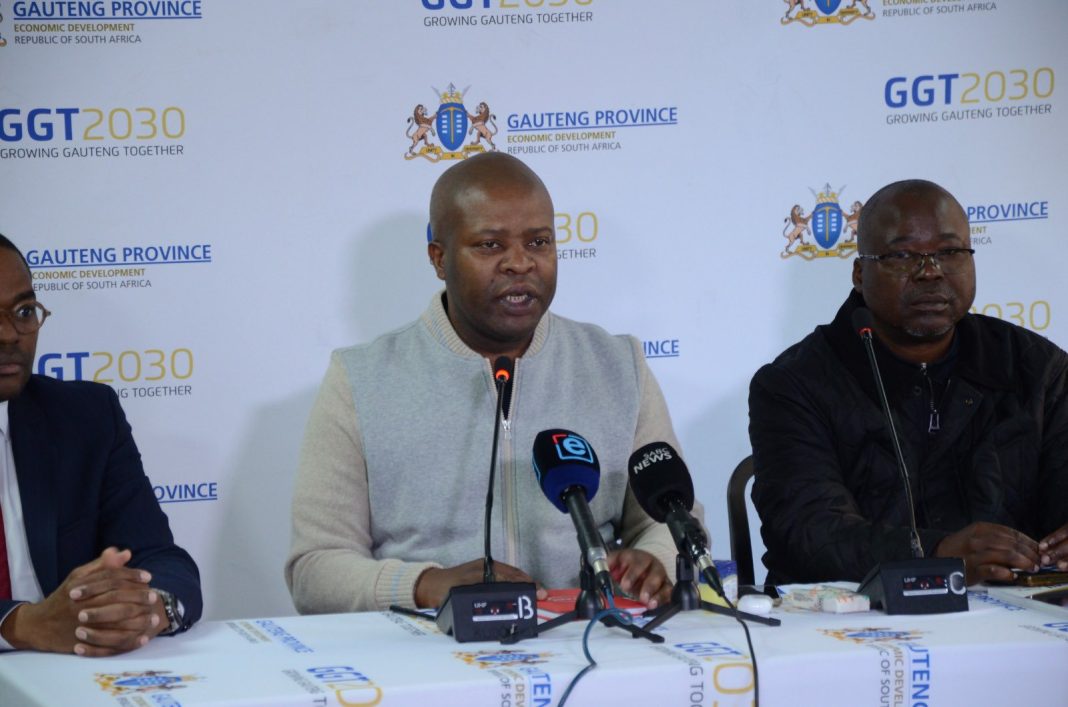
The announcements were made during a media briefing held at the Gauteng Partnership Fund offices in Sandton, as part of a government intervention aimed at restoring governance and accountability within these revenue-generating institutions.
The GLB, established under the Gauteng Liquor Act of 2003, is responsible for regulating the liquor industry through licensing.
However, the board has been plagued by growing concerns over fraudulent licensing processes, bribery and the issuance of counterfeit permits.
Maile stated that the automation of the liquor application system, intended to enhance transparency, had instead uncovered more cases of unlawful activity, pointing to an entrenched culture of corruption.
While five GLB employees have already been criminally charged and dismissed following investigations by SAPS’s Firearm, Liquor, and Second-Hand Goods Unit, irregularities persist.
“The evidence we have gathered demonstrates that corruption within the Liquor Board is systemic. We cannot allow this to become institutionalised,” Maile said.
To arrest this decay, the committee of inquiry has been appointed to conduct an impartial and far-reaching investigation into misconduct and to make actionable recommendations.
The 15 members of the committee were selected from a pool of 280 nominations received by 21 March 2025, following a public call published in the Government Gazette and other media platforms.
Chaired by Fhedzisani Pandelani and supported by Deputy Chairperson Oscar Mudimeli, the committee members include professionals with legal, administrative and regulatory experience.
Its mandate includes investigating unlicensed or illegal liquor production and sales, including the proliferation of unsafe products and tax evasion; and smuggling and tax evasion, which undermine regulatory frameworks and government revenue.
In addition, it will look into counterfeiting of liquor products, endangering consumers and damaging legitimate businesses; health and safety violations, especially concerning unsafe production, storage, and distribution; and bribery and corruption in the licensing process.
The committee will also assess the operational effectiveness of the GLB’s online licensing platform.
In line with Treasury Regulation 20, members will not receive additional remuneration, while non-official members will be compensated per National Treasury scales. All financial disclosures will be made in the department’s audited statements.
In a parallel move, Maile has appointed William Mokhare as the Lead Legal Expert to investigate similar allegations at the Gauteng Gambling Board and the Gauteng Growth and Development Agency, entities tasked with regulating gambling and driving economic development in the province.
Mokhare will be supported by other legal experts in reviewing governance failures, human resource practices, procurement procedures, board oversight, and compliance with legal standards.
Specific areas of focus include mismanagement and poor governance; maladministration, including irregular procurement and labour practices; irregular appointments made without due process; and abuse of power and intimidation, which may have affected staff morale and stakeholder trust.
The legal expert team has been instructed to submit a comprehensive report within 30 days of their appointment.
Their remuneration will also be disclosed in the department’s financial records, ensuring transparency.
Maile emphasised the importance of good governance, accountability, and transparency in provincial institutions.
He added that the investigations were not intended as witch-hunts but as necessary mechanisms to strengthen governance and restore public confidence.
The department will be the sole source of official communication on the progress of these investigations.
Residents, businesses and stakeholders are encouraged to follow updates and cooperate where necessary.
Maile reaffirmed the Provincial Government’s unwavering commitment to uprooting corruption and building an economy that is inclusive, ethical, and development-focused, stressing a legal and moral duty to clean the provincial government’s institutions.
INSIDE POLITICS