


By Johnathan Paoli
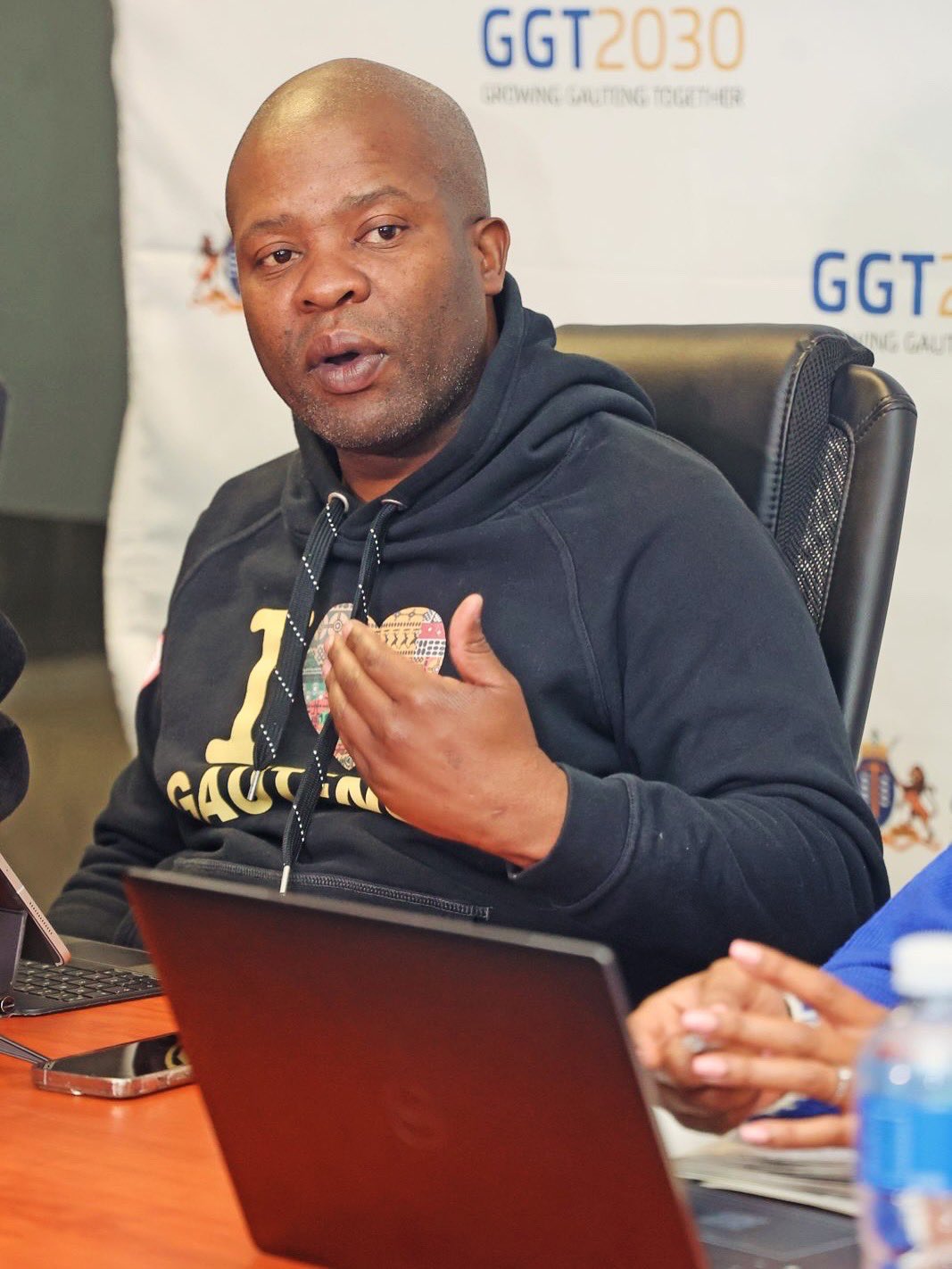
Municipal councillors and officials collectively owed municipalities about R165.7 million in debt as at 31 December, Gauteng Finance and Economic Development MEC Lebogang Maile said on Sunday.
The largest balances were in Johannesburg (R74.8 million), Tshwane (R36.2 million) and Ekurhuleni (R22.9 million). Maile said formal correspondence had been issued to enforce recovery measures and ensure compliance.
Gauteng municipalities were also owed R165.7 billion by residents, businesses and state entities by the end of December, he said.
He said households accounted for 73.3% of outstanding debt, commercial customers 23.2%, and organs of state 3%.
The figures are contained in the consolidated quarterly state of municipal finance report covering the first half of the 2025/26 financial year, which ended on 31 December 2025.
Maile said the publication of the report formed part of an effort to improve transparency and inform the public about how municipal financial performance affects service delivery.
Weak implementation of credit control policies contributes to the growing debtor burden and constrains municipalities’ ability to meet obligations when they fall due, he said.
Municipalities also reported outstanding creditors of R37.9 billion as at 31 December 2025, down from R53.2 billion in November.
The City of Tshwane is driving much of the improvement after reducing its creditors to R5.7 billion from R18.3 billion, Maile said.
Bulk electricity accounted for 53.7% of the aggregated creditor balance, followed by trade creditors at 30%.
Maile said the Gauteng Provincial Government owed municipalities R2 billion at the end of December, after payments of R101.7 million against total billings of R2.19 billion.
The outstanding provincial debt is largely concentrated in the three metropolitan municipalities — the City of Johannesburg, Tshwane and the City of Ekurhuleni — with the departments of Infrastructure Development (51%), Education (33%) and Health (12%) the main drivers, he said.
He said the Gauteng Provincial Treasury compiles the consolidated quarterly statement on the state of municipal budgets and submits it to the Gauteng Provincial Legislature in line with Section 71(7) of the Municipal Finance Management Act.
At the start of the municipal financial year on 1 July 2025, Gauteng municipalities adopted a consolidated operating revenue budget of R229.1 billion and operating expenditure of R222.2 billion, resulting in a projected operating surplus of R6.9 billion, he said.
By the end of December, municipalities had generated R123.3 billion in operating revenue, representing 53.9% of the annual budget and 3.9 percentage points above the 50% straight-line estimate.
The metropolitan municipalities were the primary contributors, with Johannesburg contributing R48.5 billion, Ekurhuleni R34.5 billion and Tshwane R27.6 billion, Maile said.
Operating expenditure during the same period amounted to R109.2 billion, or 49.2% of the annual budget, again driven largely by the metros.
As a result, most municipalities were functioning within their adopted budgets during the first half of the year, but accumulated operating deficits were reported by Johannesburg, Lesedi Local Municipality, Merafong City Local Municipality and Rand West City Local Municipality.
Maile said the collection rate for the majority of Gauteng municipalities as at the end of December was R30.1 billion, or 116%, above the 95% collection norm set out in National Treasury’s MFMA Circular 71. Collection measures can exceed 100% when municipalities recover arrears in addition to current billings, but he said Johannesburg, Emfuleni Local Municipality, Lesedi and Merafong were below the expected 95% norm.
On capital spending, municipalities approved an aggregated capital expenditure budget of R16.2 billion for 2025/26, up from R14.9 billion the previous year — an increase of nearly R1.3 billion, or about 8%.
The programme is funded mainly through national conditional grants allocated via the Division of Revenue framework, representing national grants of 55% (R8.9 billion), provincial allocations of 8% (R1.4 billion), borrowings of 22% (R3.5 billion), and internally generated funds of 15% (R2.4 billion), Maile said.
As at 31 December, capital spending amounted to R5.4 billion, or 34% of the annual budget. While that is below the 50% straight-line level, Maile said historical trends suggest municipalities are likely to achieve at least 85% of budgeted capital spending by year-end, with Rand West City the exception after spending 68% by midyear.
Grant performance varied.
The Municipal Infrastructure Grant averaged 62%, with Lesedi at 89%. The Integrated Urban Development Grant applied only to Mogale City, which reported spending of 52%.
The Water Services Infrastructure Grant averaged 46%, with Mogale City Local Municipality the highest-performing municipality at 59%, while Merafong and Lesedi were below the required 40% at 39% and 32% respectively.
The Urban Settlements Development Grant, which applies to metropolitan municipalities, recorded average spending of 23%.
The Public Transport Network Grant averaged 21%, with Maile warning that none of the recipient municipalities had spent above 40% and that poor performance raised the risk of reduced allocations under the Division of Revenue Act framework.
Maile said MFMA Circular 130, developed with provincial treasuries, advises municipalities to prioritise renewal of ageing infrastructure and strengthen repairs and maintenance budgeting to prevent disruptions.
He said the Gauteng Provincial Treasury has also issued a practice note to support effective pre-planning so municipalities can optimise the use of allocated funds.
Maile said the province was also intensifying targeted support through a strategic supply chain management approach aimed at improving procurement planning, accelerating capital expenditure and infrastructure delivery, and reducing unauthorised, irregular, fruitless and wasteful expenditure through strengthened preventative controls.
He said three municipalities — Ekurhuleni, Midvaal Local Municipality and Mogale City — were able to pay suppliers within 30 days during the period, while Sedibeng still had a balance of over 90 days.
Maile said five Gauteng municipalities participate in the Eskom Debt Relief Programme: Emfuleni, Lesedi, Mogale City, Rand West City and Merafong City.
The 36-month programme runs to 2027 and is tied to compliance with conditions in MFMA Circular 124, he said.
Rand West City received a first write-off of R279.7 million from ring-fenced debt of R839.7 million after meeting conditions, Maile said.
Emfuleni and Mogale City were granted their first one-third write-offs on 16 December 2024 and 20 February 2025, amounting to R1.9 billion and R72.1 million respectively.
All participating municipalities are awaiting National Treasury approval for a second write-off, he said, while Lesedi and Merafong City are awaiting final assessments to determine whether they qualify for write-offs.
Maile added that Emfuleni signed a distribution agency agreement with Eskom and entered into a special purpose vehicle agreement with Rand Water Services as part of debt management measures.
Maile said the province would intensify support through its Municipal Finance Hands-On Support Programme, under which 10 municipal advisors provide technical support to selected municipalities, and through the Debt Management Committee. Since the committee’s establishment in the 2017/18 financial year, municipalities have received a cumulative R21.04 billion in payments from the Gauteng provincial government, he said.
“These interventions are aimed at strengthening governance, restoring financial sustainability, and ensuring that municipal resources are used efficiently to improve service delivery to communities,” he said.
INSIDE POLITICS