


By Johnathan Paoli
Communications and Digital Technologies Minister Solly Malatsi has declared that securing a sustainable funding model for the SABC is a national priority, warning that the survival of South Africa’s public broadcaster is central to safeguarding media freedom and democracy.
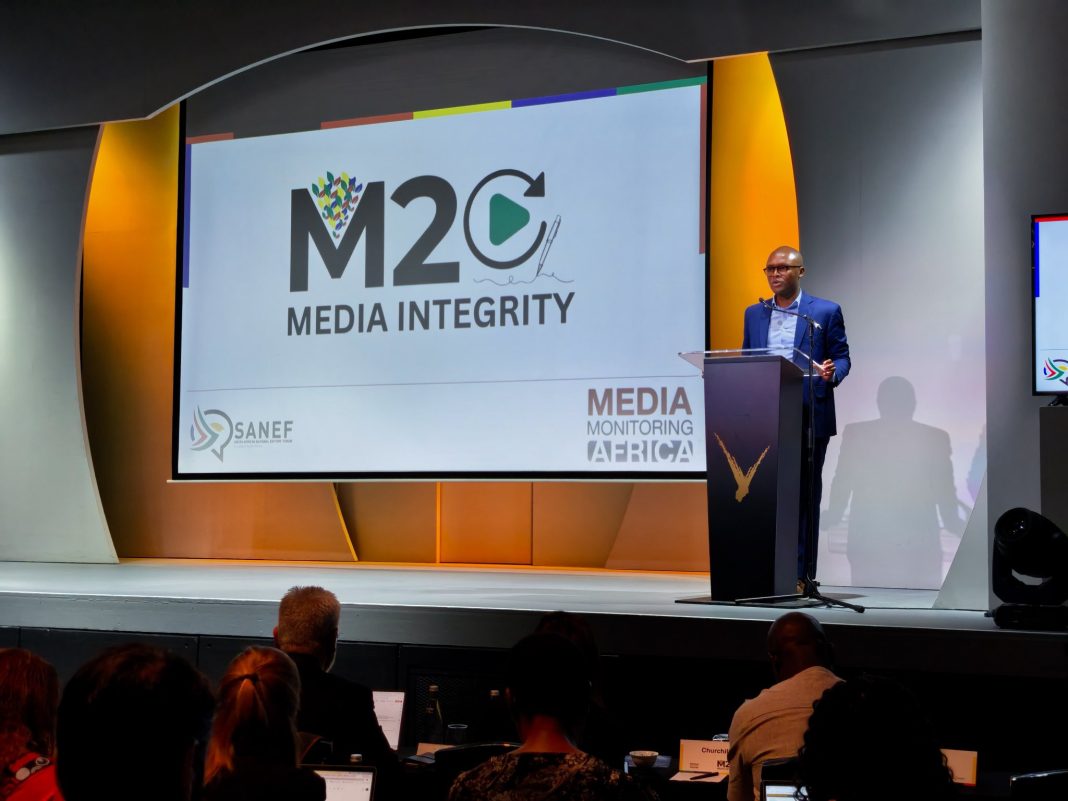
Speaking at the M20 Summit in Melrose Arch, Johannesburg, on Monday, Malatsi linked the SABC’s financial stability to the broader fight for press independence and information integrity.
“A large part of my motivation to withdraw the original SABC Bill was that it postponed the development of a funding model for three years. That is kicking the can down the road on an issue that must be resolved now,” he said.
The two-day international gathering, held alongside the G20 programme, brings together journalists, policymakers, and media experts to debate how journalism can remain a cornerstone of human rights, accountability, and development.
Malatsi confirmed that government is fast-tracking the appointment of a service provider to design the new funding model, after inviting proposals in June. The bid evaluation committee completed its review last week, and the outcome will inform a revised SABC Bill aimed at addressing governance and financial sustainability simultaneously.
“The fundamental issue the bill must resolve is the financial and business viability of the public broadcaster in an era of media evolution and rising competition,” Malatsi said.
The SABC, which relies on a hybrid model of licence fees and advertising, has long battled declining revenues, repeated bailouts, and difficulties adapting to the digital age. Without urgent reform, it risks failing to fulfil its constitutional mandate of universal, independent public service broadcasting.
Malatsi stressed that media sustainability is not just an economic matter but a democratic imperative.
“When media outlets cannot sustain themselves, society loses its watchdogs. Independent media is the beating heart of democracy. A free press broadcasting diverse voices is not a luxury—it is a necessity,” he said.
He argued that government must work with the private sector to design innovative funding mechanisms, ensure fair competition, and prevent dominant tech platforms from siphoning off advertising revenues critical to journalism.
Tying South Africa’s struggles to a global crisis, Malatsi cited the 2025 World Press Freedom Index, which found that media outlets in 160 of 180 countries face difficulties achieving financial stability.
“The economic model that sustained independent news is collapsing in many places. Without sustainable media, there is no accountability,” he warned.
He added that South Africa’s upcoming G20 presidency will push for international cooperation on media sustainability through the Digital Economy Working Group.
While focused on the SABC, Malatsi also warned of broader threats to information integrity, including deepfakes and AI-driven disinformation.
“During the 2024 elections, we witnessed the rise of generative AI deepfakes. These incidents remind us that the speed and reach of digital falsehoods can fracture social cohesion and political stability,” he said.
However, he cautioned against censorship, arguing instead for empowering citizens with accurate information, protecting journalists, and using technology to elevate truth over falsehoods.
Asked if he would brief the Portfolio Committee on Communications and Digital Technologies about progress on the SABC Bill, Malatsi was clear.
“I’ve never missed an invitation from the committee, and I will always engage—whether on the SABC Bill, connectivity, or the Post Office. Ministers must account to parliament and the public,” he said.
Malatsi concluded by pledging to take the M20 Summit’s declaration on media freedom to the highest levels of global governance, stressing the urgent need to safeguard the independence of the media so they can work without fear, intimidation, or violence, and continue informing the public freely.
INSIDE POLITICS