


By Johnathan Paoli
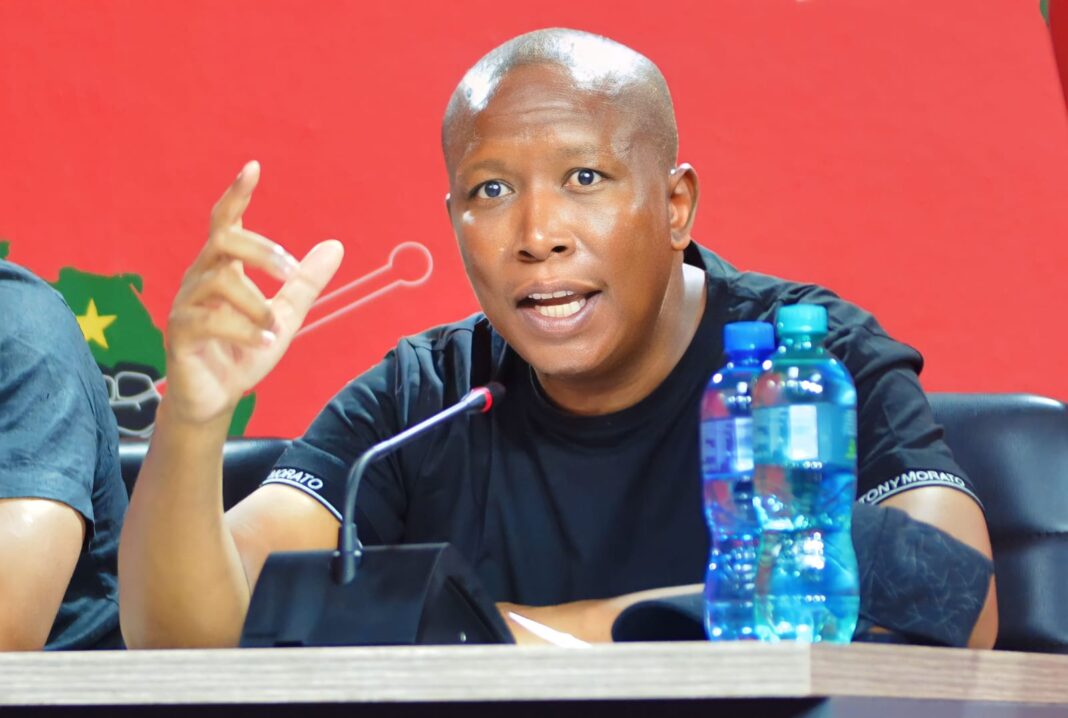
EFF leader Julius Malema clashed with evidence leaders on Tuesday as parliament’s ad hoc committee opened its probe into KwaZulu-Natal Police Commissioner Nhlanhla Mkhwanazi’s allegations of criminal infiltration within South Africa’s justice system.
Malema led objections to the committee’s reliance on Mkhwanazi’s “supplementary statement” drawn from testimony he had already submitted to the Madlanga Commission of Inquiry.
He said that parliament could not base its investigation on documents tied to an executive process, adding that the committee required an original statement addressed solely to parliament.
“In the history of this parliament, when our children and grandchildren look for General Mkhwanazi’s statement, they won’t find it in the archives. We are not a subcommittee of the Madlanga Commission. It is unconstitutional,” Malema said.
Other MPs from across parties echoed the concern, warning that accepting the supplementary statement risked undermining parliament’s independence.
uMkhonto weSizwe Party MP David Skosana said the approach threatened the credibility of the inquiry from its very first sitting.
The ad hoc committee, chaired by former Limpopo MEC Soviet Lekganyane, was established after Mkhwanazi alleged in July that a cartel tied to drug syndicates, business interests and politicians had compromised South Africa’s police and prosecutorial structures.
Evidence leader and senior counsel Norman Arendse opened proceedings with a warning that corruption threatened to corrode the foundations of South Africa’s democracy.
He quoted first democratically elected president Nelson Mandela’s 1995 call for a united fight against crime and corruption, saying little progress had been made since.
“The committee’s task is not merely to conduct an investigation. It must safeguard the integrity of our institutions, restore public confidence, and uphold the rule of law. Since our past president’s speech in 1995, we have failed to heal the wounds he refers to and our fight against corruption has floundered,” Arendse said.
He detailed the committee’s mandate to investigate allegations of political interference, police procurement irregularities and the alleged penetration of law enforcement by organised crime.
Arendse said that the disputed document was indeed an original sworn statement prepared specifically for parliament, even though it incorporated Mkhwanazi’s Madlanga testimony.
“After parliament decided to appoint this ad hoc committee, the Madlanga Commission had also been proclaimed. Their evidence leaders got hold of General Mkhwanazi first,” Arendse said.
He insisted parliament was not bound by the executive inquiry, but the explanation failed to satisfy MPs.
Malema dismissed it outright, saying: “Where have you ever heard that the first statement to be deposed is a supplementary statement? If this is the original, let it be corrected properly.”
Lekganyane attempted to mediate, suggesting that Mkhwanazi could confirm before parliament that the statement was his official submission.
But MPs rejected the idea of seeking clarification from the provincial commissioner before he had taken an oath.
“He has not taken an oath. In the absence of the oath, let’s release him. He’s not part of this mess,” Malema said, urging the committee to halt proceedings.
The clash escalated, with MPs describing the situation as embarrassing and accusing the legal team of damaging the committee’s credibility on live television.
Skosana and others called for an adjournment so the statement could be corrected.
By mid-morning, Lekganyane conceded to the demands and adjourned proceedings, instructing evidence leaders to fix the documentation before the inquiry could continue.
MPs urged colleagues to avoid excessive reference to the Madlanga Commission, warning that parliament risked appearing subordinate to the executive.
Despite the shaky start, the committee is expected to resume with Mkhwanazi as its first witness once procedural corrections are made.
Future witnesses include National Police Commissioner Fannie Masemola and Minister Senzo Mchunu, among other officials and senior prosecutors.
The inquiry has powers under the Powers and Privileges Act to compel testimony even if it could be self-incriminating, although witnesses are protected from their statements being used in criminal cases.
INSIDE POLITICS