
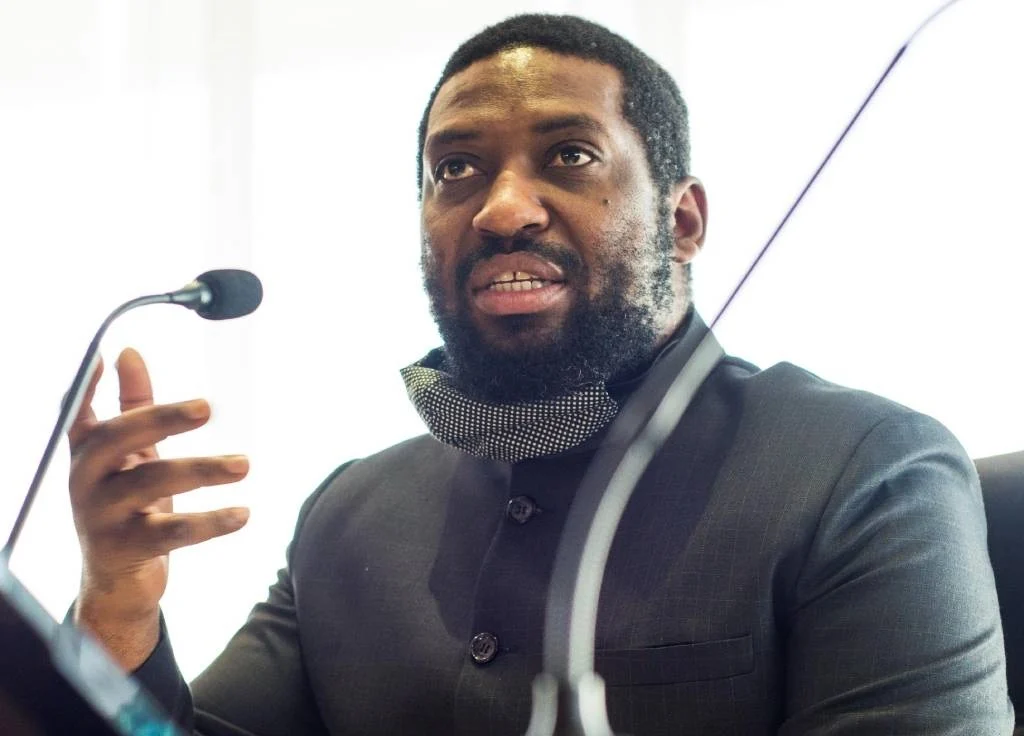


By Thapelo Molefe
Higher Education and Training Deputy Minister Buti Manamela has called for a reimagining of state governance and a renewed spirit of solidarity among Global South nations as the world faces overlapping and intensifying global crises.
Speaking during a webinar hosted by the National School of Government on the theme “Governance and Economic Modernisation in the Era of Polycrises”, Manamela drew on global case studies particularly the Chinese model to reflect on South Africa’s own challenges and opportunities.
Referencing Prof. Zhang Weiwei’s presentation on China’s development trajectory, Manamela acknowledged the usefulness of examining models that challenged Western liberal democratic norms.
He highlighted the importance of state capacity not merely as a technical matter but as a “civilisation-defining” one.
“The triggers of the current polycrisis – global tariff wars, Covid-19 and the 2008 financial crisis – require us to rethink the very character of the South African state,” Manamela said.
He pointed to the resilience demonstrated by South African institutions during the 2008 financial crisis and the pandemic, such as the Reserve Bank and fiscal oversight bodies.
However, he noted that these strong institutions alone have not translated into inclusive economic growth or solved deep-rooted problems like unemployment, poverty and inequality.
He described South Africa’s governance framework as one that leaned towards a “soft state and soft economy”, lacking the structural robustness needed to drive rapid development.
In a comparative mode, Manamela explored how some Asian states, China in particular, have maintained political and social stability through strong state intervention, especially in preserving public order.
He stressed that while African states must learn from global models, they must also resist the temptation to mimic Western paradigms that do not align with their historical and social realities.
“Our traditions, our democratic practices and our modern experiences must be integrated to rebuild trust in the state,” he said, cautioning that unlike China, South Africa emerged from a legacy where public order was historically enforced to repress the majority.
Manamela also lamented how the unipolar global order, shaped largely by the West post-Cold War, exported models of governance and economic development that served Western interests. He argued that the destabilisation of states in the Global South often stemmed not from internal failures alone but from external interference aimed at maintaining geopolitical control.
“We must develop an African model based on our own conditions,” he asserted. “But there are common trends in the Global South, colonial histories, extractive economies and disrupted efforts to build democratic institutions, that mean there are also common lessons.”
In this context, he praised South Africa’s involvement in multilateral bodies like BRICS and its current chairing of the G20’s CHIP platform as vital steps toward building what he described not merely as multilateral partnerships but “solidarity networks”.
“We need to move away from development enclaves. No one will be safe unless we build inclusive, people-centered states grounded in solidarity,” he concluded.
Responding to Manamela, Prof. Zhang reinforced the argument that state capacity underpinned by long-term strategic planning and consultative governance has been central to China’s economic resilience and growing global influence.
He underscored that the success of China’s developmental model lay in its ability to evolve over decades through pragmatic experimentation, institutional strength and centralised coordination.
The webinar concluded with a shared sentiment that in an era of compounding crises, the path to modernisation for developing nations would not lie in replication of the past but in strategic adaptation, mutual learning, and collective strength.
INSIDE POLITICS