


By Johnathan Paloi
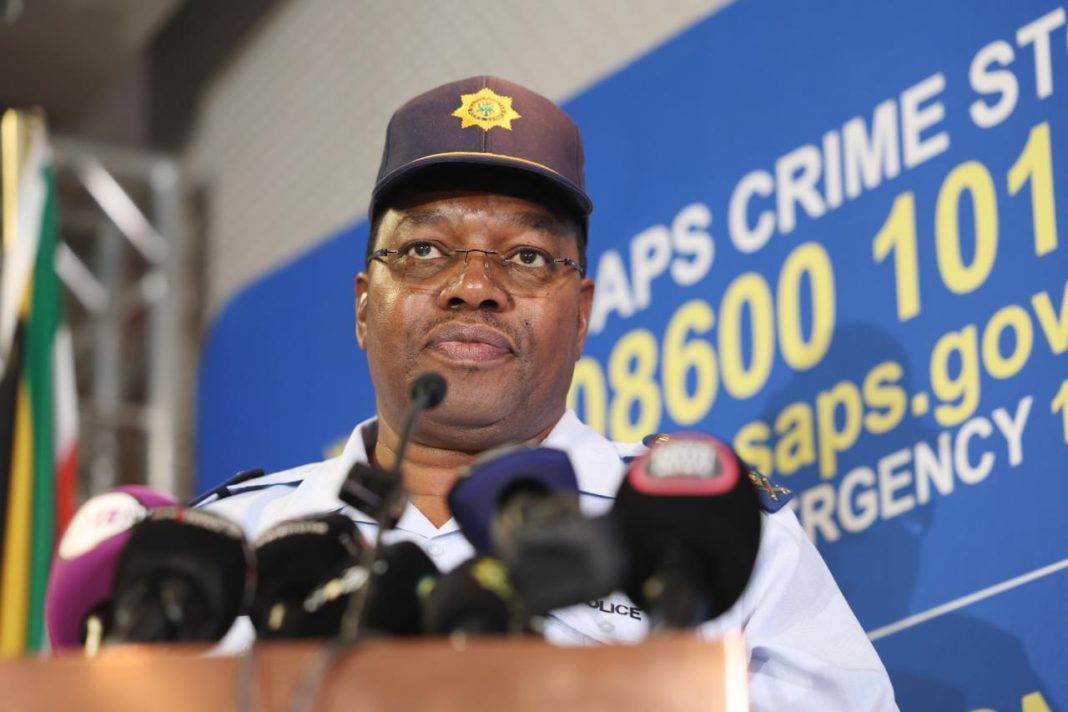
National police commissioner Fannie Masemola told members of Parliament on Tuesday that corruption and political interference remain deeply embedded within the country’s policing structures, even as authorities attempt to confront the growing reach of organised crime.
Appearing before Parliament’s ad hoc committee for a second time, Masemola acknowledged that criminal networks had penetrated not only the South African Police Service (SAPS) but also other arms of the state, complicating efforts to restore integrity to the criminal justice system.
“Yes, the issue of corruption is still there,” he said.
“Unfortunately, to pinpoint individuals, the full investigation process must be completed. We do agree, they have infiltrated; they have infiltrated SAPS and other arms of the state.”
His testimony underscored the extent to which law enforcement institutions have been weakened by internal instability, leaks of sensitive information and competing power struggles among senior police officials.
While Masemola pointed to improvements in inter-agency cooperation, he conceded that the system remained vulnerable to manipulation, including by syndicates linked to the so-called “Big Five” cartel.
MPs from across the political spectrum pressed him on whether those weaknesses reflected deeper political interference or internal factionalism.
ANC MP, Xola Nqola, cited complaints from rank-and-file officers who say they have been sidelined or victimised, raising questions about alleged interference during the tenure of former Police Minister Bheki Cele.
Masemola dismissed suggestions of collusion.
“I talk with all the [police] Generals,” he said.
“There is no conniving.”
But under sustained questioning, he acknowledged tensions within the upper ranks of the police, describing a “pull and push at the top” driven, in part, by competing ambitions for leadership.
“There are others who have tendencies of wanting to become national commissioner as soon as possible,” he said.
Glynnis Breytenbach, a Democratic Alliance MP, highlighted operational lapses, including more than 100 unattended case dockets, warning of what she called an “utter lack of urgency.”
She also pressed Masemola on when he first became aware of the “Big Five” cartel.
“Sometime in 2025,” he said.
Another DA MP, Dianne Kohler Barnard, pointed to systemic failures, noting that more than 10,000 police officers had criminal records between 2022 and 2025.
She questioned how senior officials could have worked alongside figures such as Vusimusi ‘Cat’ Matlala, a controversial businessman linked in testimony to criminal networks.
Masemola responded by outlining plans to strengthen internal oversight, including the creation of a counterintelligence capability focused on monitoring senior leadership.
“I am setting up a counterintelligence capability that will look at what the top brass is doing,” said Masemola.
FF Plus MP Wouter WesselsWouter Wessels questioned whether police leadership had acted decisively enough, while ActionSA MP Dereleen James drew parallels between the current crisis and the era of state capture, asking why intelligence structures appeared ineffective.
“Waar slaap hulle? [Where are they sleeping?] Why are they so inactive?” asked James.
“You won’t see them,” Masemola replied of the unit, “but you’ll see their actions.”
ANC MP Khusela Sangoni-Diko asked why the committee should believe Masemola’s account over conflicting testimony from other witnesses.
He replied that it was up to members to weigh the evidence.
Masemola also confirmed that investigations were continuing into efforts to disband the Political Killings Task Team (PKTT), though he acknowledged he did not yet have evidence of political motives.
The question of accountability sharpened toward the end of the session.
ANC MP Mdumiseni Ntuli asked why Masemola would comply with directives he suspected might be unlawful.
“Why would our national commissioner engage himself in something that is likely unlawful?” he asked.
Meanwhile, DA MP Ian Cameron raised concerns about persistent corruption within specialized units, saying it undermined efforts to address taxi violence.
“There is a lot of work to clean up the organization,” Masemola said.
The committee’s chairperson, Soviet Lekganyane, warned of the risks posed by parallel investigations and the possible manipulation of oversight bodies.
Despite the breadth of the challenges outlined, Masemola struck a note of confidence.
“With a team I’ll select, we’ll be able to reform the organization and get it in the right direction,” he said.
The committee adjourned late Tuesday, with KwaZulu-Natal police commissioner Nhlanhla Mkhwanazi expected to testify on Wednesday.
INSIDE POLITICS