


By Johnathan Paoli
Deputy President Paul Mashatile has reaffirmed the government’s commitment to inclusive entrepreneurship and deeper multilateral cooperation.
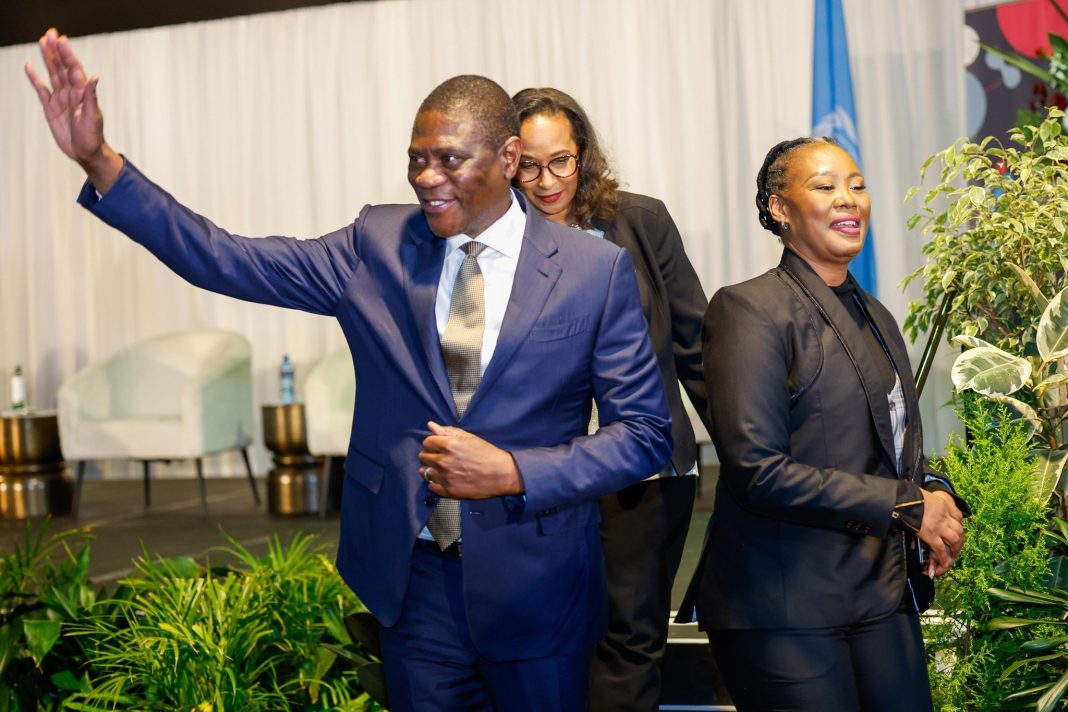
Mashatile officially closed the inaugural Global SME Ministerial Meeting in Johannesburg on Thursday, with a call for global cooperation, bold reforms and targeted investments to unlock the full potential of small and medium enterprises (SMEs), especially in the Global South.
“The discussions held in recent days have been filled with pride and optimism. They highlighted our shared resolve to enhance financial access, embrace digital tools, and promote sustainable, green growth within the SME sector,” Mashatile said.
The landmark three-day gathering brought together ministers, deputy ministers, senior officials, entrepreneurs, financiers and multilateral partners from over 50 countries.
Hosted by South Africa in partnership with the United Nations and the International Trade Centre (ITC), the meeting focused on accelerating access to finance, advancing digital transformation and enabling green transitions for SMEs and start-ups.
The deputy president praised the strong collaboration with the UN, especially during a period of increasing unilateralism globally.
He emphasised the importance of SMEs in driving innovation, job creation and inclusive growth, particularly among youth, women and marginalised groups.
He welcomed the meeting’s call to action, which aligned with major global frameworks including the UN Sustainable Development Goals, the Paris Climate Agreement and the forthcoming Pact for the Future.
South Africa, currently holding the G20 presidency under the theme Solidarity, Equality, Sustainability, used the meeting as a platform to amplify the voices of emerging economies.
The deputy president promised to carry the outcomes of the meeting into the G20 Leader’s Summit set for November.
Highlighting regional priorities, Mashatile reaffirmed South Africa’s commitment to enhancing trade through existing agreements like the Southern African Development Community, the Southern African Customs Union and the African Continental Free Trade Area (AfCFTA).
“The AfCFTA is the world’s largest free trade area, and it holds the promise of unlocking intra-African trade, job creation and opportunities for young entrepreneurs,” he said.
Mashatile pointed to the potential of the agreement to lift millions out of poverty by reducing trade barriers, increasing market access and encouraging local value creation in sectors like agriculture, manufacturing and services.
A key challenge raised by many delegates was the lack of access to capital, particularly for start-ups and small businesses in rural and underserved communities.
Mashatile acknowledged that Africa received less than 2% of global start-up capital despite having more than 18% of the world’s population.
He detailed how South Africa was addressing this with bold initiatives such as the R100 billion Transformation Fund launched earlier this year, which prioritised MSMEs.
He also endorsed stronger public-private partnerships, credit guarantees and the recapitalisation of development finance institutions (DFIs) to support entrepreneurship.
“We must derisk capital investment, especially for women, youth and persons with disabilities. DFIs and multilateral banks must play a central role in supporting inclusive economic transformation,” Mashatile stated.
The deputy president highlighted the role of digital platforms in expanding access to finance and markets, especially through fintech and e-commerce innovations.
However, he warned that digitalisation must not undermine local industries.
“Digital tools offer new possibilities, but we must also manage the risk of being flooded by cheap imports that crowd out locally made goods,” he said.
Mashatile stressed that governments must invest in digital infrastructure, innovation ecosystems and the upskilling of local entrepreneurs.
He echoed Small Business Development Minister Stella Ndabeni’s call for countries in the Global South to develop homegrown technologies and not merely consume foreign-made solutions.
The meeting also explored how SMEs could benefit from the green economy through clearer green industrialisation policies.
Mashatile urged delegates to ensure that green transitions go hand-in-hand with job creation and inclusive growth.
He welcomed the cross-pollination of ideas that took place between the ministerial meeting and the G20 Startup Engagement Group’s Mid-Term Meeting, as well as the parallel Trade Promotion Organisations’ gathering.
“These forums explored practical ways to share trade intelligence, navigate supply chain disruptions and build SME resilience,” he said.
The deputy president added that governments must enhance trade and economic diplomacy, not only to unlock bilateral and multilateral trade agreements, but also to improve cross-border investment and reduce regulatory bottlenecks.
INSIDE POLITICS