


By Akani Nkuna
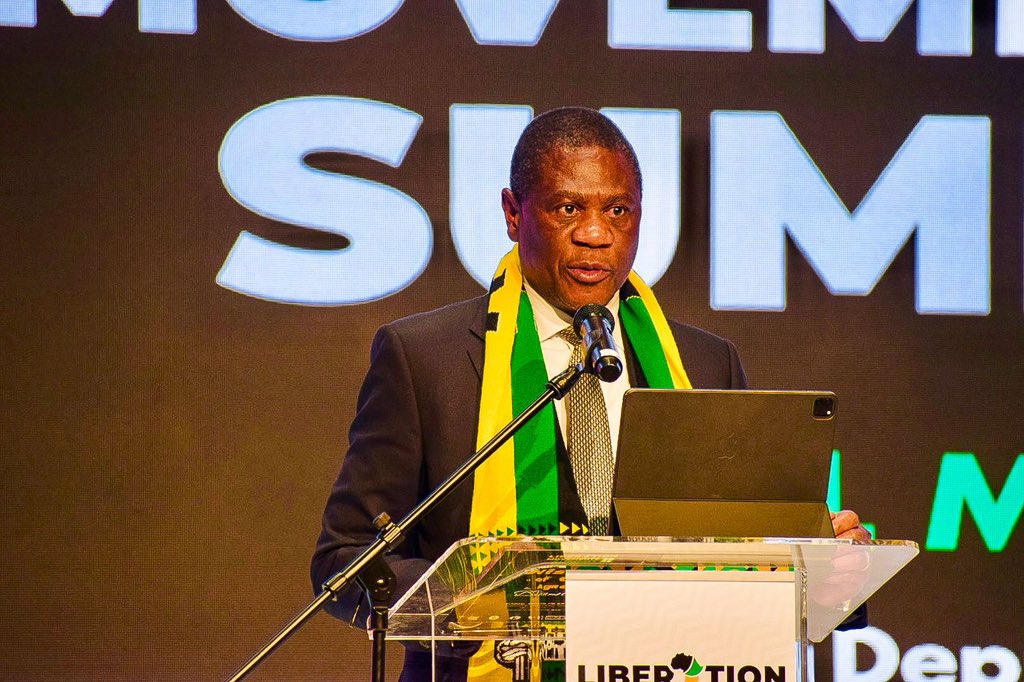
The Deputy President, Paul Mashatile, on Friday convened an inaugural inter-ministerial committee on Public Employment Programmes (PEP) to assess their impact on employment creation and reducing poverty.
The meeting, held virtually, sought to improve the implementation of the Expanded Public Works Programme (EPWP) and further enhance collaboration of PEPs as a vehicle to combat unemployment.
Other Public Employment Programmes include the Presidential Youth Employment Initiative (PYEI), Community Work Programme (CWP), and National School Nutrition Programme (NSNP) amongst others.
“We are pleased as the PEP-IMC that this inaugural meeting has sat today. We also reaffirm the importance of scaling up training, accountability and pathways into real economic opportunities for participants,” remarked Mashatile during the meeting.
“We remain steadfast in ensuring that PEPs promote impactful skills development initiatives and long-term work opportunities to the participants, drawn from our communities.”
Mashatile and Minister of Public Works and Infrastructure Dean Macpherson, who is deputy chair of the committee, asserted that its mandate also included addressing the lack of compliance, accountability and non-performance synonymous with some aspects of the programmes.
This comes after some local municipalities, especially in KwaZulu-Natal and Free State where they could not pay EPWP workers’ stipends since April this year due to financial distress, whilst other departments, including the Department of Basic Education (DBE), were ousted for not creating EPWP work opportunities.
In the 2022/2023 financial year, DBE created 50,000 fewer opportunities, which was attributed to inconsistent integration of EPWP into school maintenance and nutrition programmes, raising the matter of non-compliance.
The DBE also runs the Department of Basic Education Employment Initiative, which was implemented for an initial R 4,5 billion in 2020/2021 and saw the hiring of thousands of teacher assistants.
The committee chair and his deputy highlighted the significance of synergy, especially across all the PEPs, to better affect the livelihoods of the citizens. Additionally, the committee underscored government’s commitment to create 5 million work opportunities by 2029 through these programmes.
“We must provide short to medium-term employment prospects for poor, unskilled, and jobless South Africans, focusing specifically on vulnerable demographics such as youth, women and persons with disabilities,” he said on X.
Some of the underlying issues addressed by the committee include aims to also explore sustainable funding models for the benefit of quality service delivery, whilst providing efficient and transparent recruitment processes of the EPWP personnel.
“Holding public bodies accountable for performance in the EPWP and non-compliance to relevant prescripts and strengthening the interface between PEPs and the skills system to improve training towards permanent employment, entrepreneurship and enhance sustainable livelihoods,” said the Presidency in a statement.
Meanwhile, Macpherson reaffirmed efforts to scale up training, accountability to foster lucrative economic opportunities for citizens, emphasising that rebuilding of strategic coherence within PEPs was in fact one of the departments’ main objective.
“Our focus remains clear: ensuring PEPs deliver dignity, skills and impact for communities across South Africa,” he added.
INSIDE POLITICS