
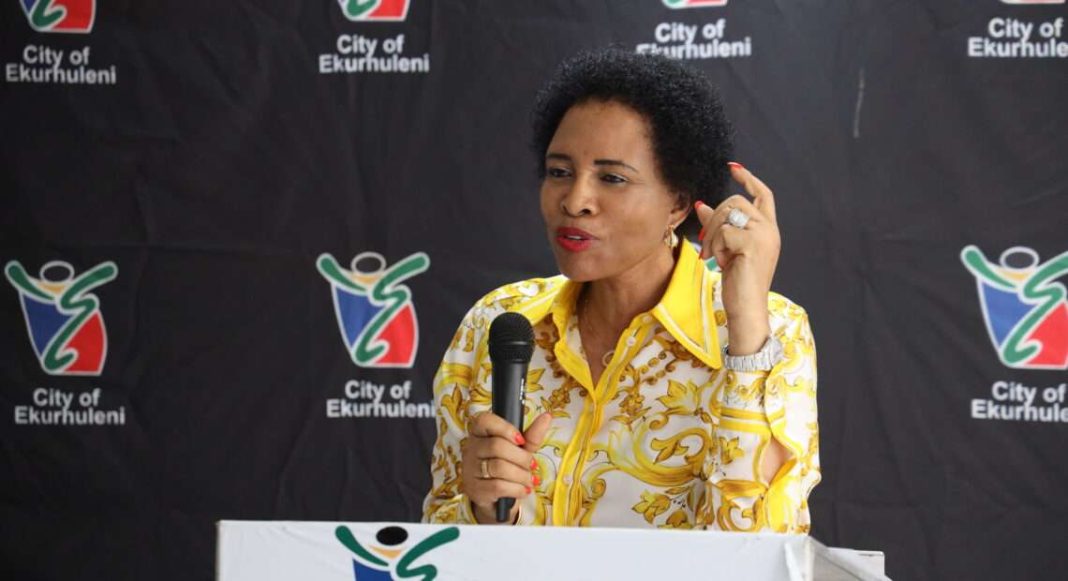


By Johnathan Paoli
The Madlanga Commission closed on Monday evening with former city manager Imogen Mashazi forcefully denying allegations that she protected controversial Ekurhuleni Metro Police Department deputy chief Brigadier Julius Mkhwanazi, interfered in disciplinary processes against him, or issued instructions that halted a fingerprint-based vetting exercise that exposed hundreds of officers with criminal records.
She also rejected retired EMPD official Revo Spies’s detailed notes about a high-stakes August 2023 meeting, insisting she never directed that suspended Chief Isaac Mapiyeye be placed on special leave during those discussions.
Mashazi’s testimony was marked by repeated attempts to distance herself from both the disciplinary matters involving Mkhwanazi and the wider vetting scandal that has rocked the EMPD.
She told the Madlanga Commission she never called either Mapiyeye or former senior EMPD head of employee relations Xolani Nciza to stop any disciplinary process against Mkhwanazi.
Central to the day’s testimony was whether Mashazi intervened after a chaotic vetting exercise revealed that 275 EMPD officers had criminal convictions.
Spies previously testified that categories of wrongdoing included assault, theft, drunk driving and even murder and rape, and that 200 officers reporting to Mkhwanazi had refused to submit fingerprints.
According to Spies, Mkhwanazi erupted during a meeting and phoned Mashazi, after which he allegedly announced that the city manager said this process would stop immediately.
But Mashazi rejected this version, saying she never instructed Mkhwanazi not to be vetted and that all officers should be vetted.
She called Mkhwanazi “unruly” and stressed that enforcing vetting was the Chief of Police’s responsibility, not hers.
Sello challenged this, saying the presence of criminally implicated officers in active service should have deeply concerned the city manager.
Mashazi maintained she was not expected to be involved and asserted she trusted Mapiyeye to handle it.
The commission then turned to allegations about an explosive 17 August 2023 meeting recorded in minutes kept by Spies.
Those minutes assert that Mashazi placed Mapiyeye on 30 days’ special leave, accused EMPD officials of opening “too many” cases against each other, and warned she could also go to IPID if she wished.
Spies testified that attendees’ phones were confiscated, but he later compiled the minutes from notes.
Mashazi disputed the accuracy of the minutes, saying she could not recall placing Mapiyeye on special leave during the meeting and claimed the document was “fabricated”.
But Baloyi pointed to city records confirming that the matter was discussed, and Sello highlighted a letter dated 18 August 2023, the very next day, in which Mashazi approved Mapiyeye’s special leave.
Mapiyeye had testified that the confrontation came after he told Mashazi he intended to pursue action against members of Mkhwanazi’s unit for the alleged theft of precious stones worth millions.
He claimed Mashazi accused him of having a personal vendetta against the Brigadier.
She denied this, arguing it was his responsibility to act on the theft.
Throughout the day, commissioners expressed concern that Mashazi appeared detached from major governance failures inside the EMPD.
She conceded “oversight” in not holding Mapiyeye accountable for a lack of action against criminally implicated officers but defended her broader management approach.
The commission resumes with Mashazi completing her testimony on Tuesday morning, and Police Minister Senzo Mchunu, who is on a special leave of absence, expected to take the stand in the afternoon.
INSIDE POLITICS