


By Johnathan Paoli
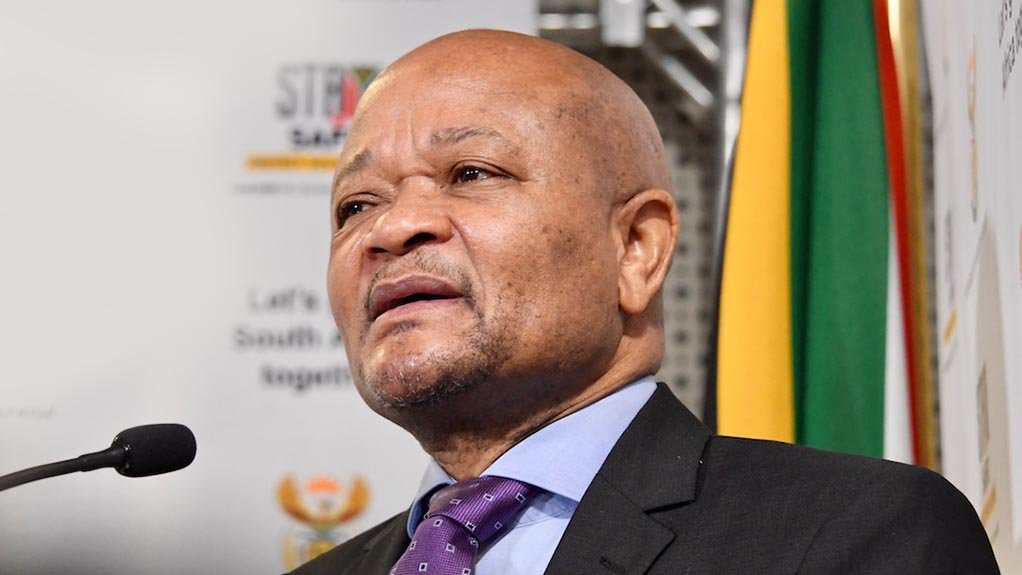
Suspended Police Minister Senzo Mchunu has insisted that his decision to question the continued funding of the Political Killings Task Team (PKTT), and subsequent call for its disbandment, was grounded in law and sound governance.
“I want to be clear: funding a task team without assessing its continued necessity is inconsistent with the Public Finance Management Act,” Mchunu told parliament’s ad hoc committee, which is investigating allegations of criminal infiltration and political interference in the justice system.
Evidence leader and senior counsel Norman Arendse said the testimony would help the committee “clarify whether the minister acted lawfully or sought to undermine operational policing”.
Mchunu said that upon assuming the police portfolio in July 2024, he welcomed the appointment “without prior notice” but quickly realised that major structural and operational issues required his attention.
“After I was sworn in, I sought meetings with police leadership for orientation. I received support from the national commissioner and his deputies, but later became aware of other things,” he said.
Those “other things” included what he described as a blurred line between legitimate, time-bound task teams and permanent police units, a distinction that, in his view, lay at the heart of the PKTT controversy.
The PKTT, which investigates politically motivated murders, was formed in 2018 following President Cyril Ramaphosa’s directive for a three-tiered intervention into political killings into KwaZulu-Natal: the Inter-Ministerial Committee (IMC), a steering committee, and an operational task team.
Mchunu testified that while the PKTT was a necessary response to the violence at the time, it was never integrated into the SAPS organogram and therefore functioned as a temporary entity.
“Everyone was aware that this was a task team. You pool people for a particular purpose, for a defined time frame. It has a start and an end date,” he said.
He added that under proper governance, such teams should be evaluated periodically and disbanded once their purpose has been served.
The crux of Mchunu’s testimony so far revolved around the R94 million funding request for the PKTT’s extension into 2025, which he said was not accompanied by a valid work study or evaluation.
“When the chief financial officer doesn’t sign off on a funding request and recommends a work study, there is a problem,” Mchunu said.
He told the committee that continuing to fund the PKTT under such circumstances would have contravened the PFMA, which mandates that all expenditure be justified by functional necessity and legal compliance.
He criticised what he called a “duplication of effort” between the PKTT and the Murder and Robbery Unit, whose expanded structure was approved in November last year.
Arendse pressed Mchunu on whether he accepted the lawfulness of the PKTT’s establishment.
Mchunu agreed that the task team had been lawfully created in 2018 by then-police minister Bheki Cele and national commissioner General Khehla Sitole, under the president’s directive.
However, Mchunu distinguished between lawful creation and lawful continuation, saying the task team’s repeated extensions had not been backed by adequate evaluation.
Documents before the committee showed that the PKTT’s initial plan was costed for six months and signed off by both Sitole and General Fannie Masemola, who was then deputy national commissioner.
The task team’s lifespan was subsequently extended multiple times.
Mchunu’s testimony directly challenges claims made before the Madlanga Commission that he interfered in police operations by disbanding the team.
He argued that his intervention was administrative, not operational, and rooted in fiscal accountability.
He added that no minister could create or dissolve an inter-ministerial committee, which only the president has the authority to do.
His suspension earlier this year followed a public fallout with KZN Police Commissioner Nhlanhla Mkhwanazi, who alleged that ministerial meddling and infiltration of the criminal justice system by underworld figures with political links had jeopardised high-level investigations.
Mchunu’s testimony continues.
INSIDE POLITICS