


By Johnathan Paoli
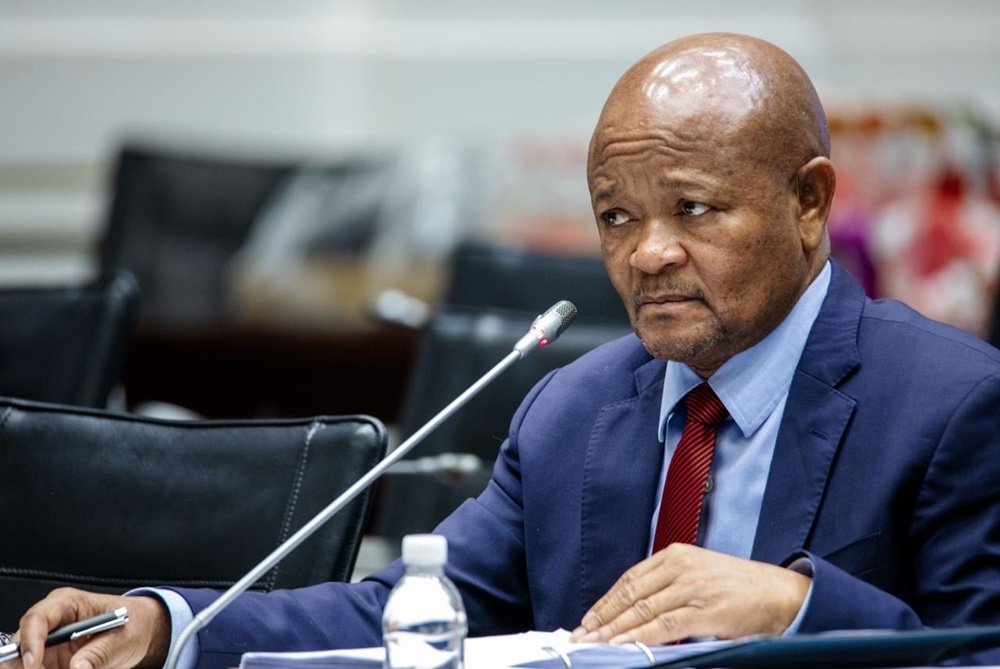
Proceedings at the Madlanga Commission paused for the year on Friday, with suspended Police Minister Senzo Mchunu again pressed to explain the reasoning, sources, and processes behind his decision to disband the Political Killings Task Team (PKTT).
Evidence leader Adv Mahlape Sello SC and Commissioners Sandile Khumalo and Nompumelelo Baloyi repeatedly challenged the minister on whether he relied on unverified allegations, misunderstood internal SAPS structures, and applied inconsistent standards to task teams across the country.
Sello began by revisiting documents listing Inter-Ministerial Committees (IMCs).
She noted that while the IMC on political killings was absent from the 2024/25 guide, it had also not appeared in earlier years, including 2018/19 and 2021/22, yet continued to function.
Mchunu confirmed this but insisted that regardless of listings, he never received a formal letter appointing him to the IMC, unlike the JCPS cluster, where he was formally designated co-chair.
Sello returned to the 2024 work-study report, which required impact analyses for existing task teams.
Asked whether he ensured such an analysis was conducted for the PKTT before disbanding it, Mchunu said he had not, instead relying on the report prepared and signed off by SAPS top brass.
Commissioner Khumalo pointed out that it was the very same document Sello had been reading from.
When Sello pressed whether he satisfied himself that the reviews had taken place, Mchunu replied that he trusted the national commissioner and senior officials to have done so.
A significant portion of the afternoon centred on Mchunu’s reliance on human rights complaints.
Sello argued that many were ordinary HR grievances ordinarily dealt with internally, not matters for a minister.
Mchunu insisted some complaints had escalated “beyond the national commissioner”, prompting him to refer them to his deputy, Cassel Mathale.
Baloyi challenged the minister to explain what, specifically, those human rights complaints entailed, beyond mentions of balaclava-wearing officers and unnamed whistleblowers.
She noted that Mchunu referenced eight confidential complainants but had not clearly explained their relevance to the PKTT’s fate.
Mchunu repeatedly said he could not disclose details because of security risks and confidentiality undertakings but admitted he did not verify the information beyond listening to the individuals.
Baloyi said she “saw a problem” with how untested allegations influenced a decision of such magnitude.
Mchunu conceded he had no reason to doubt the complainants but accepted they would need to be verified, although this was not done before the PKTT was dissolved.
The minister faced further scrutiny over his references to civil society actors Patricia Mashale and Mary de Haas.
Sello highlighted that none of Mashale’s Facebook posts mentioned the PKTT, despite Mchunu including them among concerns underpinning his decision.
Ultimately, he conceded that Mashale’s posts played no role and were merely part of the broader environment.
Baloyi said this contradicted his affidavit, which listed her allegations alongside serious claims involving SAPS leadership.
On De Haas, the minister’s stance shifted multiple times.
At one stage he acknowledged her allegations were “one of the factors” influencing him; minutes later he said they played no role and should be excluded if the commission compiled a table of considerations.
Ultimately, he maintained her letter was part of the “environment”, but not material to his final decision.
Budget issues were also scrutinised.
Sello contrasted the PKTT’s expenditure with that of the illicit mining task team, which spent far more yet remained untouched.
Mchunu said the two were not comparable because illicit mining operations used CARA funding.
Baloyi accused him of inconsistency, noting he later created a taxi-violence task team in the Eastern Cape despite citing organisational and budget constraints to justify closing the PKTT.
Mchunu denied inconsistency, saying the PKTT had become a “seven-year sitting task team” and the Eastern Cape situation required urgent intervention.
Friday’s session ended with lingering questions about the reliability of the information Mchunu acted upon and whether key decisions affecting political violence investigations were based on verified evidence or accumulated “environmental” concerns the minister never interrogated.
The commission has ended for the year, while the date of commencement is still to be announced.
INSIDE POLITICS