
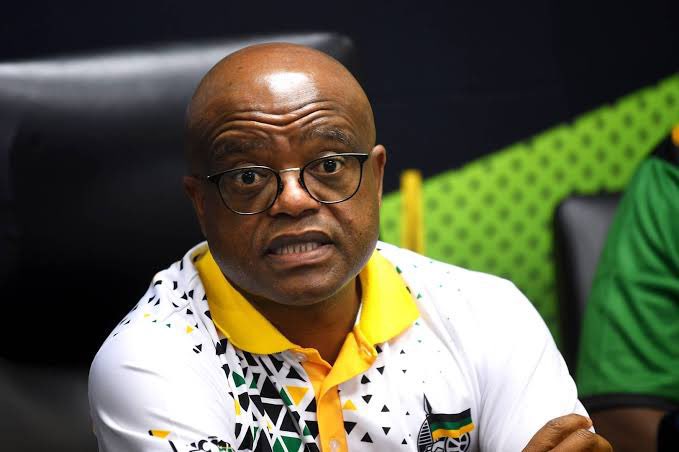


By Akani Nkuna
The ANC’s 16th Gauteng Regional Conference has renewed calls for competent, credible leadership to consolidate the party’s influence in the province and realign it with its founding principles and values.
Delivering his political report on day two of the conference at Cedarwood Hotel, ANC Johannesburg regional chairperson Dada Morero acknowledged the systemic leadership weaknesses that have come to define the party in Gauteng.
He told delegates the conference must serve as a turning point to dismantle these long-standing stereotypes and rebuild internal strength.
The conference has been running behind schedule, with voting for new leadership—pitting Loyiso Masuku against Morero for regional chairperson—expected to begin later on Thursday night.
“Our structural challenges are linked to our governance challenges,” Morero said.
“Persistent gaps in accountability frameworks, oversight mechanisms and leadership effectiveness have impeded decision-making and policy implementation.”
He highlighted a troubling pattern in which ANC public office bearers are associated with operational failures, including delays in infrastructure projects, service-delivery backlogs and unfunded mandates that severely compromise services to residents.
Morero also underscored ongoing financial instability, attributing it to the so-called “purple coalition,” which he said has coincided with declining revenue collection since 2016 and soaring debt and unauthorised expenditure that continue to strain the city’s finances.
Given the scale of these challenges, he urged delegates to develop solutions suited to Gauteng’s shifting political terrain.
“We must continue creating an inclusive economic environment that reflects the aspirations of our residents,” he said, stressing the importance of co-production, local economic growth, sustainable jobs and township-economy development.
Morero appealed to the conference to rebuild the ANC’s power in Johannesburg and reduce dependence on coalition partners.
He said the party needs leaders capable of driving economic growth, supporting co-operatives and advancing industrialisation.
“Coalition politics is not living our dream,” he said.
“We must win back the hearts and minds of our communities so they can fall in love with us again.”
Reaffirming the ANC’s commitment to unity, renewal and rebuilding, he said the party still intends to contest the 2026 Local Government Elections with the goal of winning outright—despite the setbacks of 2021.
He reiterated commitments to service delivery, safer communities, accountability, and rooting out corruption and nepotism across the city and within the party.
ANC secretary-general Fikile Mbalula described Johannesburg as a “special region,” noting its historic role in shaping the black middle class, professionals and intellectuals.
Mbalula emphasised the importance of renewal and Johannesburg’s key role in rebuilding the movement.
He called for a united conference focused on the ANC’s recovery and service to the people.
“When there is a decline in Johannesburg, it signals a national trend. We must work hard here,” he said.
“Losing a congress is not the end of the world. We are not enemies. The ANC must survive beyond our contestations,” said Mbalula.
Mbalula also stressed the importance of appointing qualified people to municipal leadership positions as part of the renewal project.
He said the ANC’s strength lies in strong, active branches—not polling predictions.
“We don’t want coalitions, comrades. We want an overwhelming majority,” he said.
“But that majority will not come on a silver platter. We must work hard and reconnect with our people.”
INSIDE POLITICS