


By Thebe Mabanga
The National Empowerment Fund (NEF), an agency of the Department of Trade and Industry and Competition that funds black-owned businesses to help transform and grow the South African economy, has had to adapt and be innovative to survive and now aims to bolster youth and women-owned businesses
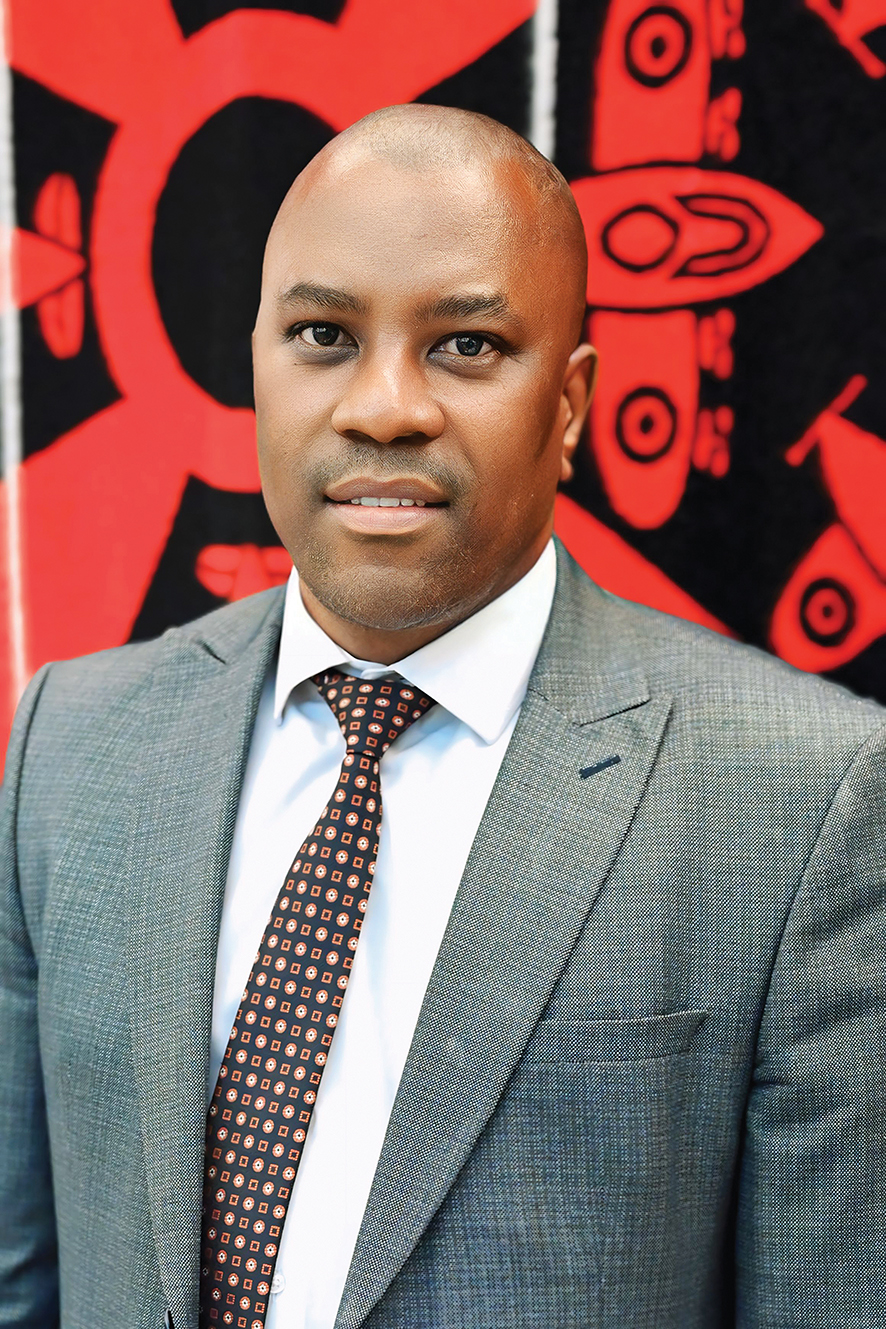
Its new CEO, Mzi Dayimani, believes that to win over sceptics, detractors and critics of Black Economic Empowerment (BEE) and transformation, the government must keep delivering positive results with the support of institutions like the NEF.
“The best way to silence critics is to deliver economic growth and jobs,” he says.
One of the latest sceptics is the World Bank, which in a recent report declared that South Africa needs to “ease up on BEE” and labour laws, suggesting these impose an added regulatory cost to doing business.
Dayimani merely sees this as a communication challenge.
“The World Bank is not against transformation,” he says, “But what is required is for us as a country to communicate what we are trying to achieve and deliver results.”
Over the past few years, South Africa has drifted towards BEE fatigue, with transformation seemingly taking a back seat as the country grappled with challenges ranging from the Covid-19 pandemic to poor economic growth, the cost-of-living crisis sparked by the Russia-Ukraine conflict, and, perhaps unfairly, BEE taking some of the blame for the state capture revelations at the Zondo Commission.
Dayimani says that to counter this narrative, the government must remove uncertainty around BEE or any other regulation that is aimed at improving the transformation of South Africa’s economy.
“We must also remove perceptions of corruption and use transformation as a tool for development,” he says.
Through all of this, the NEF has had to look for ways to thrive and continue its programme of transformation. Ever since it was set up in 2005, the NEF has not been capitalised beyond its seed funding.
The lack of capitalisation has been a significant challenge, as it limits the NEF’s ability to fund more businesses and entrepreneurial initiatives.
The fund’s business model mainly involves issuing loans and grants to black-owned businesses and collecting repayments to keep itself afloat. This means it must bet on companies that are likely to succeed in repaying the loans. The NEF also offers non-funding support.
Striking a balance
However, the NEF must be brave and fund businesses that may otherwise not receive funding from traditional financing institutions.
Dayimani notes that this balance has not always been easy to strike.
“There is no lack of funding, but rather a lack of solutions,” says Dayimani. One of the NEF’s solutions was the R200 million Covid-19 relief fund, implemented after the pandemic to support distressed businesses.
Following the registration process, the NEF is also responsible for administering the R500 million Spaza Support Fund, which formalises the township retail sector for the benefit of locals.
Its latest concept is the potentially game-changing R100 billion Transformation Fund. This aggregates a combination of existing funds under Enterprise and Supplier Development and raises new funding to fund empowerment initiatives for R20 billion a year over five years.
“The aim is to increase impact and change the economic trajectory,” says Dayimani.
The NEF has also significantly improved its loan collection track record and now distributes R1.5 billion in a financial year.
It strives to spread its funding beyond urban areas to township businesses and rural regions, with a specific aim to fund 40% women-owned businesses and 50% women and youth-owned businesses.
Dayimani emphasises that the NEF’s goals now include helping the country increase its manufacturing capacity to create jobs.
The aim is to stimulate economically depressed areas, including townships, partly through concession funding.
Dayimani notes that some of the challenges facing township businesses include water and electricity supply, and business zoning. But this focus on job creation instils hope for the future of the economy, he says.
Beyond supporting manufacturing, Dayimani says the NEF focuses on tourism, mining, agriculture and agro-processing. It is also looking to the automotive and renewable energy sectors as job-creating sectors to invest in, partly guided, of course, by applicant demand.
Dayimani was born in the Eastern Cape and later moved to Cape Town with his domestic worker mother. On completing matric, he was oblivious to the doors his good marks could open and was ready to look for work. That’s when a benefactor offered him a financial kickstart to go to Stellenbosch University, where he studied law and never looked back.
He served articles and then worked at the law firm Cliffe Dekker Hofmeyr, where he worked his way up to the senior ranks. The firm had the NEF as a client, and they poached him when he was approaching partner level.
In the 15 years he has been at the NEF, he has taken on various roles that have seen him evolve beyond his legal scope.
“I have become more of an economic activist than a legal person,” he says, focusing on entrepreneurship solutions. “I was given roles that have allowed me to grow in the organisation.”
From his initial role as legal counsel, he expanded to areas of governance and strategy. He was also responsible for setting up provincial offices and has been involved in negotiations for the various initiatives the NEF has driven over the past few years, including the Transformation Fund.
Dayimani serves on the Nelson Mandela Metropolitan University council and several DTIC appeals committees for trade.
INSIDE POLITICS