


By Thebe Mabanga
Just as South Africans thought inflation was under control, the beast has reared its head again as Consumer Price Index (CPI) rose from 3 % to 3,5 % from a year ago in July to reach the highest level in 10 months.
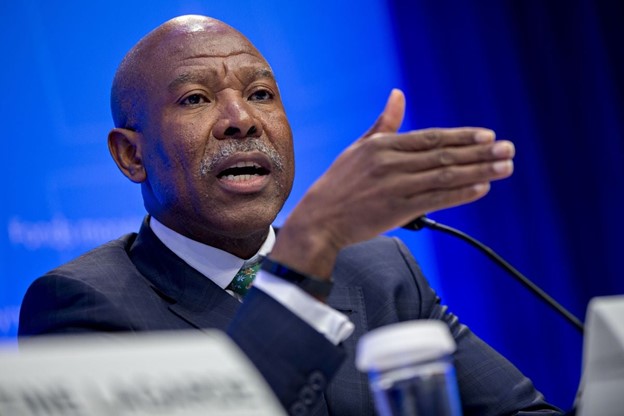
This follows last month’s Monetary Policy Commitee (MPC) meeting, where Reserve Bank Governor Lesetja Kganyago suggested that the bank would use the lower end of the inflation target of 3% to target inflation.
A year-and-a-half ago, the Bank opted to use the mid point of the target range, or 4,5%, to target inflation. The latest move to target 3% prompted Finance Minister Enoch Godongwana to assert the National Treasury’s role as custodians of the inflation targeting policy, with the Reserve Bank as implementers.
Releasing inflation figures on Wednesday, Statistic South Africa stated that household’s food budgets were under pressure.
“Annual inflation for food & non-alcoholic beverages continued to rise, accelerating to 5,7% from 5,1% in June.” the statistical agency said, noting that meat, vegetables and ‘other food’ fueled the uptick.
“Meat, specifically beef, remains the main driver,” Stats SA said, noting that beef prices had risen, on average, by 28,8% over the past 12 months and by 7,6% between June and July.
This raises the question of how the Bank should respond should inflation inch upwards. A Reserve Bank’s typical response in such a situation, especially one with a predominantly hawkish MPC like Kganyago’s one, would be to raise interest rates.
Nedbank points out that the Bank provided one set of forecasts after it had released numbers under the 4.5% inflation target’ scenario and the 3% inflation target scenario at the May MPC meeting.
Then at the July meeting, under the 3% scenario, it shows inflation remaining well contained over the forecast horizon to 2027, while risks to the outlook are still assessed as “balanced.”
The Bank says under the 3% target the average inflation forecast for 2025 was unchanged at 3.3%, while CPI averages 3.3% in 2026 and 3% in 2027. In the previous forecasts under the 4.5% scenario, CPI averaged 4.2% in 2026 and 4.4% in 2027. The hope is that the July increase does not move us to the 4,5% scenario.
With the 4.5% inflation target, the Reserve Bank Quarterly Projection Model, which is a non-prescriptive guide for how rates are likely to move, projects the repo rate bottoming out at 7%, meaning there is no room for further cuts. However, at the lower target of 3%, the QPM predicts five more rate cuts over the three years to 2027.
South Africans can only hope that even if inflation inches higher, Kganyago should, for once, use his instinct and empathy for struggling consumers and look to cut rates, even if it is less than five times over the medium term.
The reality is that while interest rate can influence inflation by moderating the demand for money in the economy, the ultimate container of inflation is achieving efficiency gains through the successful implementation of the contemplated economic reforms in energy, water, logistics and telecommunications, and that, as Kganyago knows, is not within the Reserve Bank’s control.
INSIDE POLITICS