


By Thebe Mabanga
Operation Vulindlela, government’s economic reform programme launched in October 2020, has unlocked R500 billion in investments and will now focus on the water sector, local government and digitisation.
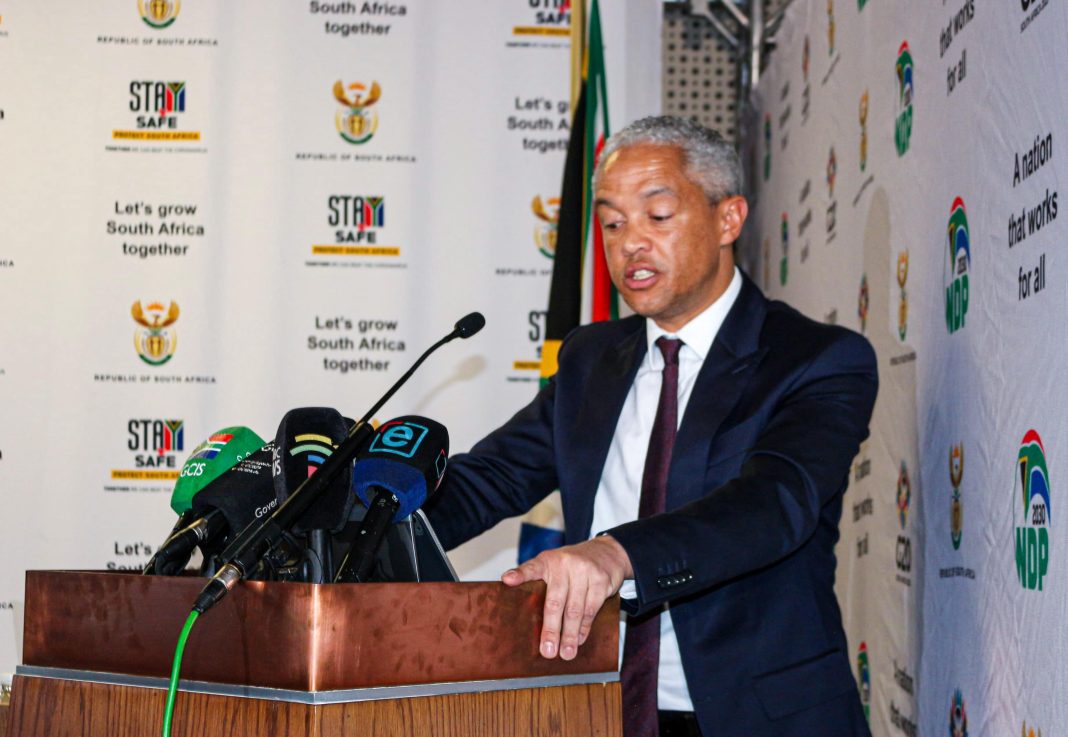
This emerged at a technical briefing hosted by National Treasury ahead of the launch of the second phase of the reforms by President Cyril Ramaphosa on Wednesday.
“When Operation Vulindlela was launched in 2020, South Africa was already facing a decade of economic stagnation, deep institutional erosion and growing fiscal pressure,” Treasury director-general Duncan Pieterse told reporters in Pretoria.
“And when the pandemic came along, it merely accelerated the urgency for reform. It became clear that without targeted and coordinated structural reforms, our prospects for meaningful growth, job creation and investment would remain out of reach.”
At the official launch, Ramaphosa emphasised this point, noting: “The pandemic arrived just as we were emerging from more than a decade of stagnant economic growth and rising unemployment and from the era of state capture.”
By far the most successful of the reforms have been in energy, where R400 billion investment and 22,5 GW of renewable energy have been unlocked and load-shedding has been, for the most part, eliminated.
Another area is freight logistics. A Freight Road Map was adopted in 2023 and Transnet is currently driving the process of opening up the rail network to third party access.
In telecoms, government raised R 14,4 billion from auctioning the spectrum and the country has seen the cost of 1,5G of data fall by more than 50%
Water Use Licence applications have been reduced from more than three years to a few months and as of last year, a new visa framework is in place to attract skilled foreigners.
Ramaphosa acknowledged that despite these successes, growth remained constrained.
“Our economy needs to grow much faster to create the jobs that we need and to achieve prosperity for all,” the president said.
“We need more rapid growth to enable government to spend more on healthcare, education, social grants, infrastructure and other key areas to improve the lives of our people.
“That is why this Government of National Unity is committed to sustaining the momentum achieved by Operation Vulindlela on the economic reform agenda.”
NEW FOCUS AREAS
The first area of focus for the new set of reforms is water, where many municipalities face supply disruptions and must implement water restrictions due to ageing infrastructure.
“We will establish the National Water Resources Infrastructure Agency as a dedicated entity to own manage and invest in our water resources,” Ramaphosa said.
“Through the Water Partnerships Office, we will support public-private partnerships in water infrastructure to reduce leaks, access new water sources and improve wastewater treatment.”
To address the root causes of service delivery failures, the president said government amended the Water Services Act to separate the role of municipalities as water service authorities and water service providers.
“The days of standing by and watching while taps run dry or raw sewage runs into our rivers are over. We will take action to make sure that right of every South African to quality drinking water is protected.”
Ramaphosa said the second phase of Operation Vulindlela was also to improve the performance of local government.
“Many of our municipalities are unable to deliver basic services to households and businesses.”
A White Paper on the funding of local government has been developed and the sector will be professionalised by reviewing the hiring criteria for senior managers.
“This will be done by extending the mandate of the Public Service Commission to local government and taking action against municipalities that fail to comply with minimum competency standards.”
The Minister of Cooperative Governance and Traditional Affairs has already updated the White Paper on Local Government and National Treasury will review the local government fiscal framework, including the design of conditional grants, to ensure that the revenue of municipalities matches their responsibilities.
The president said the third area of focus was digital transformation and last month, Cabinet approved a Digital Transformation Roadmap
The reform includes being able to access digital IDs, and the payment and government services, including visas, matric certificates and health records, electronically.
“The process of reform is never easy. It is often contested, especially by those with vested interests,” Ramaphosa said, describing those who prove to be a hindrance as “insiders”.
He warned that the country faced a stark choice.
“If we do not reform our economy, it will not grow, and we will not create jobs. Unemployment will rise and poverty will increase.”
Lastly, Ramaphosa noted that there was a “generation of South Africans that does not know what it is to live in a country that is growing”.
“They have never experienced rising incomes, increasing jobs, thriving businesses and expanding opportunities. It is our intention to ensure that every South African feels the benefits of rapid, sustained and inclusive economic growth.”
Operation Vulindlela comprises a team of 20 located in the Presidency, National Treasury and across 15 departments and government entities responsible for implementation of various reforms.
INSIDE POLITICS